 Pin It
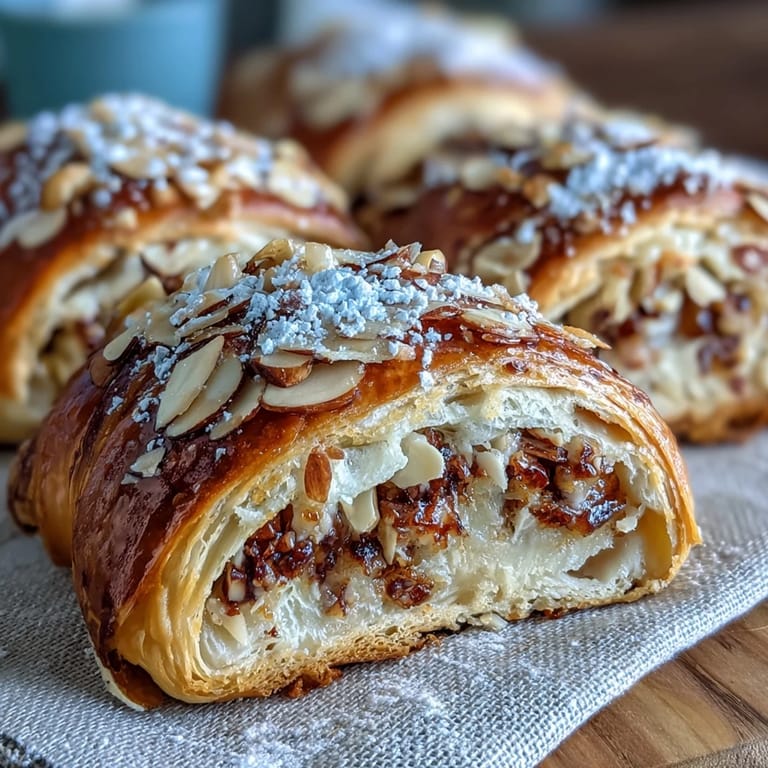
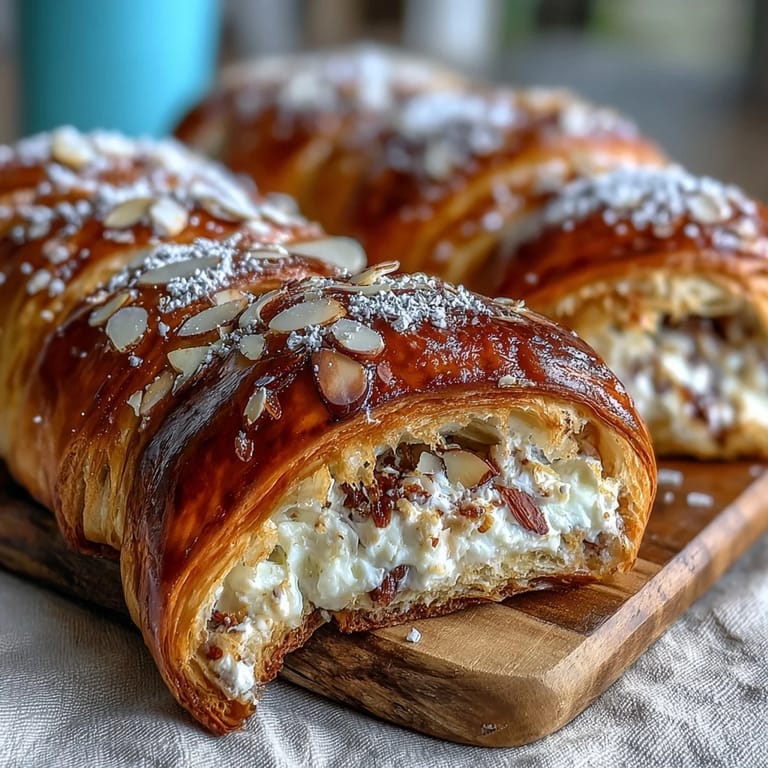
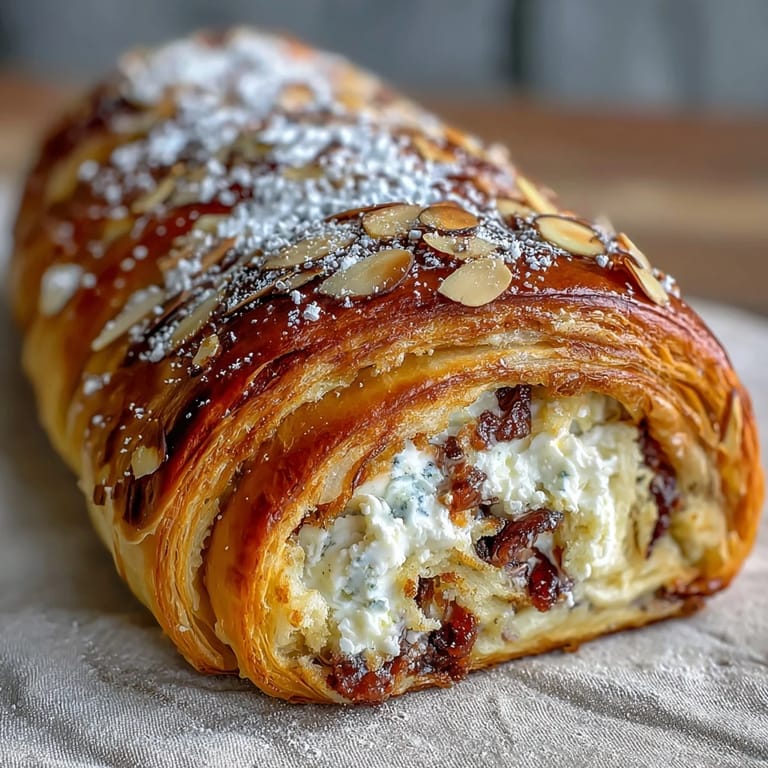
 My neighbor knocked on my door one Saturday morning with a croissant from the French bakery down the street, and we stood in my kitchen comparing it to a sourdough roll I'd pulled from the oven that same morning. She tilted her head thoughtfully and said, "What if you just... combined them?" That question stuck with me through three coffee refills. The result was these almond croissant-style sourdough rolls, where tangy sourdough meets the buttery, marzipan-like richness of frangipane, and honestly, they've become my answer to every "what should I bring?" invitation ever since.
I made these for a Sunday book club last spring, and someone literally stopped mid-sentence to ask for the recipe before even trying one—just the sight of them dusted with powdered sugar got everyone talking. What I didn't expect was my friend Sarah mentioning weeks later that she'd made them for her daughter's school bake sale, and they sold out in the first fifteen minutes. Small moments like that remind me why I love cooking for people.
Ingredients
- Store-bought or homemade sourdough pizza dough (1 lb/450 g): This is your secret weapon—it already has that tangy depth without the fussy overnight proofing, and it stays tender even as these rolls cool.
- Almond flour (1/2 cup/60 g): Use blanched almond flour if you want a delicate pale cream, or keep the skin on for a slightly earthier, nuttier flavor that somehow tastes more authentic.
- Granulated sugar (1/4 cup/50 g): This sweetens the frangipane but also helps it caramelize beautifully where it touches the dough.
- Unsalted butter, softened (1/4 cup/55 g): Room temperature is non-negotiable here—it creams into that almond mixture like a dream and keeps the filling smooth.
- Large egg (1): Acts as both binder and moisture, creating a custard-like texture that's distinctly different from marzipan.
- Vanilla and almond extracts (1/2 tsp each): These feel like the unnecessary fancy touch until you taste how they deepen the whole filling into something that tastes like it came from a patisserie.
- Sliced almonds (1/2 cup/50 g): Toast them lightly in a dry pan first if you have five minutes—the nutty flavor intensifies and they won't taste raw against the warm pastry.
- Milk (2 tbsp): Your egg wash stand-in, simple and effective for that glossy golden sheen.
- Powdered sugar (2 tbsp): Applied after baking so it doesn't melt into the almond cream and become cloyingly sweet instead of delicately dusted.
Tired of Takeout? 🥡
Get 10 meals you can make faster than delivery arrives. Seriously.
One email. No spam. Unsubscribe anytime.
Instructions
- Get your oven ready and prep the stage:
- Preheat to 375°F (190°C) and line your baking sheet with parchment paper—this takes two minutes but saves your rolls from sticking and gives them a better bottom crust. Have everything within arm's reach because once you start rolling, you'll want momentum on your side.
- Roll out the dough into a thin rectangle:
- Dust your work surface lightly with flour and gently stretch the sourdough into a 12x16-inch rectangle, working it gradually so it doesn't spring back at you. If it keeps resisting, let it rest for five minutes and come back—it'll be more cooperative.
- Blend the almond cream until it's silky:
- In a bowl, cream the softened butter and sugar together first until pale and fluffy, then fold in the almond flour, egg, vanilla, almond extract, and salt until completely smooth and homogeneous. If you see any lumps, press them against the side with your spoon or give it another minute of mixing.
- Spread the filling over your dough canvas:
- Spread the almond cream evenly across the rectangle, leaving that half-inch border around all edges so nothing oozes out during rolling and baking. Use an offset spatula or the back of a spoon and don't overthink it—rustic coverage is honestly better than perfectly even here.
- Roll it up and portion into individual rolls:
- Starting from the long edge, roll tightly toward you like you're rolling a sleeping bag, using light pressure to seal the seam without squeezing out the filling. With a sharp knife, cut into eight equal pieces and place them cut-side up on your baking sheet.
- Add your toppings and watch them puff:
- Brush each roll gently with milk, then scatter sliced almonds on top so they toast slightly and add texture. Bake for 22–25 minutes—they're ready when the edges are golden and they've risen noticeably but aren't pale in the center.
- Cool slightly, then finish with the powdered sugar dust:
- Let them rest for just a few minutes so the filling sets slightly, then dust generously with powdered sugar while they're still warm enough for it to cling beautifully.
 Pin It
 There's this moment right when they come out of the oven where the kitchen fills with toasted almond and caramelized sugar, and you know everything worked. My partner came downstairs that morning and just stood there for a minute, taking it in, and I realized these rolls had become more than breakfast—they were that thing I make when I want to say "I'm thinking of you" without actually saying it.
The Sourdough Advantage
Using sourdough instead of laminated croissant dough is genuinely brilliant because it already brings complexity and slight tang that plays beautifully against sweet almond cream. The crumb stays open and tender rather than dense, and there's a subtle sourness that prevents these from tasting one-dimensional or cloying. I've made versions with regular brioche dough and they're fine, but they lack that character that makes you reach for a second one.
Timing and Temperature Matter
The 375°F temperature is the sweet spot—hot enough to set the dough and caramelize the almond cream at the edges, but not so scorching that the outside burns before the inside finishes puffing. I learned this by watching a batch at 400°F turn dark brown while staying slightly gummy inside, which was genuinely disappointing. Twenty-five minutes is really the upper limit; even a minute or two extra and you risk the filling cooking past creamy into something drier.
Make Them Your Own
These rolls are honestly a canvas, and I've played with them more times than I can count. The almond cream base is sturdy enough to handle additions without falling apart, so don't feel locked into the exact recipe—this is where you get to have real fun.
- Spread a thin layer of good raspberry jam on the dough before the almond cream for brightness and tartness that cuts through the richness beautifully.
- Brush melted butter under the almond cream layer if you want that extra flakiness and don't mind a slightly richer pastry.
- Drizzle them with a simple glaze (powdered sugar mixed with a splash of milk) instead of just powdered sugar if you want them more decadent.
 Pin It
 These rolls have become my weekend ritual, my "sorry I'm late" gesture, and my answer to "what's for breakfast?" They're French-inspired but not fussy, impressive but genuinely easy, and they taste like you know something special about baking. Make them once and you'll understand why they've stolen a permanent spot in my rotation.
Recipe FAQs
- → What dough works best for these rolls?
Sourdough pizza dough, either homemade or store-bought, provides the perfect chewy and tangy base for these almond-filled rolls.
- → How is the almond cream prepared?
The almond cream is a smooth mixture of almond flour, softened butter, sugar, egg, vanilla, and almond extracts, blended until creamy.
- → Can these rolls be made ahead of time?
Yes, you can assemble the rolls and refrigerate them before baking to bake fresh later, preserving their flakiness and flavor.
- → What’s the best way to ensure flakiness?
Brushing the dough with melted butter before adding the almond cream enhances flakiness and richness in the final rolls.
- → Are there any suggested pairings?
These almond-filled sourdough rolls pair beautifully with coffee or a sparkling brunch wine, elevating your breakfast experience.
- → Can I add a fruity twist to the rolls?
Adding a spoonful of raspberry jam before rolling adds a delicious fruity contrast to the nutty almond cream.