 Pin It
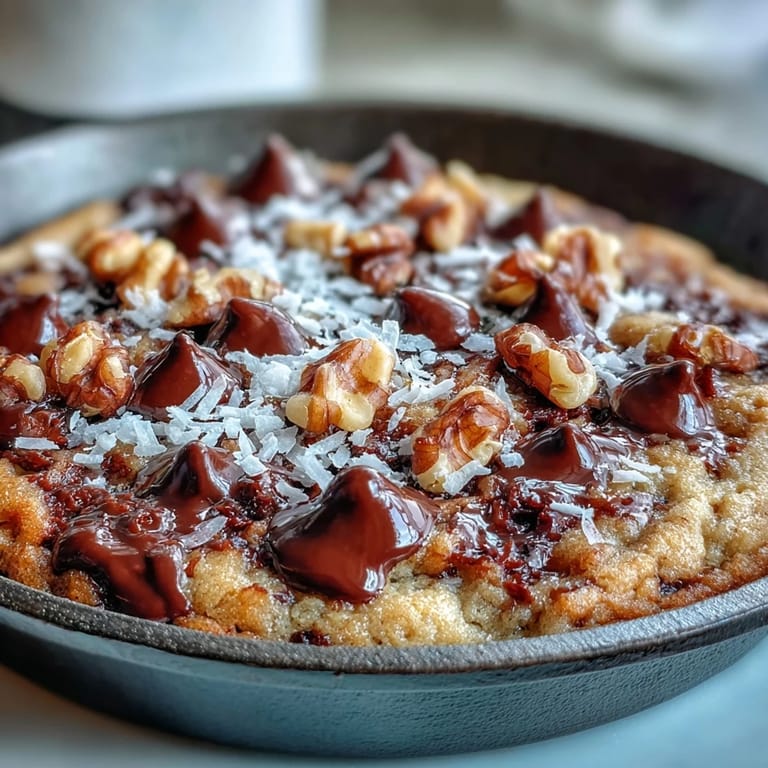
 There's something about the smell of bananas and chocolate baking together that stops me mid-afternoon. My neighbor knocked on the door once because she thought I was making banana bread, but when I told her it was a skillet cookie, she invited herself in without hesitation. That's the magic of this one—it feels indulgent enough for dessert but casual enough to share straight from the pan with whoever happens to be around.
I made this for my book club last month, and everyone stopped talking mid-sentence when it came out of the oven. One friend went back for thirds and admitted she'd been stress-eating it while pretending to reorganize her life around the dessert table. That's when I knew it was the kind of recipe worth making again and again.
Ingredients
- Old-fashioned rolled oats (1 1/2 cups): These hold their texture and give you that wholesome chewiness—don't swap them for instant oats or you'll end up with mushiness instead of substance.
- All-purpose flour (1 cup): This is your structural backbone, keeping everything bound without making it dense.
- Baking soda (1/2 teaspoon): A small amount reacts with the banana's acidity to help the cookie rise just enough.
- Salt (1/2 teaspoon): It's not about making things salty; it's about making everything else taste more like itself.
- Ground cinnamon (1/2 teaspoon): This quietly deepens the banana flavor and makes the whole thing feel intentional.
- Unsalted butter, melted (1/2 cup): Melting it first means it distributes evenly and you skip the lumpy-dough situation.
- Light brown sugar (1/2 cup, packed): The molasses in brown sugar adds moisture and a subtle depth that granulated sugar can't touch.
- Granulated sugar (1/4 cup): This keeps things from being too heavy while the brown sugar carries the flavor load.
- Egg (1 large): This binds everything and helps create that tender crumb—room temperature eggs mix in smoother than cold ones.
- Vanilla extract (2 teaspoons): Use real vanilla if you can; it makes a noticeable difference in how the whole dessert comes together.
- Ripe bananas, mashed (2 medium, about 1 cup): They need to be genuinely ripe with brown spots so you get that deep sweetness and creamy texture.
- Semisweet chocolate chips (1/2 cup): These provide pockets of richness without overwhelming the banana and oat flavors.
- Chopped walnuts (1/2 cup): They add a subtle bitterness that balances the sweetness and give you something to bite into.
- Unsweetened shredded coconut (1/4 cup, optional): If you use it, you get an unexpected tropical note that makes people ask what's in here.
Tired of Takeout? 🥡
Get 10 meals you can make faster than delivery arrives. Seriously.
One email. No spam. Unsubscribe anytime.
Instructions
- Get your oven ready and prep the skillet:
- Heat your oven to 350°F and rub your cast-iron skillet with a little butter or nonstick spray—you want it ready to go. Cold cast iron is forgiving, so don't stress about getting a perfect coat.
- Combine your dry ingredients:
- Whisk together the oats, flour, baking soda, salt, and cinnamon in a large bowl, making sure the baking soda and cinnamon are evenly distributed. This is where the magic starts, even though it looks like nothing special yet.
- Build the wet mixture:
- In another bowl, whisk the melted butter with both sugars until it looks smooth and combined. The mixture should feel silky and look like wet sand.
- Bring the wet ingredients together:
- Crack your egg into the butter mixture and whisk it in, then add the vanilla extract and give it a good stir. The batter will start to come together and smell absolutely incredible.
- Add the bananas:
- Stir in your mashed bananas until you don't see streaks anymore—this is what gives the cookie its moisture and natural sweetness. If your bananas are stringy, break them up with a fork before adding them.
- Combine wet and dry:
- Pour the wet mixture into the dry ingredients and fold everything together gently with a spatula until just combined. You're looking for no visible flour streaks, not a perfectly smooth batter—overmixing makes things tough.
- Fold in the good stuff:
- Add the chocolate chips, walnuts, and coconut if using, folding them in with a light hand so you don't crush anything. The texture should feel studded and interesting.
- Transfer to the skillet:
- Spread the dough evenly into your prepared skillet, using a spatula to level it out. This step determines whether you get an even bake, so take a quiet moment to get it right.
- Bake until golden:
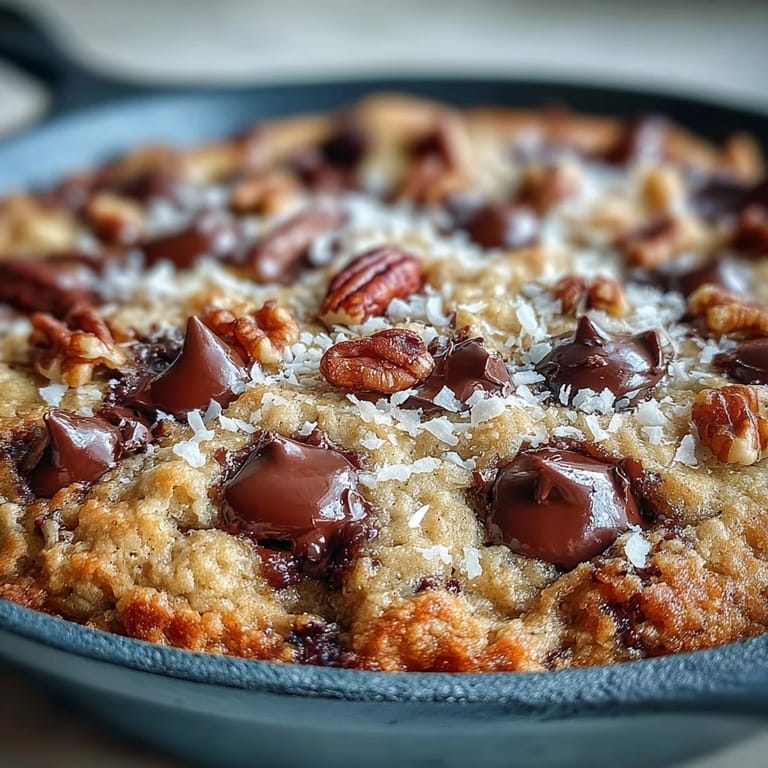
- Slide it into the oven for 20 to 24 minutes—you're looking for a golden top and set edges while the very center should still look just slightly underdone. The residual heat will continue cooking it as it cools.
- Rest before serving:
- Let it sit in the skillet for about 10 minutes so it can set up without becoming dense. This is also your chance to turn on the kettle or grab ice cream if that's your move.
 Pin It
 There was a quiet moment when my daughter first tasted this warm from the skillet, and she literally closed her eyes. She said it tasted like banana bread and a cookie had somehow decided to be friends, and honestly, that's exactly what it is. Those small moments of recognition around food are why I keep making things like this.
Why Cast Iron Is Your Best Friend Here
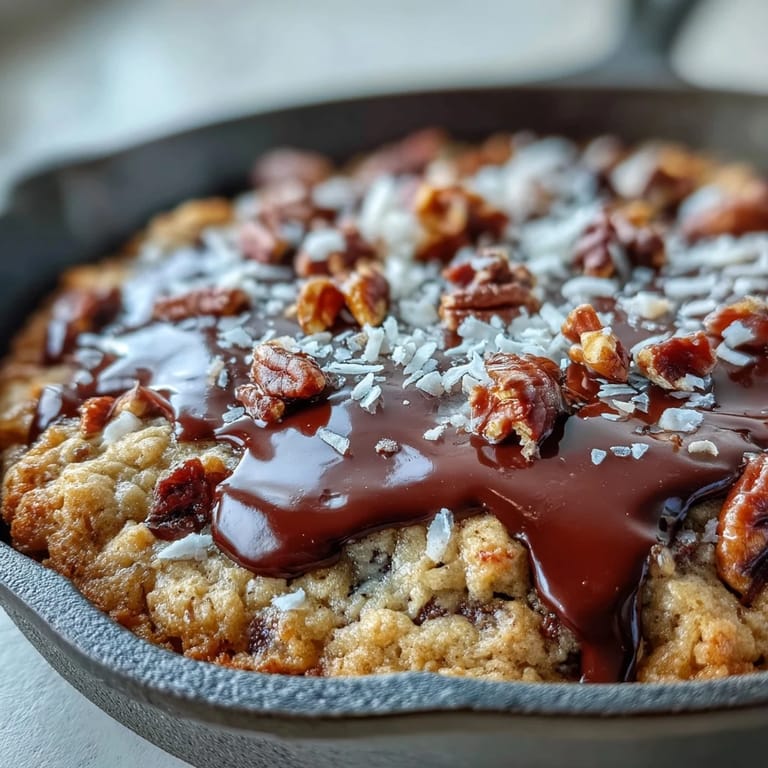
Cast iron holds heat like nothing else, which means your skillet cookie bakes more evenly and gets those slightly crispy edges while the center stays tender. Plus, serving straight from the skillet feels special in a way that transferring to a plate just doesn't. If you don't have cast iron, a 9 or 10-inch round cake pan works fine—just add a couple extra minutes to the baking time since it won't hold heat quite as aggressively.
When to Serve It Warm Versus at Room Temperature
Warm, this is gooey and almost pudding-like in the center—perfect for ice cream or eaten straight with a spoon. Let it cool to room temperature and it firms up while staying tender, making it easier to slice if you need to. Leftovers actually taste better the next day after the flavors have settled into each other, though honestly there usually aren't any leftovers to test this theory.
Customizing It to Your Taste
This recipe is honestly just a starting point—I've made it with peanut butter chips instead of chocolate, with sunflower seeds in place of walnuts, and even with a sprinkle of sea salt on top that one time someone challenged me to. The banana and oat base is sturdy enough that it adapts well to whatever mix-ins sound good at the moment.
- Peanut butter chips create a whole different vibe that makes this feel more like a peanut butter cookie than a banana one.
- If nuts aren't in your house or your life, sunflower seeds or pumpkin seeds give you that same texture and slight bitterness.
- A tiny pinch of sea salt sprinkled on top right after it comes out of the oven adds a sophisticated edge that surprises people.
 Pin It
 This skillet cookie exists in that perfect space between homemade and shareable, between indulgent and actually reasonable. Make it when you need something warm and honest that doesn't require a lot of fuss.
Recipe FAQs
- → Can I make this nut-free?
Yes, simply omit the walnuts or substitute them with sunflower seeds for a nut-free version that still maintains crunch and texture.
- → How should I store leftovers?
Store covered at room temperature for up to 2 days. Gently reheat in the skillet at 300°F for 10 minutes to restore the warm, gooey texture.
- → Can I use quick oats instead of old-fashioned?
Old-fashioned rolled oats work best as they provide better texture. Quick oats may make the final result softer and less hearty.
- → Is the center supposed to be slightly soft?
Yes, the center should remain a bit soft when removed from the oven. It continues cooking as it cools, resulting in perfectly tender portions.
- → What size skillet do I need?
A 10-inch cast-iron skillet is ideal. If using a different size, adjust baking time accordingly—smaller skillets need more time, larger ones need less.