 Pin It
 Last Tuesday, I was standing in my kitchen at 6 AM, staring at a container of cottage cheese that seemed destined for toast, when it hit me: what if I built something more interesting around it? Within an hour, I'd mixed up a bagel dough spiked with garlic and herbs, boiled them, and watched my partner's face light up when she bit into one—that perfect chew, that garlic warmth, that creamy spread. This recipe was born from that morning experiment, and it's become my secret weapon for impressing people without much fuss.
I made these for a Sunday brunch once, and my sister—who's usually a cereal person—asked for the recipe before she even finished her first one. She said it felt like eating something from a real bagel shop, but better because it was warm and the spread was still soft. That's when I knew this wasn't just a protein hack; it was something people genuinely wanted to eat.
Ingredients
- Bread flour: The base of everything; it develops gluten for that chewy bagel texture you're after.
- Unflavored whey protein powder: This is your protein boost without added flavors getting in the way—I learned the hard way that vanilla protein makes these taste like gym class.
- Instant yeast: Make sure it's fresh and stored in the fridge; old yeast means dense, sad bagels.
- Dried mixed herbs: A blend of oregano, basil, and parsley gives you that complex savory note without having to chop fresh stuff at dawn.
- Garlic powder: Two teaspoons might sound bold, but it mellows during baking and becomes just the right amount of savory.
- Warm water: 110°F is crucial—too hot and you'll kill the yeast, too cool and nothing rises properly.
- Olive oil: Just a tablespoon keeps the dough tender without making it greasy.
- Honey or sugar for boiling: This creates that slightly shiny, chewy exterior that makes a real bagel a real bagel.
- Baking soda: It raises the pH of the boiling water, which deepens the crust color and texture.
- Cottage cheese: Choose one that's not too watery; drain it slightly if needed for a thicker spread.
- Fresh chives and parsley: These brighten the spread and keep it from tasting one-dimensional.
- Lemon zest: Just a hint, but it wakes everything up and makes people ask what that something special is.
Tired of Takeout? 🥡
Get 10 meals you can make faster than delivery arrives. Seriously.
One email. No spam. Unsubscribe anytime.
Instructions
- Gather and Combine Your Dry Ingredients:
- In a large bowl, whisk together bread flour, protein powder, yeast, sugar, salt, dried herbs, and garlic powder. This step ensures the yeast is evenly distributed so your bagels rise consistently.
- Add the Wet Ingredients:
- Pour in the warm water and olive oil, then mix with your hands or a wooden spoon until everything comes together into a shaggy, slightly wet dough. Don't worry if it looks rough—that's exactly what you want.
- Knead Until Smooth:
- Turn the dough onto a floured surface and knead for about 8 minutes, using the heel of your hand to push it away, then fold it back over itself. You'll feel it shift from sticky to smooth and elastic, almost like it's becoming alive in your hands.
- Let It Rise:
- Place the dough in a lightly oiled bowl, cover it with a damp cloth, and set it in a warm spot for 30 to 40 minutes. It should roughly double in size; if your kitchen is cold, turn on the oven for a minute, then turn it off and use that warmth.
- Preheat and Shape:
- Heat your oven to 425°F and line a baking tray with parchment paper. Punch down the dough to release the air, then divide it into 6 equal pieces by eye—they don't have to be perfect.
- Form the Bagels:
- Roll each piece into a tight ball, then poke a hole through the center with your thumb and gently stretch it until you have a ring about 3 inches across. The hole should be roughly the size of a quarter once it's done rising.
- Prepare the Boiling Water:
- Bring 2 quarts of water to a gentle boil in a large saucepan, then add honey and baking soda—you'll see it foam slightly, which is normal. The water should stay at a rolling boil but not aggressively so.
- Boil the Bagels:
- Working with one or two bagels at a time, gently place them in the water and let them sink. After 45 seconds, flip them and boil the other side for another 45 seconds, then use a slotted spoon to transfer them to your prepared baking sheet.
- Bake Until Golden:
- Bake for 18 to 20 minutes, until the bagels are a deep golden brown and feel firm when you tap them. You'll know they're done when your kitchen smells like a proper bagel shop.
- Make the Spread:
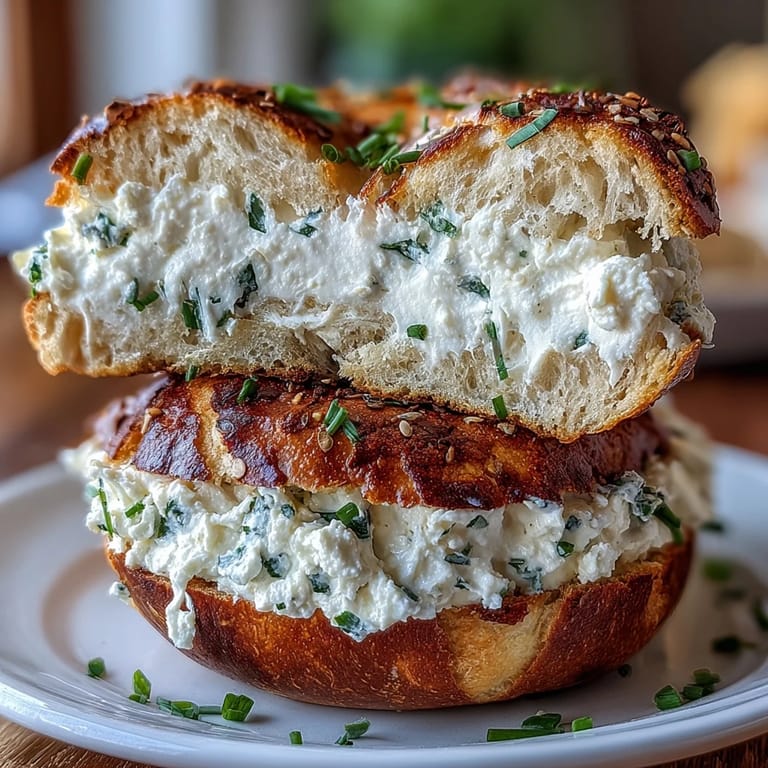
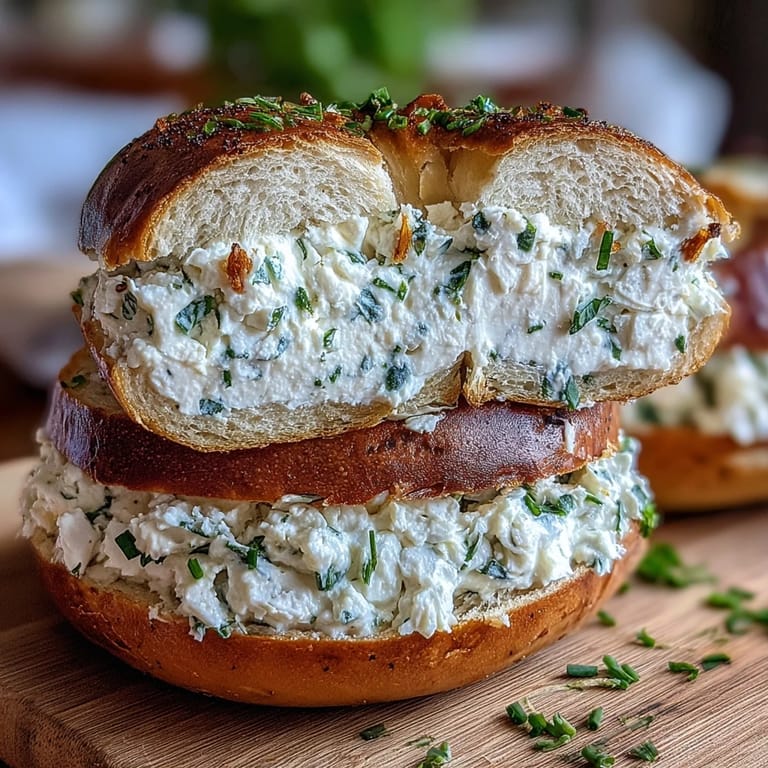
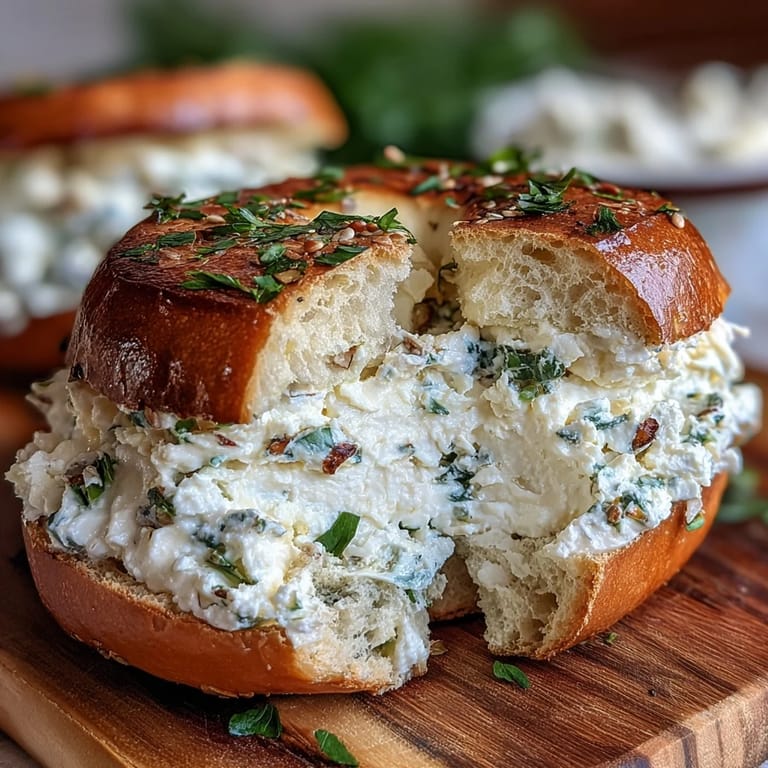
- While the bagels cool, combine cottage cheese, chives, parsley, minced garlic, lemon zest, salt, and pepper in a bowl. Stir until everything is distributed evenly; if you prefer it smoother, blend it briefly or mash it with a fork.
- Serve and Enjoy:
- Once the bagels have cooled enough to handle, slice them horizontally and spread a generous layer of the cottage cheese mixture on each half. Eat them right away while they're still a bit warm.
 Pin It
 There's something almost meditative about shaping bagels—rolling each piece of dough into a ball, then creating that perfect hole, knowing that in less than an hour they'll be completely transformed. My kids actually volunteered to help with this step, which tells you something about how satisfying the process feels.
When and How to Serve These
These bagels are at their absolute best eaten within a few hours of baking, when they still have that just-made chew. I've found they're perfect for breakfast, brunch, a quick lunch, or even a mid-afternoon snack with coffee—they're that versatile. They also reheat beautifully if you slice and toast them the next day, though they lose some of that tender quality.
Storage and Make-Ahead Options
If you want to get ahead, you can shape the bagels, freeze them on a tray, and then boil and bake them straight from frozen—just add a minute or two to the boiling time. The dough also freezes well before rising, so you could mix it up on a Sunday evening and bake fresh bagels on a quiet Tuesday morning. I've even made the cottage cheese spread the night before, which saves time and lets the flavors meld.
Why the Protein Powder Actually Works
When I first tried adding protein powder to bagel dough, I was skeptical—I thought it would either make them taste artificial or ruin the texture entirely. But unflavored whey protein is surprisingly neutral; it adds structure and moisture while staying completely invisible. The magic is in using the right ratio so the flour still does the heavy lifting; too much protein powder and your bagels turn dense and rubbery. Start with this recipe and trust it—the math is already done for you.
- If you ever want to experiment, try adding a handful of everything bagel seasoning mix right before the final rise for a flavor variation.
- The cottage cheese spread is customizable too; I've added everything from smoked salmon to sliced radish depending on what I had and the mood.
- Keep some of these in the freezer and you'll never have a morning without a quality breakfast option.
 Pin It
 These bagels have a way of making an ordinary morning feel intentional, like you're taking a small moment to care for yourself and the people you're feeding. That's worth the minimal effort.
Recipe FAQs
- → How do I achieve the perfect chewy texture?
Boiling the dough briefly before baking helps develop the classic bagel chewiness by setting the crust and sealing moisture inside.
- → Can I substitute the whey protein powder?
Yes, you can use other unflavored protein powders but ensure they won't alter dough consistency significantly.
- → What herbs work best in the dough?
Dried oregano, basil, and parsley combine well to provide balanced herbal aroma without overpowering the garlic.
- → How should the cottage cheese spread be prepared?
Mix cottage cheese with fresh chives, parsley, minced garlic, lemon zest, salt, and pepper until smooth for a creamy complement to the bagels.
- → Is there a way to add extra crunch to the bagels?
Sprinkling sunflower or pumpkin seeds on top before baking adds a pleasant crunch and visual appeal.