 Pin It
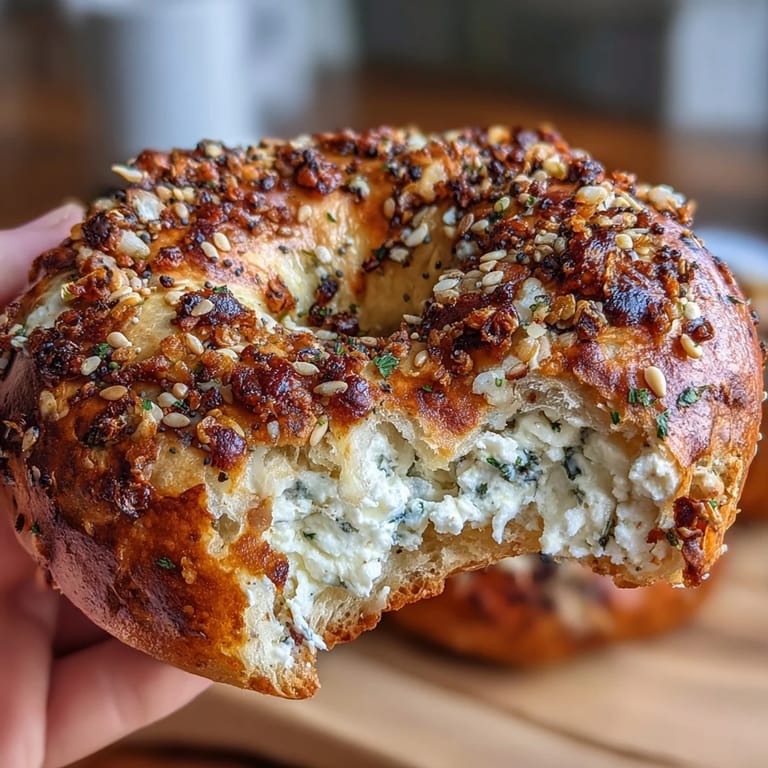
 One Tuesday morning, I was standing in my kitchen staring at a container of Greek yogurt, wondering why I kept buying it only to let it sit untouched. That's when it hit me—what if I stopped chasing complicated bagel recipes with yeast and boiling water, and just leaned into what I already had on hand? Twenty minutes later, I pulled golden, chewy bagels from the oven, and suddenly that forgotten yogurt became my secret weapon. No special equipment, no waiting around, just real bagels that actually tasted like they belonged on a breakfast table.
I made these for a friend who'd just started a new workout routine and kept complaining about finding quick, protein-rich breakfasts. Watching her eyes light up when she bit into one of these still-warm bagels, then immediately asking for the recipe, felt like I'd solved something she didn't even know she needed solved. She's made them at least twice a week since then.
Ingredients
- Plain Greek yogurt (non-fat or 2%), 1 cup: This is the backbone of your dough—it brings moisture, tanginess, and serious protein without needing any yeast activation.
- All-purpose flour, 1 cup plus extra for dusting: Keep some nearby because the dough's wetness can shift depending on your yogurt brand and humidity in the room.
- Baking powder, 2 tsp: This is your leavening agent, doing all the work yeast would normally do but in a fraction of the time.
- Fine sea salt, 1/2 tsp: Don't skip this—it brightens the yogurt's tanginess and makes the bagel taste intentional rather than flat.
- Egg, 1 beaten: The egg wash is what gives you that golden, slightly glossy finish that makes these look bakery-quality.
- Everything bagel seasoning, 2 tbsp: Use the good stuff or make your own blend—this seasoning is where all the personality lives.
Tired of Takeout? 🥡
Get 10 meals you can make faster than delivery arrives. Seriously.
One email. No spam. Unsubscribe anytime.
Instructions
- Heat your oven and prep your workspace:
- Set the oven to 375°F and line your baking sheet with parchment paper so your bagels won't stick and will have a clean slide into the oven.
- Mix your dry ingredients together:
- Whisk the flour, baking powder, and salt in a large bowl—this ensures the baking powder gets distributed evenly so you don't get dense pockets in your bagels.
- Bring the dough together:
- Add the Greek yogurt to the dry mixture and stir with a spoon or spatula until everything comes together into a shaggy dough that's just barely holding itself together. You're not looking for a smooth, elastic dough like you'd get with yeast—this is supposed to feel a bit rough.
- Knead gently on a floured surface:
- Turn the dough out onto a floured counter and knead for just 1 to 2 minutes until it smooths out slightly and feels cohesive. If it's too sticky to work with, dust with just a tiny bit more flour—resist the urge to add too much or your bagels will be dense.
- Shape your bagels:
- Divide the dough into 4 equal pieces and roll each one into a rope about 8 inches long, then pinch the two ends together firmly to seal your bagel shape. The seal is important—don't just loop it loosely or it'll flatten out in the oven.
- Prepare for the oven:
- Place your shaped bagels on the prepared baking sheet and brush each one generously with the beaten egg, making sure you get into all the ridges and folds.
- Add the seasoning:
- Sprinkle the everything bagel seasoning on top of each bagel right after the egg wash while it's still slightly wet—this helps the seasoning stick instead of sliding off.
- Bake until golden:
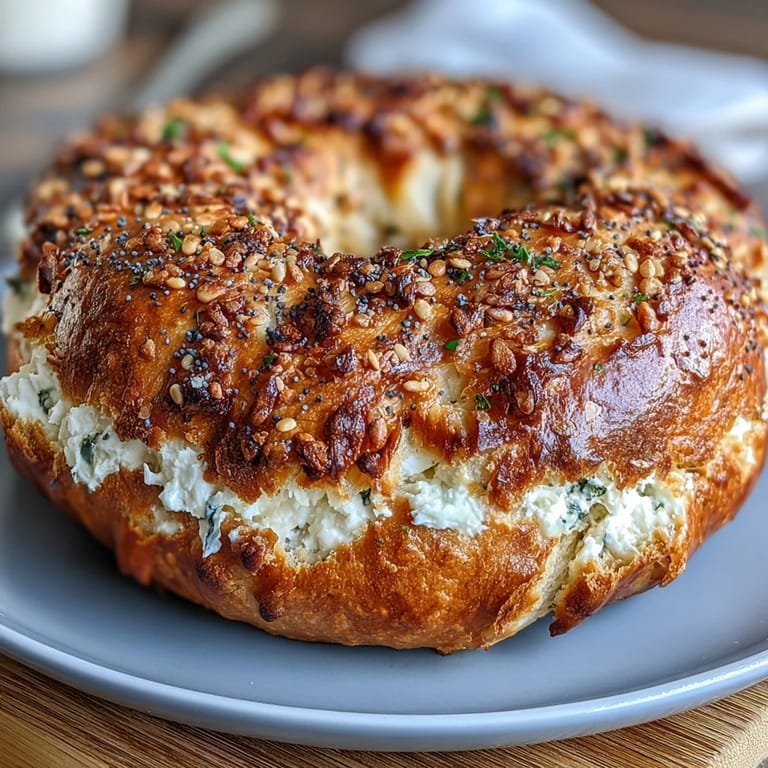
- Slide them into the oven for 22 to 25 minutes until they're golden brown on top and feel set when you gently tap them. A bagel that looks pale is undercooked—wait for that real golden color.
 Pin It
 There's something unexpectedly satisfying about pulling a batch of bagels from the oven that taste like they came from a real bakery, especially when you made them in less time than it takes to drive to one. My kitchen smelled incredible for the rest of the morning, and more importantly, I finally had a good reason to buy that Greek yogurt again.
Customizing Your Bagels
Once you master the basic dough, this recipe becomes your playground. I've folded in everything from shredded cheddar to grated Parmesan, and each version has its own personality. The key is not to add more than a couple tablespoons of anything extra, since you're working with such a small volume of dough and you don't want to throw off the texture.
Making These Gluten-Free
If you're cooking for someone who can't have gluten, swap in a 1:1 gluten-free baking flour blend and watch the dough closely—it might need slightly less liquid or slightly more flour depending on your blend. The rest of the process stays exactly the same, and honestly, most people can't tell the difference once the everything seasoning kicks in.
Serving and Storage Ideas
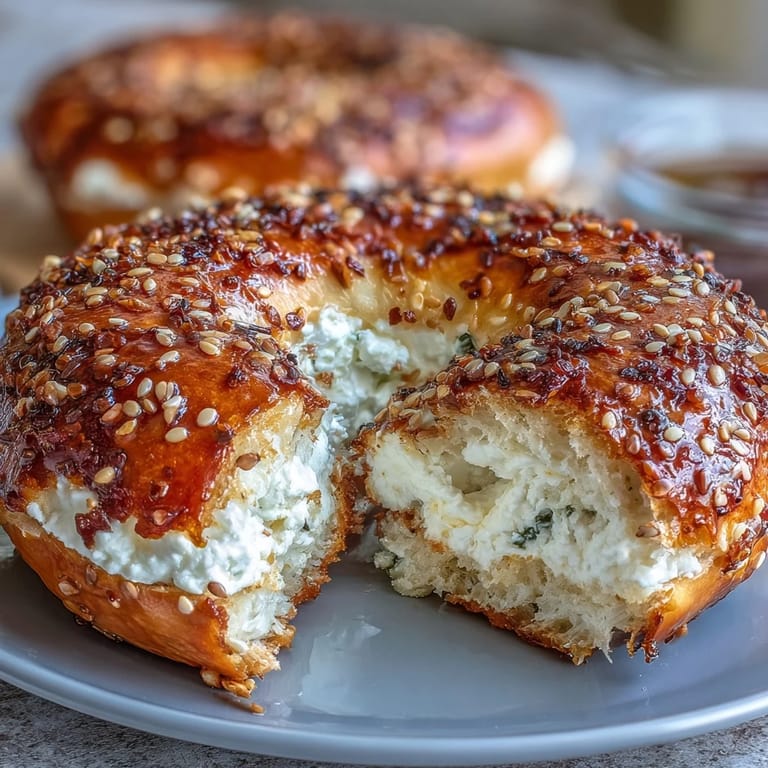
These bagels are best eaten within a few hours of baking while they still have that soft, chewy texture, but they'll keep in an airtight container for a day or two. Toasted with cream cheese and smoked salmon, topped with avocado, or even just with a spread of butter and jam—they're versatile enough for whatever you're hungry for.
- Slice and toast the next morning for a quick protein-packed breakfast that reheats beautifully.
- Build breakfast sandwiches with scrambled eggs, cheese, and bacon for meal prep that actually tastes good.
- Freeze extras in an airtight container for up to two weeks and toast straight from frozen when you need them.
 Pin It
 These bagels prove that the best recipes aren't always the ones with the longest ingredient lists or the most elaborate techniques. Sometimes they're the ones that actually fit into your real life and taste like something worth making again.
Recipe FAQs
- → Can I make these bagels gluten-free?
Yes, you can substitute all-purpose flour with a 1:1 gluten-free baking flour blend for a gluten-free version.
- → Why is Greek yogurt used in the dough?
Greek yogurt adds protein and moisture, resulting in a soft, chewy texture while reducing the need for yeast.
- → Do I need to boil the bagels before baking?
No boiling is required. The baking powder in the dough helps create a soft texture without the boiling step.
- → Can I add cheese to the bagels?
Yes, folding in grated Parmesan or cheddar cheese before shaping adds extra flavor and richness.
- → What is everything seasoning?
Everything seasoning is a blend of sesame seeds, poppy seeds, dried garlic, dried onion, and coarse salt, adding savory crunch to the bagels.
- → How should I store leftover bagels?
Store cooled bagels in an airtight container at room temperature for up to two days or freeze for longer storage.