 Pin It
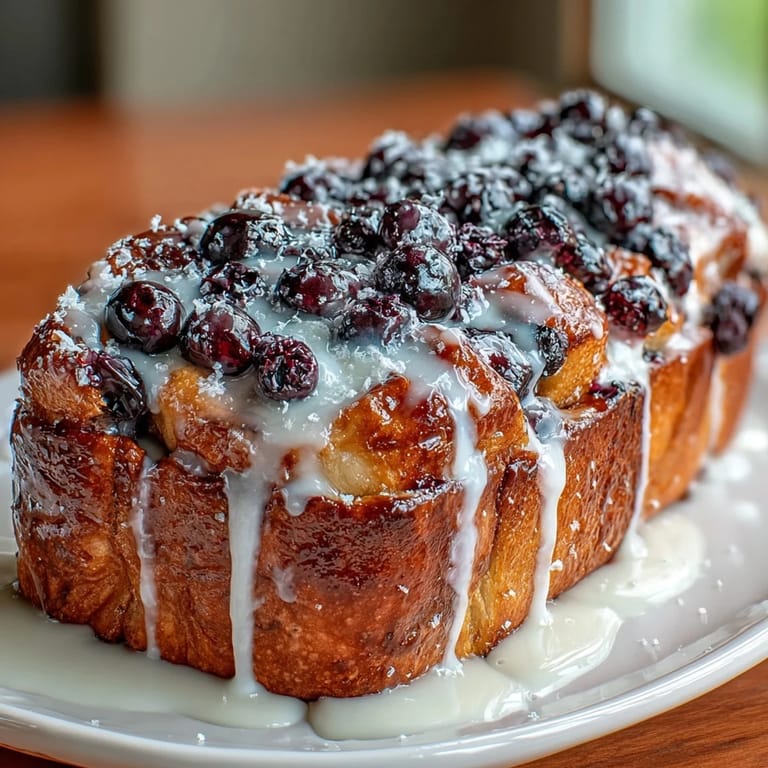
 There's something about pulling apart warm, pillowy bread at the breakfast table that makes everyone slow down and actually talk to each other. My neighbor brought this lemon blueberry sourdough to a Sunday gathering, and I watched three separate people ask for the recipe within an hour—that's when I knew I had to master it myself. The tanginess from the sourdough starter plays beautifully against the bright lemon and sweet burst of blueberries, creating this unexpectedly sophisticated breakfast that feels casual enough for a weekday but special enough for guests.
I made this the morning my sister visited unexpectedly, and I realized halfway through mixing that I had no fresh blueberries on hand. Panic set in for about thirty seconds until I remembered the frozen ones in my freezer, and they worked perfectly—maybe even better, since they didn't bleed their juice everywhere. Watching her eyes light up when she pulled apart a warm piece and found those little bursts of fruit inside made me understand why my neighbor was so protective of this recipe.
Ingredients
- All-purpose flour (2 1/2 cups): This is your structural backbone—measure by weight if you have a scale, as it's more forgiving than scooping and leveling.
- Active sourdough starter (1/2 cup, fed and bubbly): Use your starter at its peak, when it's risen fully and has that pleasant yeasty smell, not when it's just been fed.
- Granulated sugar (1/4 cup for dough): This feeds the yeast and adds subtle sweetness without overwhelming the tangy sourdough flavor.
- Whole milk (1/2 cup, lukewarm): Warm milk helps activate the starter and makes the dough richer and more tender than water alone.
- Large eggs (2, room temperature): Room temperature eggs incorporate more smoothly and create a better crumb structure than cold ones.
- Unsalted butter (1/4 cup softened, plus 2 tablespoons melted): The softened butter enriches the dough while the melted version is your adhesive for the filling layer.
- Sugar and lemon zest filling (1/2 cup sugar mixed with 2 tablespoons zest): Grating fresh zest right before mixing ensures maximum citrus oils and aroma—bottled zest just doesn't compare.
- Fresh blueberries (1 cup): Use the freshest ones you can find, or frozen without thawing if fresh aren't available—they'll hold their shape better.
- Powdered sugar and lemon juice for glaze (1 cup powdered sugar with 2 to 3 tablespoons juice): The glaze should drip slightly when you drizzle it—if it's too thick, add more juice drop by drop.
Tired of Takeout? 🥡
Get 10 meals you can make faster than delivery arrives. Seriously.
One email. No spam. Unsubscribe anytime.
Instructions
- Mix Your Dough Base:
- In a large bowl, combine the flour, sugar, and salt with a few whisks. In another bowl, whisk your fed sourdough starter with the lukewarm milk and room temperature eggs until smooth, then pour this wet mixture into the dry ingredients and stir until shaggy. This is where patience matters—let the flour fully absorb the liquid before you get aggressive with the mixing.
- Incorporate the Butter:
- Add your softened butter and knead by hand or with a stand mixer for 7 to 10 minutes until the dough becomes smooth, elastic, and slightly tacky but not sticky. You'll feel the transformation happen—at first it seems impossible that the butter will work in, then suddenly it does, and the dough becomes silky under your hands.
- Begin the First Rise:
- Cover the dough with plastic wrap or a damp towel and let it rest at room temperature for 6 to 8 hours, or overnight, until it's roughly doubled in size. The exact timing depends on how warm your kitchen is, so don't stress if it takes longer—sourdough moves at its own pace.
- Prepare Your Filling Components:
- While the dough rises, mix your granulated sugar and lemon zest in a small bowl and let it sit for a bit so the oils from the zest hydrate the sugar—this step makes the filling taste fresher and more fragrant.
- Shape the Dough Into a Rectangle:
- Once your dough has risen, turn it out onto a lightly floured surface and gently roll it into a 12 by 18 inch rectangle, about 1/4 inch thick. Don't worry if it's not perfectly measured—rustic is better than stressed.
- Layer Your Filling:
- Brush the entire surface with melted butter, then sprinkle the lemon sugar mixture evenly across, followed by scattering your fresh or frozen blueberries on top. Work quickly so the butter doesn't set, and distribute the berries so you'll get some in almost every pull-apart piece.
- Cut and Stack the Dough:
- Cut the rectangle into six vertical strips (each about 3 inches wide), then stack these strips on top of each other and cut the stack into six even squares. Arrange these squares standing upright and cut side up in a greased 9 by 5 inch loaf pan—they should fit snugly so they hold each other up.
- Allow the Second Rise:
- Cover the pan with plastic wrap or a clean towel and let the bread rise at room temperature for 1 to 2 hours until the pieces look puffy and have risen above the rim of the pan. You'll see the blueberries peeking through between the layers, which is exactly what you want.
- Bake Until Golden:
- Preheat your oven to 350°F (175°C) and bake for 35 to 40 minutes, watching for a deep golden brown color and a toothpick inserted into the center that comes out clean. If the top browns too quickly, lay a loose piece of foil over it for the last 10 minutes to prevent burning.
- Cool, Glaze, and Serve:
- Let the bread cool in the pan for about 15 minutes so it sets just enough to turn out cleanly, then transfer to a wire rack. While it's still warm, whisk your powdered sugar with 2 to 3 tablespoons of fresh lemon juice until you have a drizzly consistency, then generously drizzle it over the bread and serve warm.
 Pin It
 The moment my daughter came home from school, noticed the bread cooling on the rack, and asked if she could help with the glaze, I understood why people become obsessed with recipes like this. It wasn't just about the taste—it was about having something warm and homemade to share, something that made the kitchen feel like the heart of the home instead of just a place to cook.
Why Sourdough Starter Makes All the Difference
Using sourdough starter instead of commercial yeast changes everything about this bread—it develops more complex flavor, creates better texture, and gives you that distinctive tang that makes people stop mid-bite and ask what that flavor is. The starter also ferments the dough slowly, which develops the gluten network naturally so you don't need as much kneading. If you don't have an active starter yet, now is the time to begin one, because the depth it adds is absolutely worth the planning.
The Architecture of a Pull-Apart Loaf
The genius of stacking and cutting the dough into squares is that it creates natural separation lines while keeping everything connected at the bottom, so each piece comes apart cleanly but the whole loaf stays beautiful. This method also ensures the filling gets distributed more evenly than if you rolled it like a cinnamon roll, and it gives the cut edges maximum surface area to caramelize and turn golden. I learned this the hard way after my first attempt at a spiral-rolled version, which looked chaotic and lost filling everywhere—the stacking method is superior and honestly more impressive-looking.
Seasonal Variations and Storage Wisdom
While this bread is perfect as written, I've experimented with adding sliced almonds for crunch, a handful of poppy seeds for visual interest, or even a hint of cardamom to complement the lemon. The dough stays fresh for a couple of days wrapped at room temperature, or you can freeze the completely cooled bread for up to a month and refresh it in a low oven before serving. Reheating it for just ten minutes at 300°F brings back that soft, warm-from-the-oven quality that makes it taste like you just baked it.
- Frozen blueberries work just as well as fresh and sometimes even better for structural integrity.
- If you're using store-bought frozen berries, give them a quick rinse under cold water and dry them thoroughly so excess ice doesn't water down your dough.
- Serve this bread warm whenever possible, because the butter and glaze taste their best when they still have a little warmth to carry the flavors.
 Pin It
 This bread has a way of bringing people together in the morning, which is honestly the highest compliment a recipe can receive. Make it, share it, watch someone's face light up when they bite into it, and then keep making it.
Recipe FAQs
- → What type of flour works best for this bread?
All-purpose flour is ideal for balancing structure and tenderness in the dough, supporting the sourdough starter’s rise.
- → Can frozen blueberries be used in place of fresh ones?
Yes, frozen blueberries can be incorporated without thawing to maintain texture and prevent excess moisture.
- → How long should the dough rise before baking?
The first rise should last 6–8 hours or overnight until doubled, followed by a second rise of 1–2 hours after shaping.
- → What is the purpose of the lemon glaze?
The glaze adds a bright, citrusy sweetness that complements the tangy sourdough and fresh blueberries.
- → Can this loaf be prepared ahead of time?
Yes, the dough can be mixed and set to rise overnight; after baking, leftovers keep well and can be reheated gently.