 Pin It
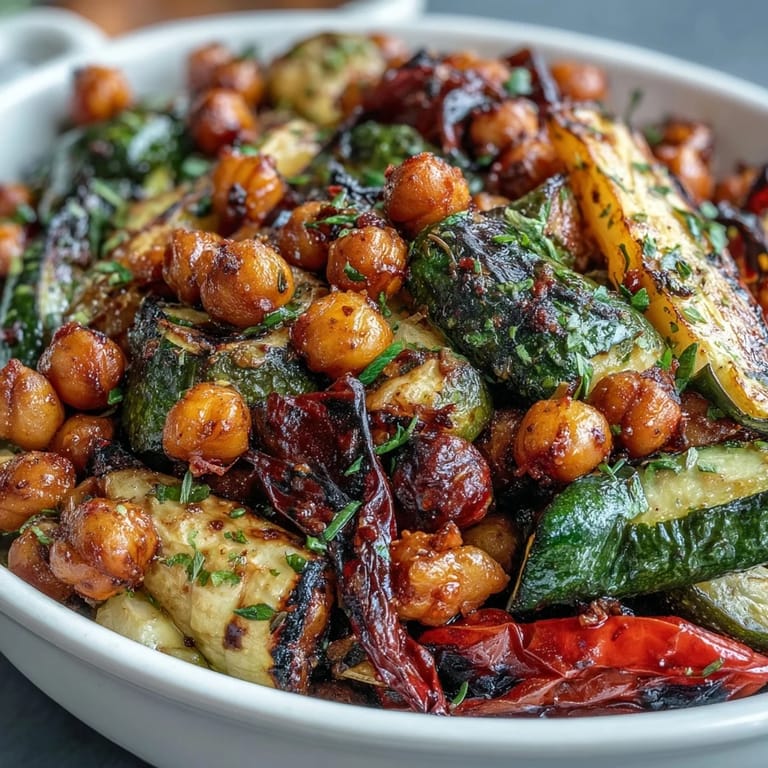
 There's something about the sizzle of vegetables hitting a hot pan that makes me pause whatever else I'm doing in the kitchen. One Tuesday evening, I was standing in front of my open fridge with absolutely no idea what to make for dinner, staring at a random assortment of bell peppers, a zucchini, and a can of chickpeas that had been sitting there longer than I'd like to admit. I threw it all together with lemon and garlic on a whim, roasted it, and somehow ended up with something so bright and satisfying that my partner asked for the recipe before we'd even finished eating.
I made this for a potluck once where everyone was bringing something heavy and rich, and mine showed up in a ceramic bowl still warm from the oven. The colors alone got compliments before anyone tasted it, but what surprised me was how many people came back asking if there was any left, even the ones who said they were too full. It's become my go-to when I want to bring something that feels homemade but isn't pretentious about it.
Ingredients
- Zucchini: Cut into pieces that are uniform enough to roast evenly, about half an inch—too thin and they'll disappear into nothing, too thick and they'll stay stubbornly raw in the middle.
- Red and yellow bell peppers: The colors matter here not just for looks but because they add different notes of sweetness when roasted.
- Red onion: Cut into wedges rather than small pieces so they stay intact and develop those caramelized edges.
- Cherry tomatoes: Halved, they burst slightly in the heat and release their juice to dress everything else.
- Chickpeas: Drain and rinse them thoroughly—this prevents them from tasting tinny or cloudy.
- Garlic: Mince it fine so it distributes through the oil and creates little flavor pockets throughout the vegetables.
- Extra-virgin olive oil: This is your dressing base, so use something you actually enjoy tasting.
- Lemon: Both zest and juice matter—the zest adds brightness while the juice ties everything together with acidity.
- Dried oregano and thyme: These are Mediterranean anchors that make the dish feel intentional rather than random.
- Sea salt and black pepper: Taste as you go because the chickpeas already have their own salt level.
- Fresh parsley: Optional, but a small handful scattered on top just before serving makes it feel finished.
Tired of Takeout? 🥡
Get 10 meals you can make faster than delivery arrives. Seriously.
One email. No spam. Unsubscribe anytime.
Instructions
- Get your oven ready:
- Preheat to 425°F and line a baking sheet with parchment paper so you don't have to scrub later.
- Combine your vegetables and chickpeas:
- In a large bowl, gather all your chopped vegetables and drained chickpeas together—this is where you can see what you're working with and make sure nothing's hiding in a corner.
- Make your dressing:
- Whisk together the olive oil, minced garlic, lemon zest, lemon juice, oregano, thyme, salt, and pepper in a small bowl until it looks emulsified and smells like a Mediterranean afternoon.
- Coat everything evenly:
- Pour the dressing over the vegetables and chickpeas, then toss with your hands or two spoons until every piece glistens and the herbs are distributed. This takes longer than you think but it's worth it.
- Spread and roast:
- Arrange everything in a single layer on your prepared baking sheet—crowding the pan makes them steam rather than roast. Slide it into the oven for 25 to 30 minutes, stirring halfway through.
- Watch for the magic:
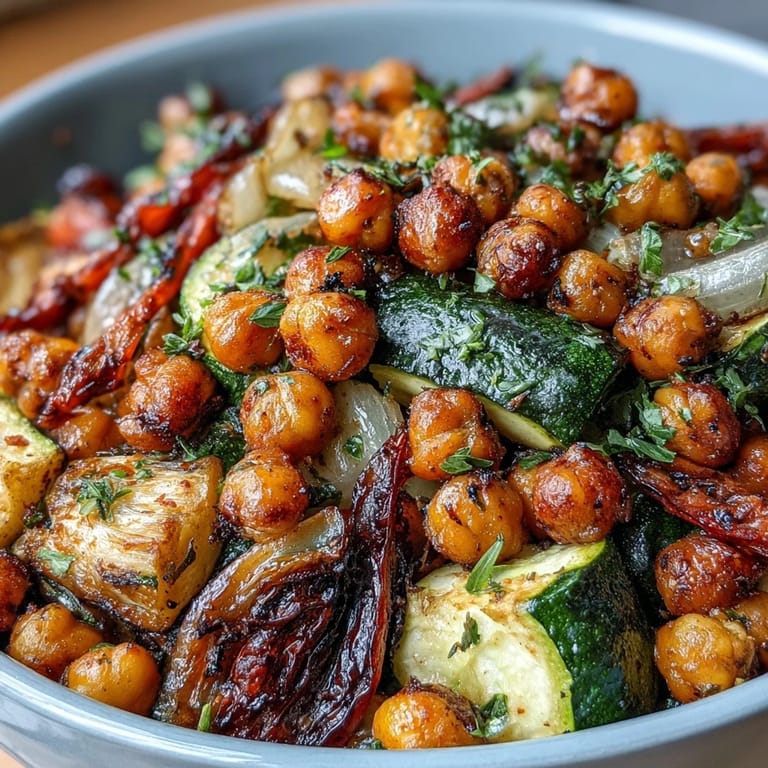
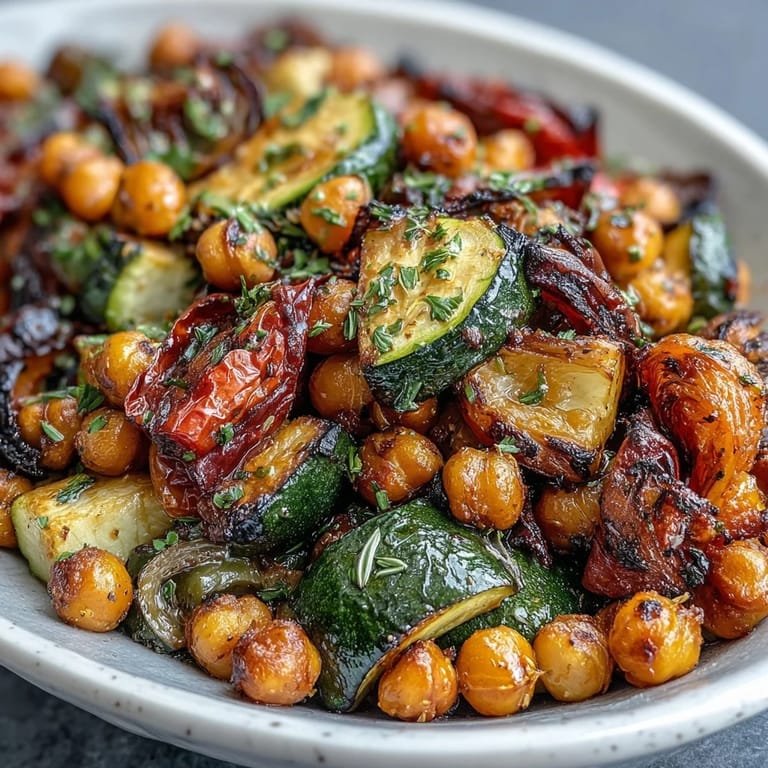
- You'll know it's ready when the vegetables are tender enough to pierce with a fork and the edges have taken on a light golden-brown color. The chickpeas should feel slightly crispy on the outside.
- Finish with a flourish:
- Transfer everything to a serving platter and scatter fresh parsley on top if you have it. Serve warm or let it cool to room temperature, which is honestly when the flavors become even more pronounced.
 Pin It
 There was an afternoon when my neighbor knocked on my door because the smell coming from my kitchen was driving her crazy in the best way possible. We ended up sharing the whole batch on her back porch with just some bread and a conversation that lasted until the sun started setting, and I realized that roasted vegetables with chickpeas had become the kind of food that brings people together without any fuss.
The Science Behind the Roast
High heat and dry roasting create something called the Maillard reaction, which is fancy speak for the reason your vegetables taste toasty and complex rather than just warm. The sugars in the vegetables caramelize, the garlic deepens in flavor, and the lemon juice protects some of the bright colors while adding complexity. It's the same technique chefs use in expensive restaurants, except here you're doing it on a baking sheet with ingredients from your regular grocery store.
Stretching This Into a Full Meal
On nights when I want this to be my main course rather than just a side, I'll serve it over quinoa, couscous, or even with some warm flatbread on the side. Sometimes I'll crumble feta cheese over the top or add a dollop of tahini-lemon sauce if I'm feeling generous with my time. The chickpeas provide enough protein that you don't need meat, but it also plays beautifully with grilled chicken, fish, or tofu if you want something more substantial.
Variations and Personal Experiments
This recipe is honestly more of a framework than a fixed formula, and some of my best versions have come from working with whatever was in season or about to go soft in my crisper drawer. I've added eggplant cut into thin rounds, carrots sliced on a bias, broccoli florets, green beans—the method stays exactly the same and everything benefits from the roasting treatment. The only thing I'd caution against is adding too many watery vegetables at once, because you'll end up with steamed rather than roasted results.
- Try adding a pinch of red pepper flakes or smoked paprika for depth and a touch of heat.
- If you have fresh herbs like basil or dill on hand, scatter them on top after roasting rather than mixing them in raw.
- Leftover roasted vegetables taste wonderful cold or at room temperature in grain bowls the next day.
 Pin It
 What I love most about this recipe is how it turned what could have been a random collection of leftovers into something I now make on purpose. It's proof that simple ingredients, high heat, and a little bit of lemon can transform an ordinary Tuesday night into something worth remembering.
Recipe FAQs
- → What vegetables work best for roasting in this medley?
Zucchini, bell peppers, red onion, and cherry tomatoes are ideal due to their roasting times and flavors. You can also swap in eggplant, carrots, or broccoli to suit your taste.
- → How does lemon enhance the medley?
Lemon zest and juice add brightness and a zesty tang that balances the natural sweetness of the roasted vegetables and chickpeas.
- → Can this medley be served cold?
Yes, this dish is versatile and can be enjoyed warm or at room temperature, making it suitable for various serving preferences.
- → What herbs complement the flavor profile?
Dried oregano and thyme provide earthy and aromatic notes that blend seamlessly with garlic and lemon, enhancing the overall flavor.
- → Are there tips to add extra flavor?
Adding red pepper flakes or smoked paprika before roasting can introduce a pleasant depth and subtle heat to the medley.