 Pin It
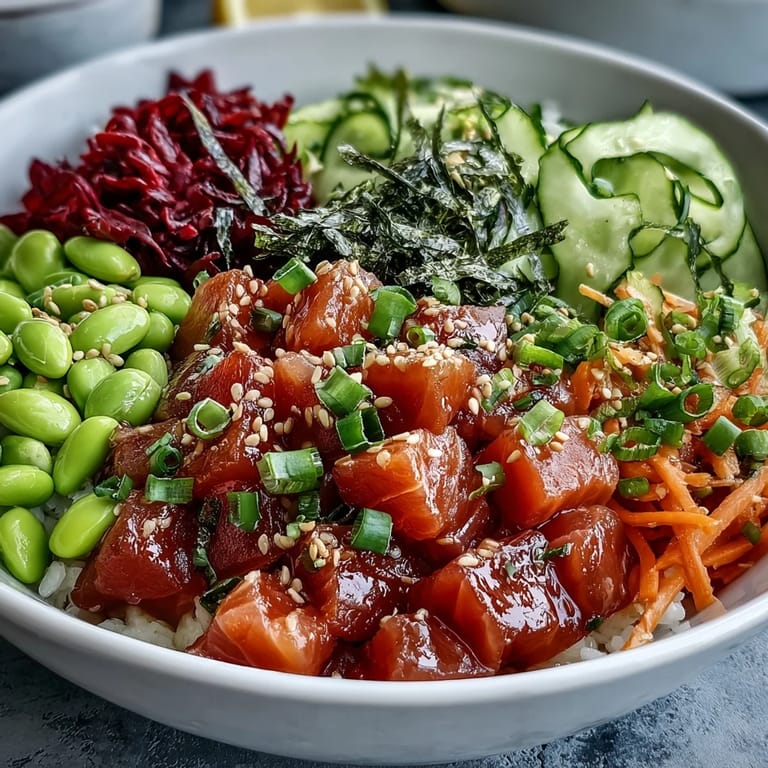
 The first time the aroma of toasted sesame hit my nose while prepping this salmon poke bowl, I knew dinner would be a little brighter than usual. Music was playing in the background, and every ingredient on the cutting board seemed to catch the sun just so. There is something kind of meditative about carefully slicing the avocado and arranging the salmon cubes, each glistening from the marinade. The vibrant colors of the vegetables always draw in anyone walking through the kitchen. Even midweek, this dish brings a bit of island lightness onto your table.
A few months ago, I prepped these poke bowls for an impromptu dinner with friends after a last-minute swim at the lake. The entire table was chatting and laughing as hands reached for extra pickled ginger and splashes of spicy mayo. Someone started layering their bowl purely by color, which turned the assembly into a mini art project. Even my friend who claimed not to like raw fish built a bowl and finished every bite. It was the kind of gathering where nobody wanted the meal to end.
Ingredients
- Sushi-grade salmon fillet: The centerpiece of the bowl—always ask your fishmonger for the freshest possible cut and freeze if you're nervous about raw fish.
- Soy sauce (or tamari): Brings that umami-rich depth; tamari is a trusty stand-in for gluten-free friends.
- Sesame oil: Just a spoonful gives an irresistible aroma that lingers while you prep.
- Rice vinegar: Adds the right zing and brightness to balance the fat of the fish and avocado.
- Honey or maple syrup: Just a kiss of sweetness softens the edges of the briny marinade.
- Freshly grated ginger: Use a microplane for best results—pre-grated never tastes as lively.
- Garlic clove: That subtle, savory hum in the background comes from a tiny bit, minced fine.
- Toasted sesame seeds: They bring crunch and visual pop; toast them in a dry pan if you haven't tried it yet.
- Sushi rice (or jasmine/brown): Sushi rice is sticky and classic, but I reach for brown rice when I want even more chewiness.
- Edamame: Little protein powerhouses, they're best just barely warmed and salted.
- Avocado: Its creamy texture ties the whole bowl together and cools down the spice if you add any.
- Cucumber: I like to leave the peel on for crunch, but you can peel it for a milder bite.
- Shredded red cabbage: Brings striking color and an earthy crispness—plus it holds up well if you pack leftovers.
- Carrots: Brightens each bite with sweetness; I use a julienne tool for perfect thin strips.
- Green onions: Green onion rounds sprinkle a light heat and fresh bite right at the end.
- Black/white sesame seeds: For both garnish and an occasional nutty crunch.
- Nori sheets/seaweed snacks: Not just a garnish—they lend that essential ocean note if you love sushi.
- Pickled ginger: Sharp and sweet, it's a wake-up call to the palate if you want it.
- Sriracha or spicy mayo: For those who, like me, always want a little heat on their bowl.
Tired of Takeout? 🥡
Get 10 meals you can make faster than delivery arrives. Seriously.
One email. No spam. Unsubscribe anytime.
Instructions
- Whisk up the marinade:
- Combine the soy sauce, sesame oil, rice vinegar, honey, ginger, garlic, and sesame seeds in a medium bowl. The scent of ginger and toasted sesame will bloom as you stir—don’t rush it.
- Marinate the salmon:
- Gently toss the cubes of fresh salmon in the marinade, watching them turn glossy. Cover and chill for 10 to 15 minutes so the flavors seep in without overpowering the delicate fish.
- Prep the rice:
- Get your rice going according to the package, fluffing it while it’s warm for perfect texture. I prefer mine cooled for poke, but it’s your call.
- Chop and ready the toppings:
- Cook and drain the edamame, dice your avocado and cucumber, shred the cabbage, slice green onions, and julienne the carrots. Lining up all the components assembly-line style makes building the bowls fun and easy.
- Assemble the poke bowls:
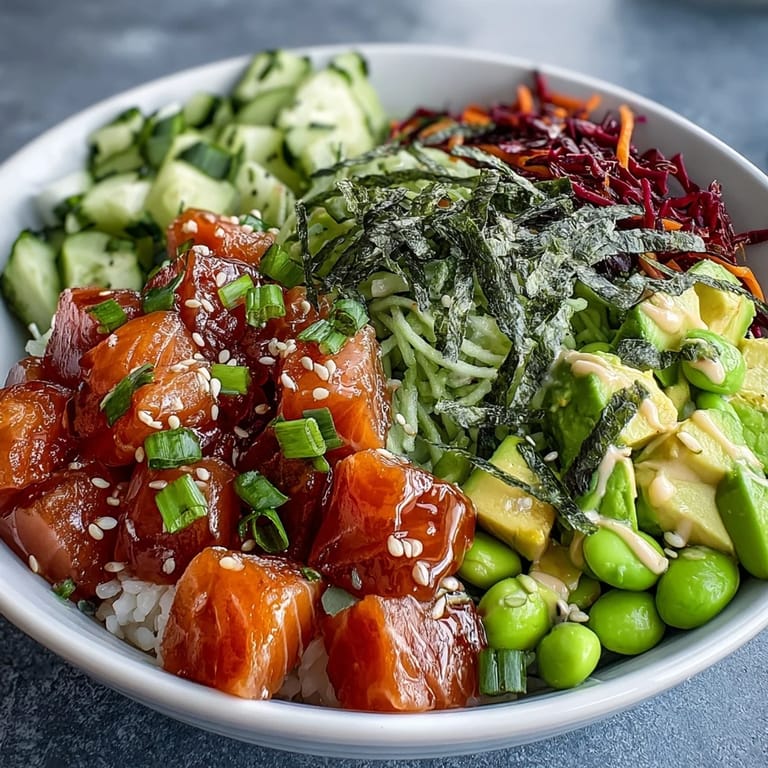
- Spoon rice into each bowl and arrange the marinated salmon, edamame, avocado, cucumber, carrots, and red cabbage in colorful sections. Don’t be shy with the toppings—scatter sesame seeds, nori, and extra green onions all over.
- Final touches and serve:
- Drizzle with leftover marinade, offer pickled ginger and spicy mayo on the side, and serve immediately. The sooner you eat, the brighter everything tastes.
 Pin It
 There was one evening the kitchen felt more like a tiny festival than a room; the poke bowls were an excuse for everyone to try new toppings and techniques. That gathering wasn’t just about eating—it was the passing around of laughter and bright flavors, and for a moment the kitchen felt like Hawaii and home all at once.
How to Pick the Best Salmon
The difference between a great and a mediocre poke bowl is all in the fish. I always ask for sushi-grade and sometimes call ahead to reserve the freshest cut, and I advise smelling it—it should remind you of clean ocean breezes, not fishy funk.
Easy Swaps and Customizations
Swapping out rice for greens instantly turns this into a lighter, lunch-friendly salad. Don’t be shy about tossing in mango, radish, snap peas, or even crispy shallots if they’re what you have on hand—a bowl like this loves variation.
Making Ahead and Storage
If you want to get a head start, chop all the veggies and cook the rice earlier in the day, but always wait to marinate and assemble right before eating.
- Keep the marinated fish separate from the rice and veggies until ready to serve.
- Leftover rice can be refreshed with a sprinkle of water and quick microwave.
- Always store avocado with a squeeze of lemon or lime to keep it green.
 Pin It
 However you top your poke bowl, make it your own—half the fun is in the colorful creation. When you share it, the smiles will tell you it’s already a new favorite.
Recipe FAQs
- → Is it safe to use raw salmon for the poke?
Use very fresh, sushi-grade salmon from a trusted fishmonger and keep it chilled. Marinating briefly firms the flesh, but consume the dish the same day to ensure safety and quality.
- → Can I substitute the salmon with another protein?
Yes. Use sushi-grade tuna or cooked shrimp for a similar texture, or firm tofu for a vegetarian-style bowl. Adjust marinating time for cooked proteins to avoid over-salting.
- → What rice works best for the bowl?
Sushi rice gives the classic sticky base, but jasmine or brown rice are great alternatives. For a lighter version, replace rice with mixed greens or quinoa.
- → How long should the salmon marinate?
Marinate the cubed salmon for 10–15 minutes—longer can over-salt and change texture. If you prefer more flavor, reserve a portion of the marinade for drizzling instead of extending marination time.
- → Can I prepare components in advance?
Prepare rice, vegetables and marinade ahead and keep refrigerated separately. Combine and add avocado and salmon just before serving to preserve texture and freshness.
- → What are good accompaniments or pairings?
Serve with pickled ginger, a spicy mayo or sriracha on the side. A crisp Sauvignon Blanc or chilled green tea complements the bright, savory flavors.