 Pin It
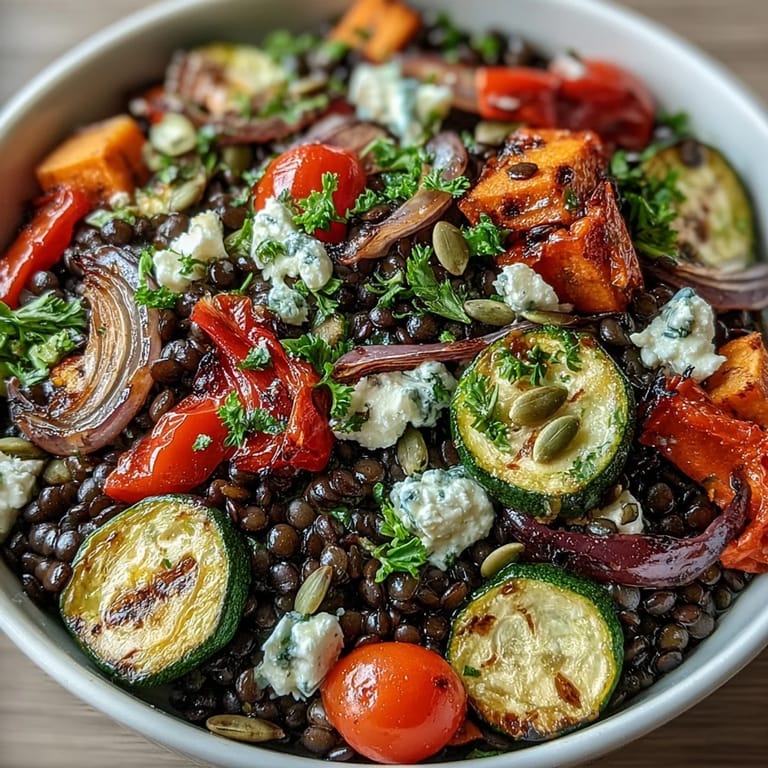
 A friend handed me a container of black lentils at the farmer's market one Saturday morning, insisting I'd never made a proper salad with them. That afternoon, my kitchen filled with the earthy aroma of simmering lentils while golden vegetables caramelized in the oven, and I realized she was right—this wasn't just another salad, it was something that felt both nourishing and genuinely exciting to eat. The bright lemon dressing tied everything together in a way that made me want to keep coming back for more bites.
I brought this to a potluck where everyone was skeptical about a lentil salad, and watched someone go back for thirds while saying they'd never realized how good lentils could be. There's something quietly powerful about watching people change their minds about food they thought they didn't like, especially when it happens over a bowl of something this honest and real.
Ingredients
- Black lentils (Beluga): These little gems stay intact and don't turn mushy like brown lentils—they're the foundation of everything that makes this salad special.
- Water: Use exactly 3 cups so the lentils cook through without becoming waterlogged.
- Bay leaf: Adds a whisper of herbal depth that makes all the difference in the simmering liquid.
- Salt for cooking: Season the lentil water properly or they'll taste flat no matter what else you add.
- Red bell pepper, zucchini, carrot, and red onion: These vegetables caramelize beautifully when roasted, developing sweet, concentrated flavors that contrast perfectly with the earthy lentils.
- Olive oil for roasting: Use a generous hand here—it's what creates those golden, slightly crispy edges.
- Dried thyme: Just enough to perfume the vegetables without overpowering them.
- Cherry tomatoes: Add them after roasting so they stay slightly tart and don't turn to liquid.
- Fresh parsley: A bright, green finish that makes the salad feel alive.
- Toasted seeds: Pumpkin or sunflower seeds bring a satisfying crunch and nuttiness that ties the whole thing together.
- Extra-virgin olive oil: This goes in the dressing where its quality matters most.
- Fresh lemon juice: This is the backbone of your dressing—squeeze it fresh or the whole thing falls flat.
- Dijon mustard: A teaspoon sounds small but it emulsifies the dressing and adds subtle complexity.
- Garlic clove: Just one, minced fine, so it doesn't overpower but instead adds savory depth.
- Honey or maple syrup: A tiny bit of sweetness balances the acidity of the lemon.
- Feta cheese: Optional but honestly worth it—those salty, creamy bits are the cherry on top.
Tired of Takeout? 🥡
Get 10 meals you can make faster than delivery arrives. Seriously.
One email. No spam. Unsubscribe anytime.
Instructions
- Prepare your oven and get started:
- Preheat your oven to 425°F and line a baking sheet with parchment paper so cleanup is effortless later.
- Cook the lentils gently:
- Rinse your black lentils under cold water, then combine them in a medium pot with 3 cups of water, a bay leaf, and salt. Bring to a boil, then lower the heat and let them simmer uncovered for 20 to 25 minutes—you're aiming for tender but still holding their shape, not falling apart. Drain them well, toss the bay leaf, and let them cool just slightly so they're not piping hot when you combine them later.
- Roast the vegetables until they're golden:
- While the lentils simmer, dice your bell pepper, zucchini, carrot, and cut the red onion into wedges, then toss everything with olive oil, thyme, salt, and pepper. Spread them across your baking sheet in an even layer and roast for 20 to 25 minutes, stirring once halfway through—you want them tender with slightly caramelized edges that taste almost sweet. Let them cool for a few minutes.
- Build your dressing:
- In a large bowl, whisk together the extra-virgin olive oil, fresh lemon juice, Dijon mustard, minced garlic, honey, salt, and pepper until it's emulsified and tasty. Taste it and adjust—if it needs more brightness, add another squeeze of lemon.
- Bring everything together:
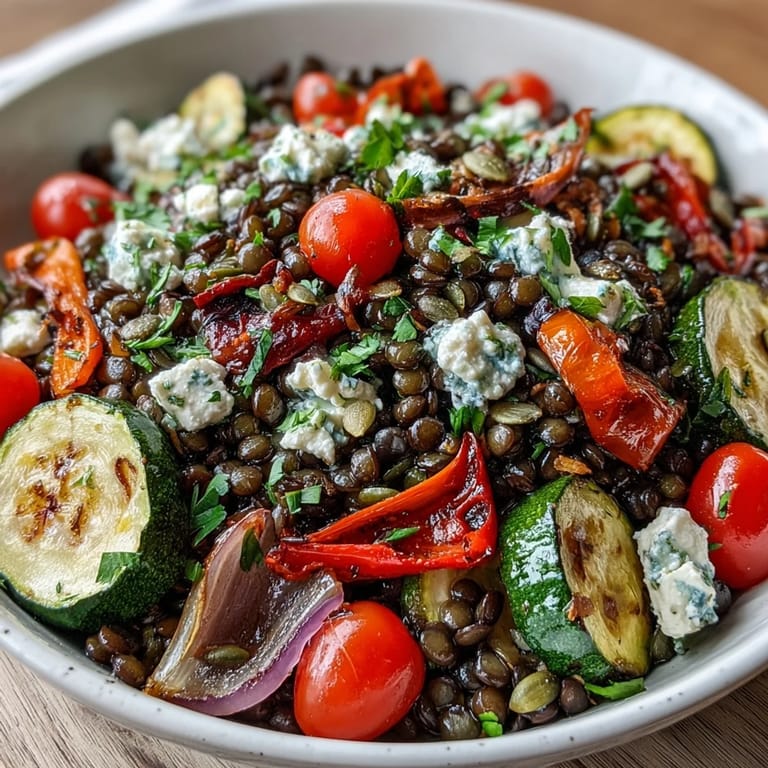
- Add your cooled lentils, roasted vegetables, halved cherry tomatoes, chopped parsley, and toasted seeds to the bowl with dressing, then toss everything gently but thoroughly so every component gets coated. Top with crumbled feta if you're using it, and serve warm or at room temperature—honestly, it's good both ways.
 Pin It
 One evening I served this to someone who'd been on a restrictive diet, and watching them eat with genuine joy and relief was a moment that stuck with me. Food that nourishes you physically and emotionally at the same time is rare, and this salad somehow manages both.
Why Black Lentils Are Worth Seeking Out
Black lentils, also called Beluga lentils because of their shiny, dark appearance, are different from the brown or red varieties most people default to. They hold their shape beautifully during cooking, which means your salad stays textured and visually interesting instead of turning into a mushy pile. I spent years avoiding lentil salads because I'd only ever had the sad, mushy kind—switching to black lentils completely changed the game for me, and now I genuinely look forward to making this.
How to Customize Without Losing the Spirit
This salad is flexible enough to work with whatever's in your kitchen or at your market, as long as you understand what you're doing. The roasted vegetables can swap around—try diced sweet potato, eggplant, or even Brussels sprouts halved—just keep them roughly the same size so they cook at the same rate. The greens can be fresh spinach or peppery arugula tossed in at the end, and if you want to add protein beyond the lentils themselves, grilled chicken, salmon, or even chickpeas work beautifully.
Making It Ahead and Storage
One of my favorite things about this salad is that it improves with time, which almost never happens with salads. Make it up to two days ahead and store it in an airtight container in the refrigerator—the lentils will absorb more of the dressing flavors, and everything melts together into something even more cohesive. If you're taking it somewhere, pack the feta and seeds separately and add them right before serving so they stay fresh and don't get soggy.
- Add the feta and seeds just before serving so they don't get soft or lose their crunch.
- If the salad seems dry after a day or two, whisk together a quick extra dressing and toss it in rather than trying to salvage the original one.
- This salad is genuinely better at room temperature than ice cold, so let it sit out for 15 minutes before eating if you've pulled it from the fridge.
 Pin It
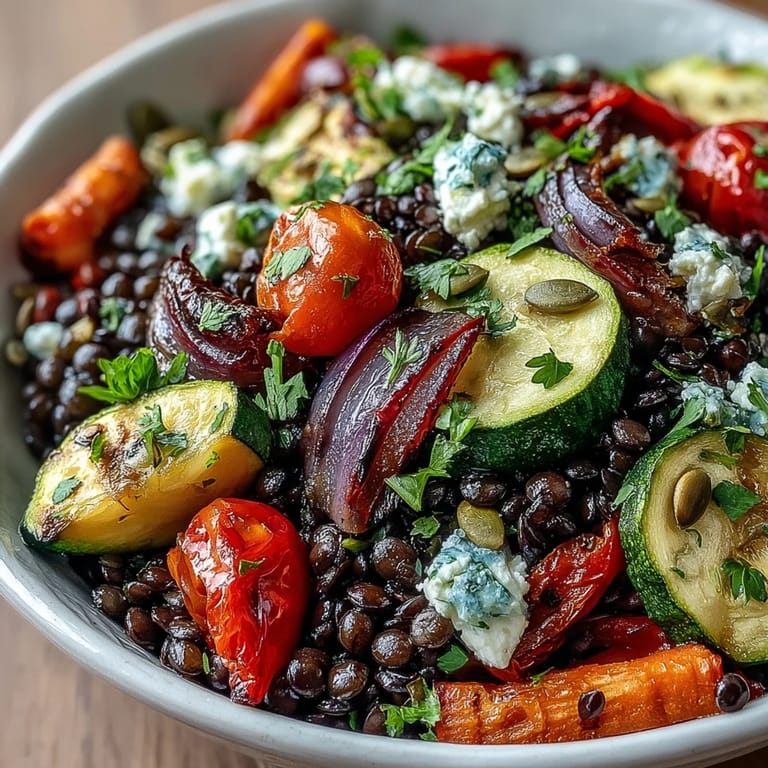
 This salad has become one of those recipes I turn to when I want to feel good about what I'm eating, but I also don't want to feel like I'm depriving myself. It's nourishing, genuinely delicious, and somehow makes everyone who eats it feel a little bit better.
Recipe FAQs
- → What type of lentils work best?
Black beluga lentils are ideal because they hold their shape beautifully during cooking and have an earthy, rich flavor. Green or brown lentils can substitute, though they may become slightly softer. Avoid red lentils as they tend to become mushy.
- → Can I prepare this ahead?
Absolutely. The lentils and roasted vegetables can be cooked up to 3 days in advance. Store them separately in the refrigerator and toss with dressing just before serving. The flavors actually develop and improve after sitting.
- → What vegetables can I substitute?
Feel free to use whatever seasonal vegetables you have available. Sweet potato, eggplant, butternut squash, and Brussels sprouts all roast beautifully. Just keep pieces similar in size for even cooking.
- → How do I store leftovers?
Store in an airtight container in the refrigerator for up to 4 days. If planning to store longer, keep the dressing separate and add just before eating. The lentils will continue to absorb flavor.
- → Can I make this vegan?
Simply omit the feta cheese or use a plant-based feta alternative. The rest of the ingredients are naturally vegan. Nutritional yeast can add a savory, cheesy element if desired.