 Pin It
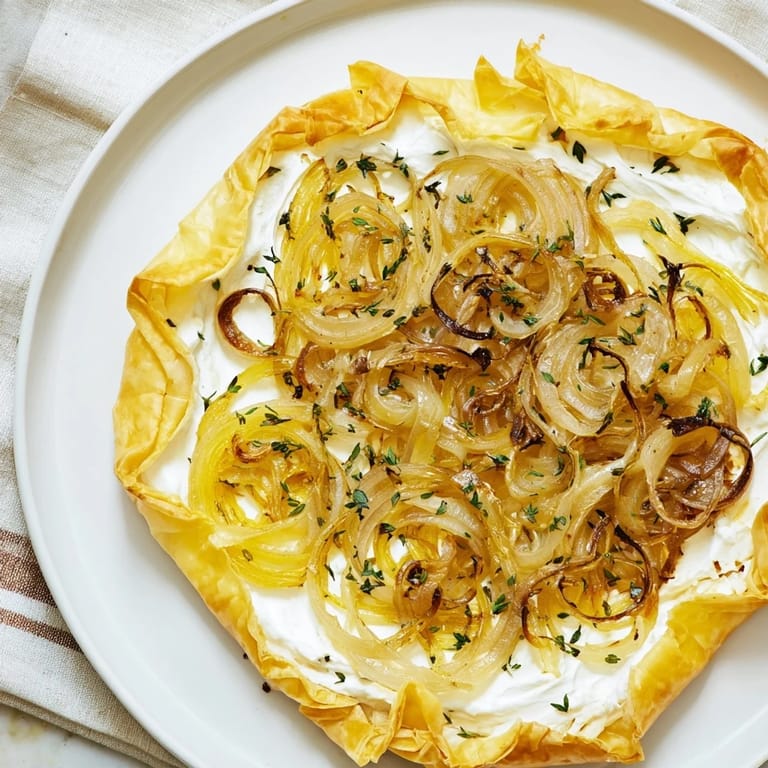
 There's something almost meditative about watching onions transform in a hot pan—those sharp, pale slices slowly blushing gold, then deepening into mahogany ribbons that smell like caramelized dreams. I stumbled onto this tart on a rainy afternoon when I had three onions, a sheet of puff pastry, and absolutely nothing else in the fridge that felt exciting. What emerged was pure magic: a rustic, elegant tart that tastes far more impressive than the simple ingredients suggest. It's become my go-to when I want something that feels special without the stress.
I made this for a small dinner party last autumn, and my friend Sarah took one bite and just closed her eyes. She didn't say anything for a moment—just smiled and asked for the recipe before she'd even finished her first slice. That's when I realized this wasn't just a tart; it was the kind of simple food that makes people feel cared for.
Ingredients
- Frozen puff pastry (1 sheet, about 250 g): The foundation—use good quality if you can, and let it thaw at room temperature for a few minutes so it's pliable but still cold.
- Large yellow onions (3, thinly sliced): These are the heart of the dish; their natural sugars caramelize into pure sweetness, so don't rush this step.
- Unsalted butter (2 tbsp): Pairs with the olive oil to create the richest, most flavorful base for caramelizing.
- Olive oil (1 tbsp): The butter alone would burn; the oil keeps everything mellow and prevents that.
- Sugar (1 tsp): A tiny pinch that helps coax out the onions' natural sweetness and speeds up the caramelization.
- Salt (1/2 tsp) and freshly ground black pepper (1/4 tsp): These season the onions as they cook, bringing out all their subtle flavor.
- Crème fraîche or sour cream (1/2 cup): A tangy, creamy base that keeps the pastry from getting soggy and adds sophisticated depth.
- Dijon mustard (1 tsp): Just enough to whisper a hint of sharpness beneath the sweetness—don't skip this.
- Gruyère cheese (1/2 cup, grated): Nutty and complex, it melts beautifully and stands up to the caramelized onions without overwhelming them.
- Fresh thyme (1 tsp leaves) or dried thyme (1/2 tsp): Earthy and herbaceous, it grounds all the rich flavors and keeps them from feeling one-note.
- Fresh chives (1 tbsp, chopped, optional): A bright finishing touch that adds a whisper of onion flavor and a pop of color.
Tired of Takeout? 🥡
Get 10 meals you can make faster than delivery arrives. Seriously.
One email. No spam. Unsubscribe anytime.
Instructions
- Get everything ready:
- Preheat your oven to 400°F (200°C) and line a baking sheet with parchment paper. Slice your onions thin—about the thickness of a coin—so they'll caramelize evenly.
- Begin the magic:
- Melt butter and oil in a large skillet over medium heat, then add the onions, sugar, salt, and pepper. You'll hear them sizzle and release their moisture—this is the beginning. Stir often, scraping up any golden bits from the pan, and let them cook for 25 to 30 minutes until they're deeply golden and smell absolutely irresistible.
- Prepare the pastry:
- While the onions work their magic, gently roll out your thawed pastry on a lightly floured surface into a 12-inch square or circle. Transfer it to your prepared baking sheet, handling it as little as possible so it stays cold and flaky.
- Build your base:
- In a small bowl, stir the crème fraîche and Dijon mustard together until smooth. Spread this mixture evenly over the pastry, leaving about an inch around the edges bare so the pastry can puff and brown properly.
- Layer with intention:
- Scatter half the grated Gruyère over the crème, then top with all those glorious caramelized onions. Sprinkle the thyme over everything, then finish with the remaining cheese so it'll melt and turn golden.
- Create rustic edges:
- Gently fold the bare pastry edges up and over the filling, creating loose, irregular folds that look utterly charming and help trap steam.
- Bake until golden:
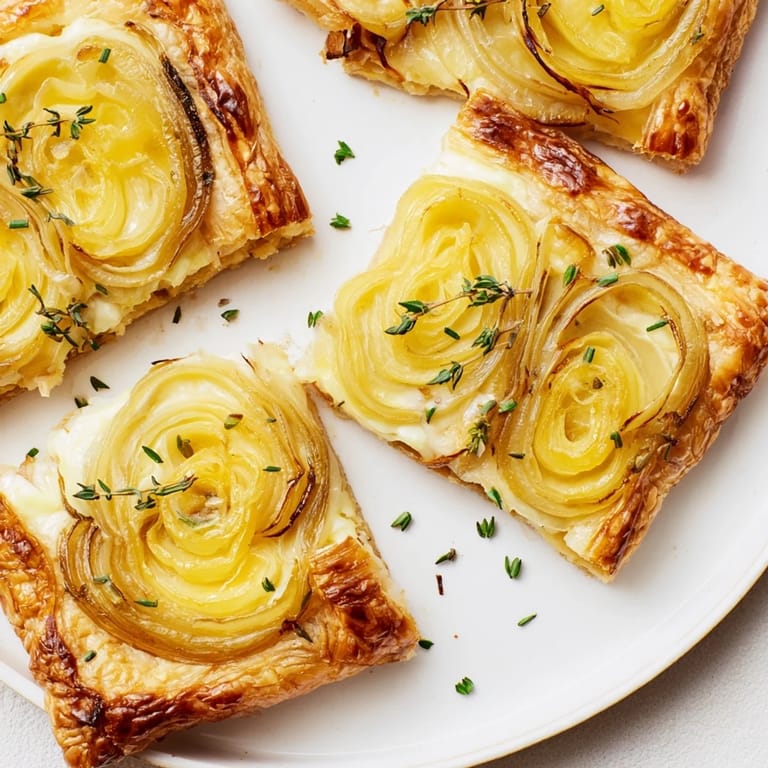
- Bake for 20 to 25 minutes until the pastry is puffed and deep golden brown. You'll know it's done when the edges look crisp and the cheese is bubbling slightly at the corners.
- Finish and serve:
- Let it cool for just a few minutes, then scatter fresh chives on top if you're using them. Serve warm or at room temperature—honestly, it's delicious either way.
 Pin It
 I've learned that the simplest dishes often teach you the most. This tart taught me that sometimes the best meals aren't about complicated techniques or exotic ingredients—they're about respecting what you have and giving it the time it deserves. That afternoon with Sarah, watching her enjoy something I'd made with patient hands and a little love, felt like the whole point of cooking.
The Art of Caramelizing Onions
Caramelization is less about heat and more about patience. The onions need to release their moisture first (which takes about 10 minutes), then slowly, gently turn golden as their natural sugars brown. If you crank the heat, you'll get burnt, bitter onions instead of sweet, jammy ones. The key is stirring every few minutes so they cook evenly, and listening for that gentle sizzle rather than aggressive bubbling. When they're done, they should smell sweet and almost honeyed, not sharp or acrid. I've found that adding a tiny pinch of sugar doesn't make them taste sugary—it just helps coax out the sweetness that's already hiding in the onions themselves.
Why Puff Pastry Works Here
Puff pastry might seem fancy, but it's actually the most forgiving choice for a rustic tart like this. Those hundreds of crispy, flaky layers create an almost edible texture that contrasts beautifully with the soft onions and creamy topping. Because you're not rolling it thin or stretching it, you don't need any special skill—just a light hand and the good sense to let it thaw enough to be pliable but still stay cold. The magic happens in the oven when the butter layers create steam and puff everything up into golden, crispy heaven.
Variations and Flavor Swaps
This tart is endlessly flexible, which is partly why I love it so much. In autumn, I sometimes add a splash of balsamic vinegar in the last 5 minutes of caramelizing the onions—it adds a subtle sweetness and depth that feels like a secret. Sometimes I swap the Gruyère for sharp cheddar or Emmental, depending on what's in my fridge. You could add crumbled goat cheese, crispy bacon bits, or sautéed mushrooms without changing the essential character of the dish. The crème fraîche and caramelized onions are the constants; everything else is an invitation to improvise.
- Splash of balsamic vinegar in the last few minutes of caramelizing takes things from delicious to unforgettable.
- Try fresh herbs like tarragon, rosemary, or basil scattered on top just before serving for brightness.
- A handful of sautéed mushrooms or crispy bacon tucked in with the onions makes it even more substantial if you need a heartier main course.
 Pin It
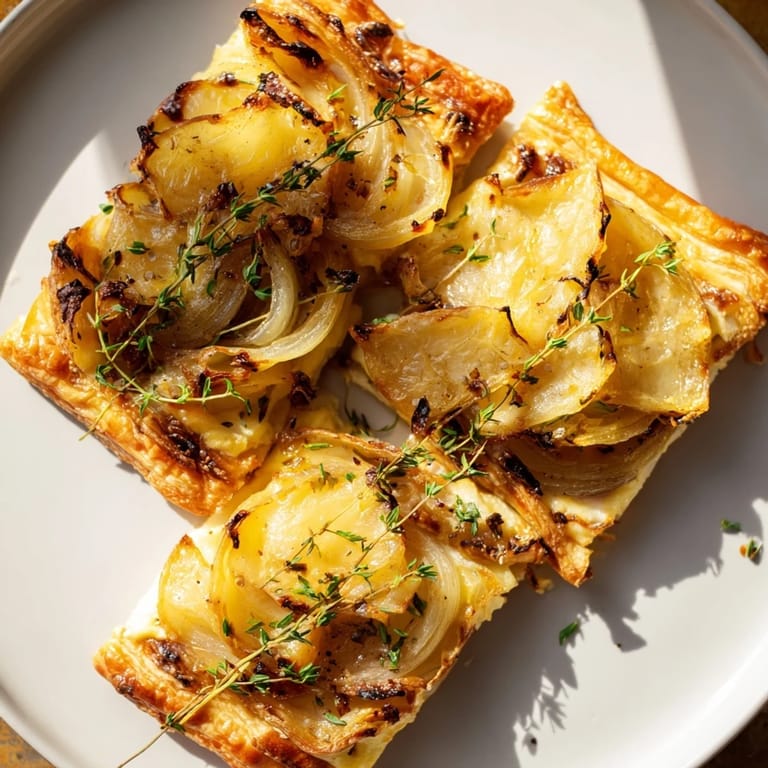
 There's something quietly powerful about a dish that looks elegant but feels homey, that tastes like restaurant cooking but comes from a completely relaxed kitchen. This tart is exactly that—proof that the best food doesn't need to be complicated, just made with attention and care.
Recipe FAQs
- → How do I best caramelize onions for this tart?
Cook thinly sliced onions slowly over medium heat with butter and olive oil, stirring frequently until deeply golden, around 25-30 minutes, to develop rich sweetness.
- → Can I use another cheese instead of Gruyère?
Yes, Emmental or sharp cheddar are great alternatives that melt well and complement the flavors of caramelized onions.
- → What pastry should I use for a flaky crust?
Frozen puff pastry works best for a light, crisp crust that contrasts nicely with the soft onion filling.
- → Is it necessary to add Dijon mustard and crème fraîche?
They provide a tangy creamy base beneath the onions, balancing sweetness and richness while enhancing texture.
- → Can this tart be served cold or leftover?
Yes, it is delicious served warm or at room temperature and maintains good texture when reheated gently.
- → Any tips for enhancing the onion flavor?
Adding a splash of balsamic vinegar in the last 5 minutes of caramelizing adds complexity and depth to the onions.