 Pin It
 I discovered this platter concept at a small gathering in a friend's kitchen, watching her arrange crackers and olives on a board with the casual precision of someone creating edible art. There was something magical about how the round crackers caught the light like ancient stones, and the way people instinctively gravitated toward it—not just to eat, but to admire. It felt like bringing a piece of a Mediterranean courtyard into the room, and suddenly I understood why the simplest things often make the strongest impressions.
I made this for a casual weeknight gathering where people were arriving in waves, and I remember setting the platter down just as the conversation started to lag. Within seconds, someone reached for an olive, then a cracker, and suddenly everyone was picking and sharing and debating which olive was their favorite. It became the thing people kept returning to between bites of other food, less because they were hungry and more because there was something social about the act of building each bite.
Ingredients
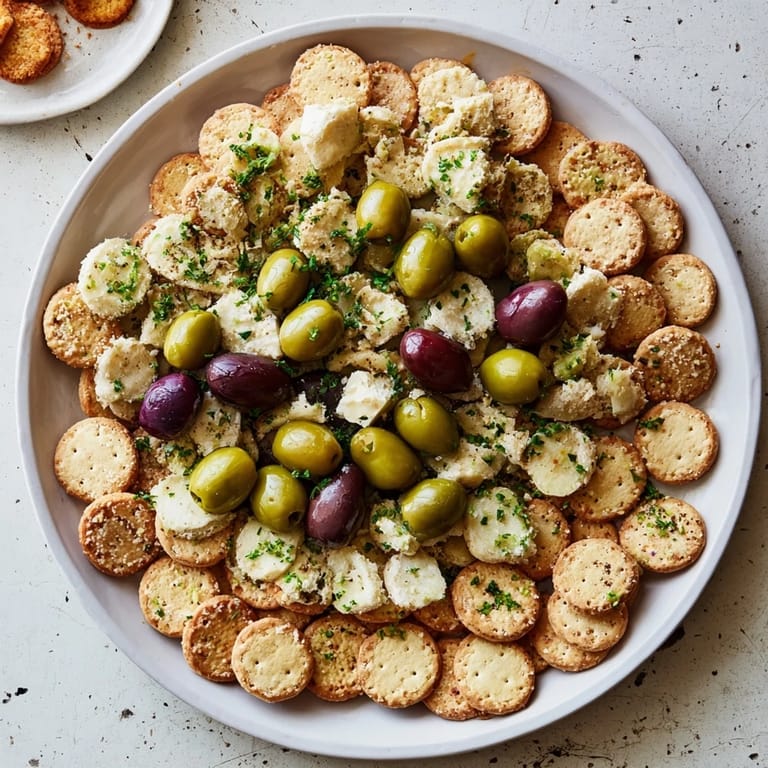
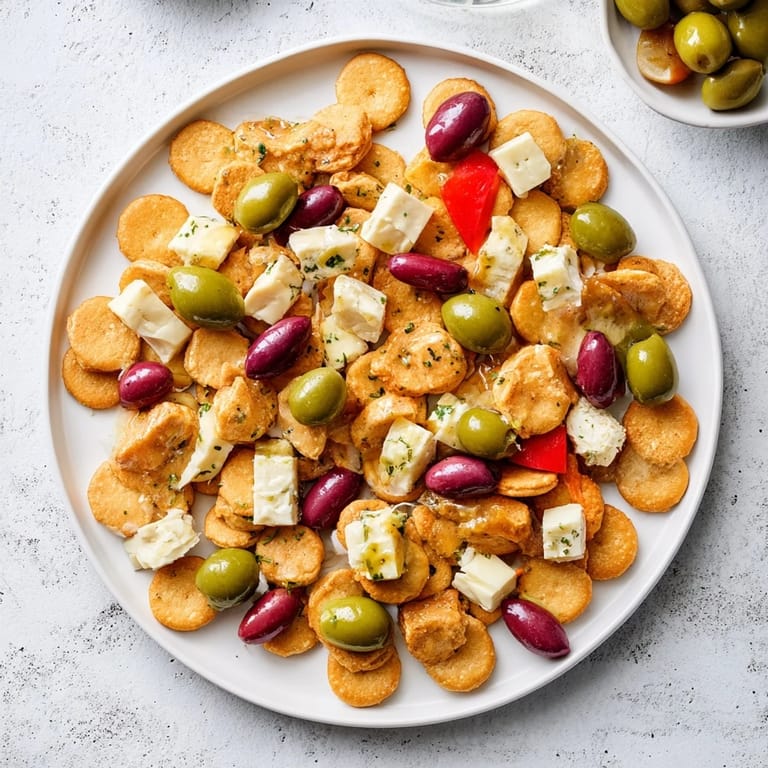
- Round crackers (36-40): The foundation of your cobblestone street—choose varieties like water crackers, multigrain, or rice crackers for visual interest and different textures, and mixing sizes makes the pattern feel more authentic and less rigid.
- Assorted olives (1 cup, pitted): Green Castelvetrano, Kalamata, and black olives give you a range of colors and flavors, with each variety bringing its own character to the platter.
- Fresh herbs (2 tbsp, chopped): Parsley, thyme, or rosemary add a whisper of garden freshness and break up the visual monotony with flecks of green.
- Feta or goat cheese (1/4 cup, crumbled): A tangy, creamy contrast that softens the saltiness of the olives and crackers, though it's entirely optional if you prefer to keep things simpler.
- Extra virgin olive oil (1 tbsp): A light drizzle at the end catches light and adds richness, making everything shimmer just a little bit more.
Tired of Takeout? 🥡
Get 10 meals you can make faster than delivery arrives. Seriously.
One email. No spam. Unsubscribe anytime.
Instructions
- Choose your canvas:
- Pick a large serving platter or wooden board that will be your courtyard—something that lets the arrangement breathe and gives you enough room to work without feeling cramped.
- Create the cobblestone base:
- Arrange your round crackers in a random, overlapping pattern, letting them nestle against each other like actual stones. Don't overthink it; imperfection is what makes it look real.
- Tuck in the olives:
- Fill the gaps and crevices with assorted olives, pressing them in gently so they feel anchored and create visual pockets of color and depth.
- Add garnishes if you're moved to:
- Scatter your chopped herbs and cheese crumbles across the top, letting them settle into the spaces between crackers and olives for a lived-in look.
- Finish with a drizzle:
- A light pour of olive oil across the entire platter adds shine and brings all the flavors into subtle conversation with each other.
- Set it out and watch it disappear:
- Serve immediately as your edible centerpiece, knowing it will likely be the first thing to vanish.
 Pin It
 I remember my grandmother watching someone carefully disassemble one of these platters, building each bite with a cracker, an olive, maybe a sliver of cheese, and she leaned over to me and said, "Look how they're eating it like a little ritual." That's when I realized this platter isn't really about the individual ingredients—it's about turning eating into a moment worth savoring.
Bringing Mediterranean Moments to Your Table
There's something about arranging food intentionally that changes the entire mood of a gathering. When people see thoughtfulness in the presentation, they eat differently—slower, more deliberately, more present. This platter is an invitation to that kind of eating, where crackers and olives become an excuse to pause and actually taste things.
Building Flavor Layers
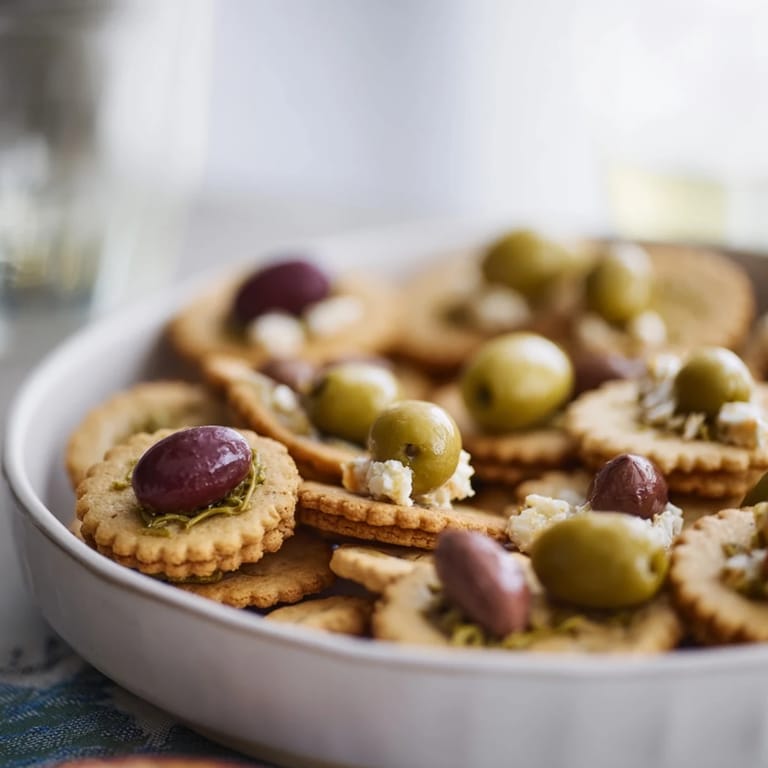
The beauty of this platter is that each bite can be completely different from the last. One cracker might carry just a single olive, another might be topped with cheese and herbs, another might get a drizzle of olive oil. It's like giving everyone permission to create their own small story with every bite, rather than delivering a finished dish that's the same for everyone.
Making It Your Own
Don't feel locked into the exact ingredients I've listed here—this platter thrives on variation and personality. I've made versions with roasted nuts scattered through the gaps, marinated artichokes filling some of the spaces, or cherry tomatoes adding bursts of color and sweetness. The cobblestone concept is flexible enough to welcome whatever your kitchen has or your guests might love.
- Roasted nuts, marinated artichokes, and cherry tomatoes all nestle beautifully into the gaps and add texture and flavor without disrupting the visual.
- Pairing this with a crisp white wine like Sauvignon Blanc or a light rosé turns the platter into a complete, easy entertaining moment.
- For gluten-free or vegan guests, swap crackers for gluten-free varieties and skip the cheese—the platter remains just as stunning.
 Pin It
 This platter proves that sometimes the most memorable dishes aren't complicated or time-consuming—they're just thoughtful and honest, asking only that you take a moment to arrange things with intention. It's food that invites conversation and connection, which might be the whole point anyway.
Recipe FAQs
- → What types of crackers work best for this platter?
Round crackers such as water crackers, multigrain, or rice crackers provide the best shape and texture to evoke the cobblestone effect.
- → Can I use different olives in this arrangement?
Yes, a variety of pitted olives like Castelvetrano, Kalamata, and black olives add color and balanced flavors to the layout.
- → How can I enhance the flavor of this appetizer?
Sprinkling chopped fresh herbs, crumbled feta or goat cheese, and drizzling extra virgin olive oil adds freshness and richness.
- → Is this suitable for vegetarians?
Yes, this selection is vegetarian-friendly and can easily be adapted for vegan options by omitting cheese.
- → What wine pairs well with this dish?
Light white wines such as Sauvignon Blanc or a crisp rosé complement the flavors without overpowering the palate.