 Pin It
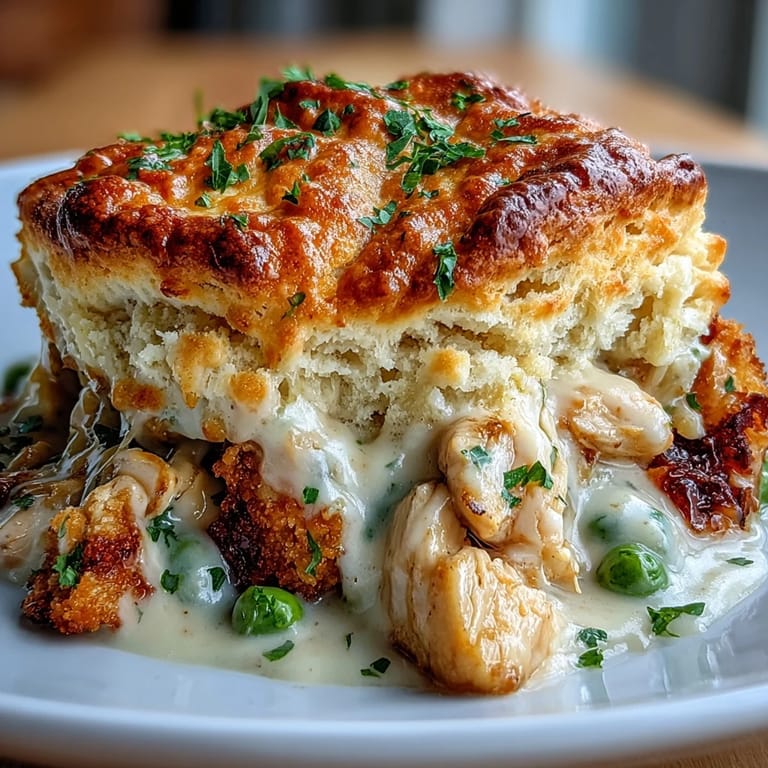
 There's something about the sound of a spoon scraping against the bottom of a pot that tells you the sauce is ready—thick, glossy, clinging to the metal like it means business. My neighbor dropped by one rainy afternoon without warning, and I had chicken, cream, and flour on hand, so I threw together this pot pie on instinct. The biscuits came out golden and impossibly fluffy, and watching her face when she took that first bite made me understand why this dish has survived a hundred years of cooking trends.
I made this for my daughter's college roommates when they visited home for the first time, and the kitchen filled with this warm, savory steam that made everyone feel like they'd come to the right place. One of them texted me months later asking for the recipe, and that small message made the whole afternoon feel less like cooking and more like something that mattered.
Ingredients
- Unsalted butter: Two tablespoons for the filling, then six more for the biscuits—using unsalted lets you control the salt and keeps the flavors honest.
- Yellow onion, carrots, and celery: The holy trinity of comfort cooking, diced small so they soften evenly and disappear into the creamy base.
- Garlic: Just two cloves minced fine, enough to add depth without announcing itself.
- All-purpose flour: One-third cup creates the roux that thickens the sauce, plus two cups more for the biscuits.
- Low-sodium chicken broth and whole milk: Two cups broth and one cup milk balance richness with restraint; low-sodium lets the chicken and thyme shine.
- Cooked chicken breast: Two cups diced or shredded—use leftover rotisserie chicken if you want to skip cooking entirely.
- Frozen peas: One cup of these little pockets of sweetness brighten the filling and add color without extra prep.
- Fresh thyme: A teaspoon of fresh leaves (or half a teaspoon dried) brings an herbaceous whisper that separates good pot pie from forgettable.
- Salt and pepper: One teaspoon salt and half a teaspoon pepper for the filling, then another teaspoon salt in the biscuit dough.
- Baking powder and baking soda: One tablespoon and half a teaspoon respectively—they're the reason the biscuits rise and stay tender.
- Cold buttermilk: Three-quarters cup stirred gently into the biscuit dough creates a tender crumb; keep it cold from the fridge.
- Egg wash: One large egg beaten light, optional but worth using for that restaurant-quality golden shine.
Tired of Takeout? 🥡
Get 10 meals you can make faster than delivery arrives. Seriously.
One email. No spam. Unsubscribe anytime.
Instructions
- Heat your oven and start the base:
- Set the oven to 400°F while you melt butter in a large skillet or Dutch oven over medium heat. Once foaming, add your diced onion, carrots, and celery—you'll know they're ready when the onion turns translucent and the air smells like home cooking, about 6 to 8 minutes.
- Build the roux:
- Stir in the minced garlic and cook until fragrant, roughly one minute, then sprinkle the flour over everything and stir constantly for 1 to 2 minutes. The flour will absorb the butter and create a light paste—don't skip this step, as it's what thickens your sauce.
- Create the creamy sauce:
- Slowly pour in the chicken broth while whisking to prevent lumps, then add the milk and keep stirring until the mixture simmers and thickens, about 3 to 4 minutes. You're aiming for something that coats the back of a spoon but still moves freely.
- Finish the filling:
- Remove from heat and stir in the cooked chicken, frozen peas, thyme, salt, and pepper. Taste and adjust seasoning if needed—this is your moment to make it perfect for your palate.
- Transfer to the baking dish:
- Pour the warm filling into a 9x13-inch baking dish or large pie dish, spreading it evenly so every spoonful gets a fair share of sauce and chicken.
- Mix the biscuit dough:
- In a separate bowl, whisk together flour, baking powder, baking soda, and salt. Cut in the cold butter cubes using a pastry blender or your fingertips until the mixture resembles coarse crumbs—this texture is what makes the biscuits flaky.
- Combine gently:
- Pour in the cold buttermilk and stir with a wooden spoon just until the dough comes together, being careful not to overwork it. Overmixing develops gluten and leads to tough biscuits, so stop as soon as you see no dry flour.
- Top the pie:
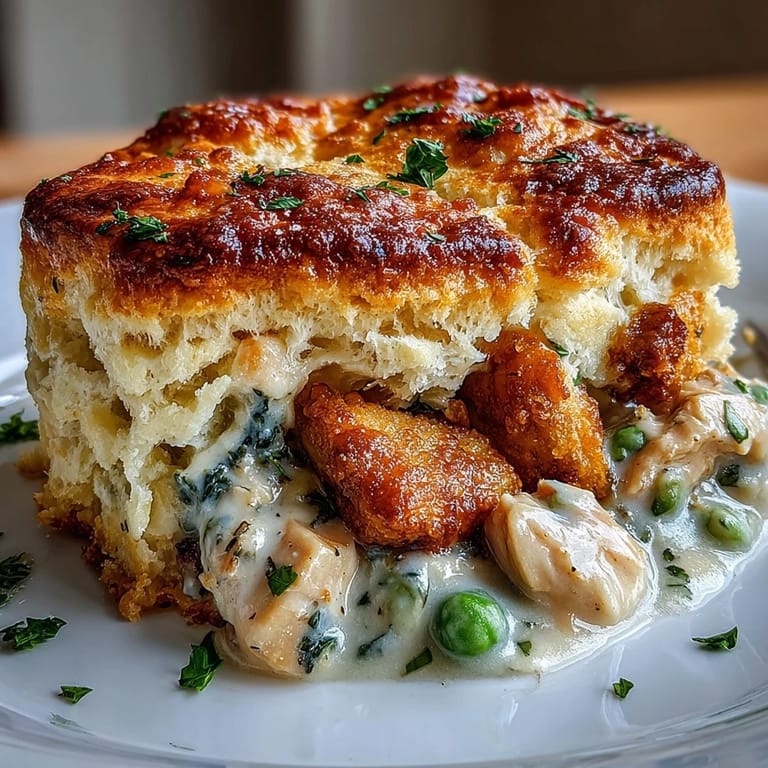
- Drop spoonfuls of biscuit dough evenly across the filling, leaving small gaps so steam can escape and the filling can bubble up around the edges. If using egg wash, brush it lightly over each biscuit top for that golden gleam.
- Bake until golden:
- Slide into the preheated oven and bake for 25 to 30 minutes, watching until the biscuits turn a deep golden brown and the filling bubbles around the edges. Your kitchen will fill with an aroma that makes everyone's stomach rumble.
- Rest before serving:
- Let the pot pie sit for 5 to 10 minutes out of the oven—this gives the filling time to set slightly so it doesn't run all over the plate when you scoop.
 Pin It
 My mother used to make this when someone in the family was going through a rough patch, and I understood later that it wasn't really about nutrition—it was her way of saying you're loved, you're cared for, and you're not alone. Now when I make it, I think of her standing at the stove with that quiet confidence she had.
The Secret to Silky Sauce
The roux—that flour-and-butter paste—is the quiet hero here, and once you understand how it works, you'll use it everywhere. The heat forces the flour granules to hydrate and gelatinize, and when you whisk in cold liquid, those swollen starch molecules trap water and thicken everything around them. Cook the roux for at least a minute but not more than two, just enough to lose the raw flour taste without browning it and turning the sauce darker than you want.
Why Fresh Thyme Changes Everything
Dried thyme works in a pinch, but fresh thyme brings a brightness that makes the whole dish feel less heavy and more alive. The fresh leaves have a slight sweetness and floral note that dried versions can't quite replicate, and even a single teaspoon scattered through the sauce does something magical.
Serving Suggestions and Storage
Serve this straight from the oven with a crisp green salad on the side and maybe a dry white wine like Chardonnay if you're in the mood. Leftovers keep beautifully in an airtight container for three days in the refrigerator, and you can reheat gently on the stovetop with a splash of milk if it's thickened too much.
- For a lighter version, swap whole milk for low-fat milk and reduce the butter slightly without sacrificing flavor.
- Add half a cup of diced mushrooms or corn to the filling for extra texture and subtle sweetness.
- Turkey works beautifully as a substitute for chicken, especially if you have leftover roasted turkey waiting for purpose.
 Pin It
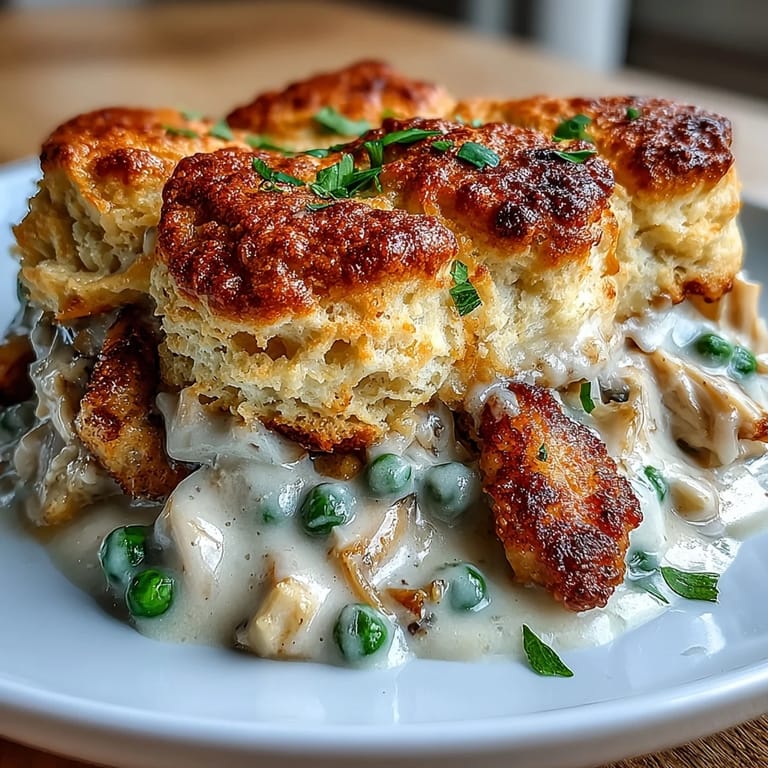
 This dish asks nothing of you but butter, cream, and a little time, and it rewards you with something warm and honest that people remember. Make it once and you'll understand why it's been passed down through so many kitchens.
Recipe FAQs
- → What is the best way to ensure the biscuit topping is fluffy?
Keep the butter cold and work it quickly into the flour mixture to create coarse crumbs before adding buttermilk gently without overmixing. This helps create a light and tender biscuit crust.
- → Can I use leftover poultry in this dish?
Yes, cooked turkey or any leftover poultry works well in place of chicken, providing similar texture and flavor.
- → How can I make this dish lighter?
Use low-fat milk and reduce the butter in both the filling and topping to lower fat content while maintaining flavor.
- → What vegetables complement the creamy filling best?
Carrots, celery, onions, and peas create a classic blend that balances sweetness and texture within the creamy sauce.
- → Is there a suggested oven temperature and baking time?
Bake at 400°F (200°C) for 25–30 minutes until the biscuit topping is golden and the filling is bubbly.
- → Can I add extra flavors to the filling?
Yes, additional ingredients like chopped mushrooms or corn can enhance texture and taste without overpowering the creamy base.