 Pin It
 The subtle aroma of simmering broth always brings me back to quiet evenings after long workdays when I craved something warm but effortless. One night, low on groceries and energy, I raided my pantry and decided to finally try my hand at egg drop soup. As the eggs floated into delicate ribbons atop the steaming broth, it occurred to me how sometimes the simplest recipes can feel like a little trick you’ve been saving for just the right moment. There was something almost meditative about the way the eggs swirled and set, transforming a basic broth into something inviting and soothing. That first bowl became a gentle comfort at the end of a hectic day.
I once made this soup for a friend who came by unexpectedly on a chilly afternoon, both of us bundled up and ready for something simple and restorative. We stood side by side, scooping ladles of broth into bowls, snipping scallions directly over the top, and joking about whose eggs made prettier ribbons. It was nourishing in a way that went far beyond flavor—almost like sharing a kitchen secret you didn’t know you knew until that moment.
Ingredients
- Low-sodium chicken or vegetable broth: This forms the liquid heart of the soup; I always pick low-sodium so I can better manage the seasoning, and a quick simmer brings out a deep, inviting aroma.
- Soy sauce: Just a dash enriches the broth with depth and classic umami; I discovered a little goes a long way.
- Ground white pepper: Its subtle heat lifts the soup without overpowering the delicate eggs; stir it in before adding the eggs for best results.
- Sesame oil: Always drizzle it at the start: its toasty fragrance is the soup’s secret note and can easily overpower if overused.
- Salt: Salt enhances every element here; I recommend tasting before adding the full amount, as broth saltiness varies wildly.
- Cornstarch (optional): Whisking a small spoonful into a slurry thickens the soup just enough for that silky, takeout-like finish—skip it if you’d rather keep things lighter.
- Water (for slurry): Only needed if you’re mixing the cornstarch in; always dissolve it completely to prevent lumps.
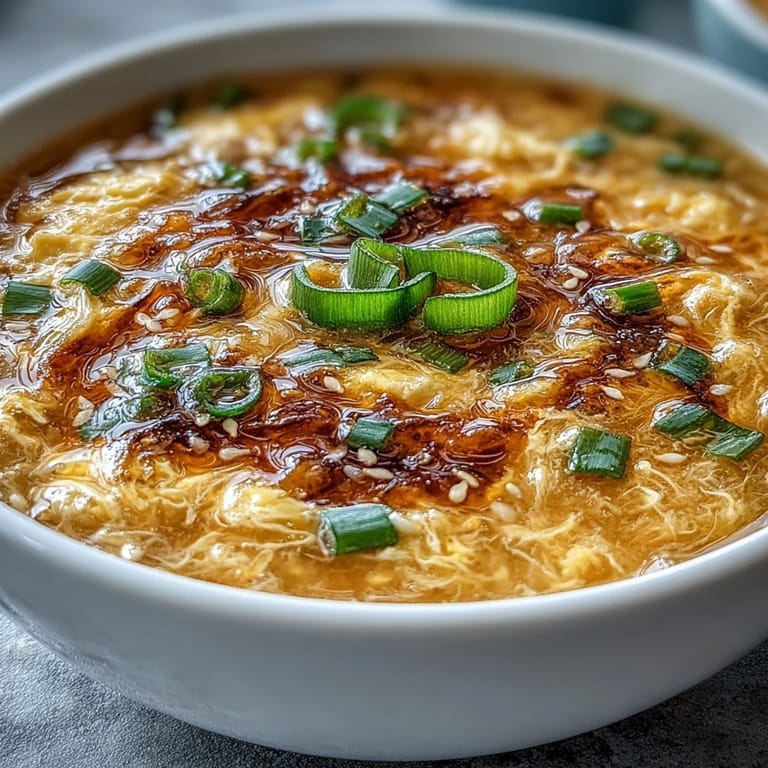
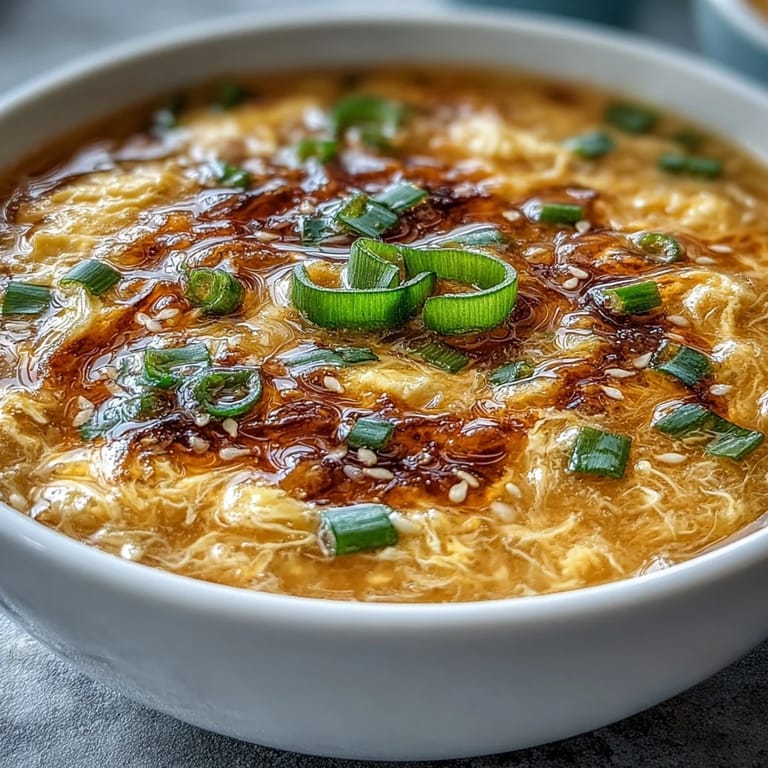
- Large eggs: Crack them cold from the fridge and beat until blended; the pour is key for that signature ribbon effect.
- Scallions: Thin slices scattered on top add fresh contrast and crunch, and they look as good as they taste.
- Toasted sesame seeds (optional): A sprinkle right before serving adds nutty richness and a little visual flair—skip or double as the mood strikes.
Tired of Takeout? 🥡
Get 10 meals you can make faster than delivery arrives. Seriously.
One email. No spam. Unsubscribe anytime.
Instructions
- Simmer the Broth:
- Pour the broth into a saucepan, add the soy sauce, white pepper, sesame oil, and salt, then bring to a gentle simmer over medium heat; breathe in that warm, savory steam.
- Thicken If You Like:
- If you prefer a silkier soup, whisk cornstarch with water for a quick slurry and stir it into the simmering broth; watch as it gently clouds up and gains body.
- Beat the Eggs:
- Crack the eggs into a bowl and vigorously beat them with a fork or whisk until no streaks remain—the smoother the blend, the better the ribbons.
- Add the Eggs, Make Ribbons:
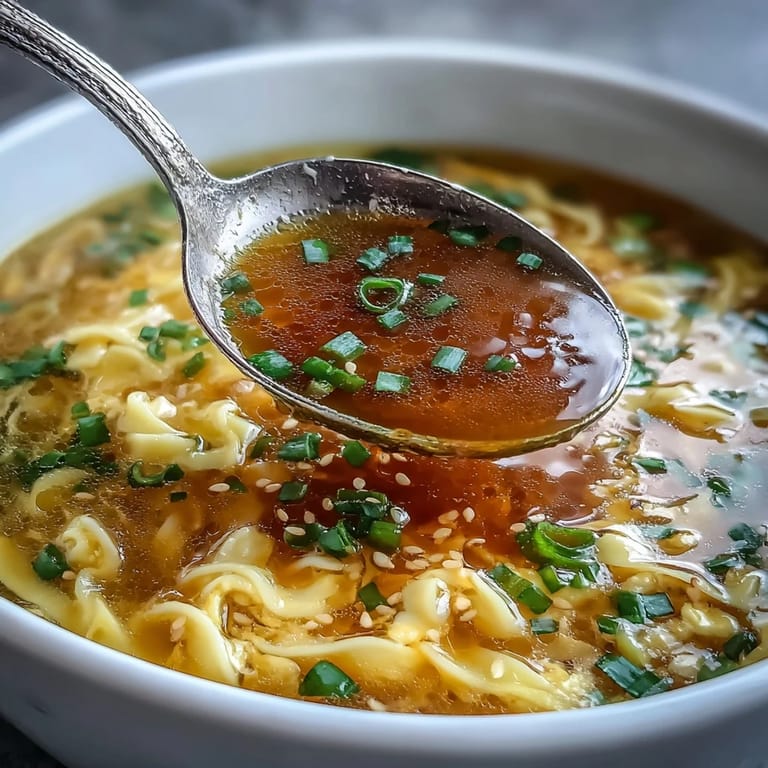
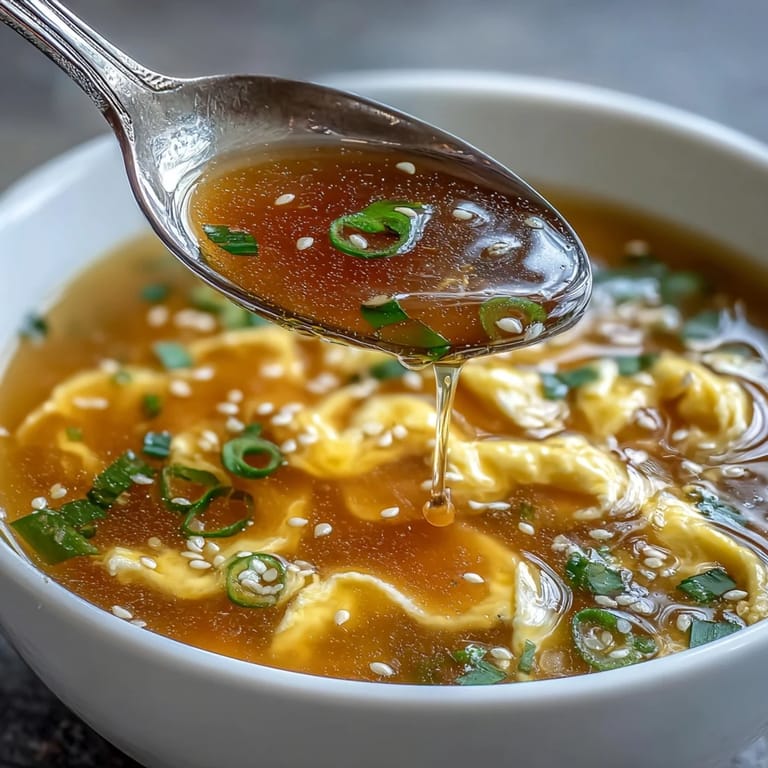
- Turn the heat down low; slowly swirl the broth with chopsticks or a fork, then drizzle the beaten eggs in a thin stream, marveling as they set into wispy ribbons almost instantly.
- Finish and Serve:
- Let the eggs rest for about thirty seconds, then gently stir to break up any bigger clumps. Ladle into bowls and top with fresh scallions and sesame seeds if you like.
 Pin It
  Pin It
 Years later, I realized how this simple soup turned an ordinary lunch into an impromptu celebration during a rainy-day picnic on my living room floor. It filled the room with warmth, laughter, and just the right amount of steam on the windows.
Getting the Texture Just Right
The speed of your pour and the temperature of the broth both matter more than you’d think—too hot or too quick, and the eggs toughen; too slow or too cool, and the ribbons never form. There’s a sweet spot where the eggs bloom instantly and stay tender, which you’ll nail after a couple tries.
Fun Ways to Make It Your Own
I love tossing in a little sweet corn or cubes of soft tofu on a whim, and a dash of turmeric not only boosts the color but hints at something a bit exotic. A sliver of fresh ginger in the broth can brighten everything, especially on days when I need a little lift.
Small Details That Matter
Snipping the scallions right over the bowl means they keep their crunch, and lightly toasting sesame seeds fills the kitchen with a cozy nutty scent. Swapping broths changes the soul of the soup, so don’t be shy about using whatever you have on hand.
- Taste before adding more salt—broths vary a lot.
- Stirring in one direction forms more even ribbons.
- Cleanup is a breeze if you rinse your mixing bowl right away.
 Pin It
  Pin It
 May your bowl of egg drop soup bring a little bit of calm and creativity to your day. You might just be surprised by how often you’ll find yourself craving it again.
Recipe FAQs
- → How do I get silky egg ribbons?
Beat the eggs well and drizzle them slowly into a gently simmering broth while stirring in a circular motion. Lower heat helps create thin, delicate ribbons instead of large clumps.
- → Can I make it thicker?
Yes—whisk a teaspoon of cornstarch with cold water to form a slurry and stir it into the simmering broth. Cook a minute until it slightly thickens before adding eggs.
- → What are good broth choices?
Low-sodium chicken or vegetable stock works best so you can control seasoning. For extra depth, simmer a piece of fresh ginger briefly and remove before adding eggs.
- → How can I keep it vegetarian?
Use a rich vegetable broth in place of chicken stock and check condiments like soy sauce for additives. Add tofu cubes or sweet corn for heartiness.
- → Any tips for seasoning and aroma?
White pepper adds a warm heat without altering color; a drop of sesame oil at the end boosts aroma. Finish with thinly sliced scallions and optional toasted sesame seeds.
- → How long does it keep and how to reheat?
Store cooled soup in the fridge up to 2 days in an airtight container. Reheat gently over low heat to avoid overcooking the eggs; add a splash of broth or water if it thickens too much.