 Pin It
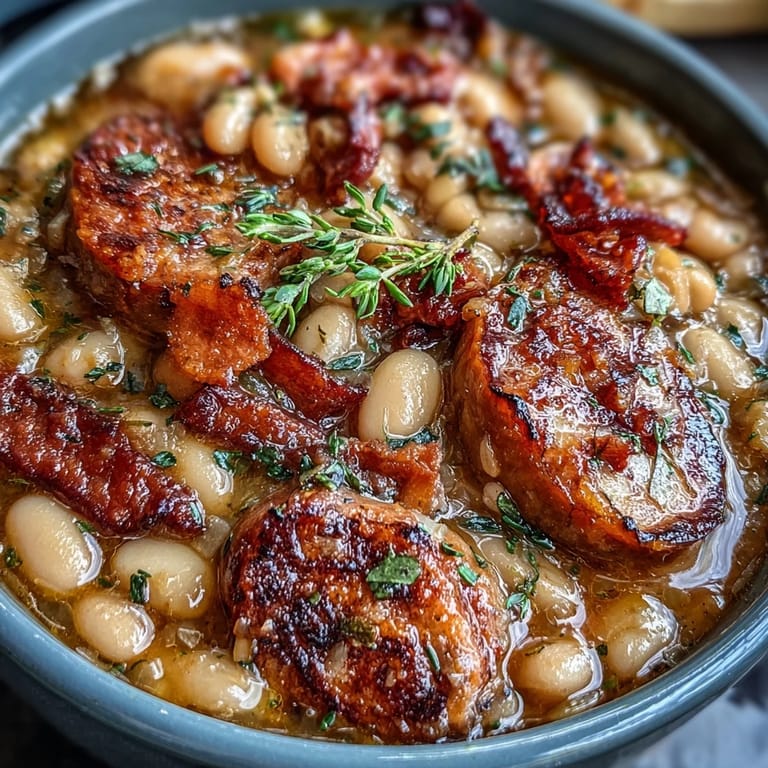
 There's something about the smell of a cassoulet bubbling away in the oven that makes a kitchen feel less like a cooking space and more like a refuge. I discovered this particular version on a cold November evening when I had a Dutch oven, leftover ham, and the kind of restlessness that only slow cooking can cure. The French have perfected the art of throwing humble ingredients into one pot and letting time do the heavy lifting, and this cassoulet proves why that philosophy has lasted centuries.
I made this for a dinner party where one guest showed up with his elderly mother, who spent most of her childhood in Lyon. She took one spoonful and went quiet for a moment, then told us about her grandmother's kitchen and how this dish tasted exactly like Wednesday nights. That's when I realized cassoulet isn't really about technique at all—it's about creating something so warm and genuine that it bypasses people's defenses entirely.
Ingredients
- Smoked ham, diced (400 g): The backbone of this dish; the smokiness carries through every spoonful and eliminates the need for added salt in some places.
- Pork sausage, thickly sliced (200 g): Choose a quality sausage with real herbs because it will season the entire pot as it cooks down.
- Bacon or pancetta, diced (100 g): Start with this rendered fat as your base—it's the secret to depth that cream and butter could never achieve.
- Dried white beans, soaked overnight (500 g): Don't skip the soaking step; it ensures even cooking and prevents that mealy texture that ruins cassoulet.
- Carrots, celery, onion, and garlic: This aromatic foundation is what French cooks call the holy trinity plus one; it's been working since medieval times for a reason.
- Diced tomatoes, drained (1 can, 400 g): The acidity brightens everything without making the dish taste tomatoey or acidic.
- Chicken stock (1.2 L): Use homemade if you can; the quality directly impacts how the beans taste by the end.
- Tomato paste (2 tbsp): A small amount concentrates umami and adds savory richness without overpowering the other flavors.
- Olive oil (2 tbsp): Good enough to cook with but not so precious that you feel wasteful.
- Bay leaf and fresh thyme: These aren't optional; they transform white beans from bland to actually interesting.
- Smoked paprika (1 tsp): This is where the dish gets its subtle whisper of smoke that lingers on your palate.
- Fresh breadcrumbs for topping (1 cup, optional): If you use them, they create a golden crust that contrasts beautifully with the soft beans underneath.
Tired of Takeout? 🥡
Get 10 meals you can make faster than delivery arrives. Seriously.
One email. No spam. Unsubscribe anytime.
Instructions
- Get your oven and pot ready:
- Preheat your oven to 160°C (325°F) and place your Dutch oven or heavy casserole on the stovetop over medium heat. A slow, gentle temperature is what makes cassoulet transform from ingredients into comfort.
- Render the pork fat:
- Add the diced bacon or pancetta to the hot pot and let it cook until the edges turn golden and crispy, which takes about 5 minutes. This rendered fat becomes the flavor foundation for everything that follows.
- Build your aromatic base:
- Add the chopped onion, diced carrots, and celery to the pot and stir often for about 5 to 7 minutes until the vegetables soften and the onion becomes translucent. You'll notice the kitchen smelling suddenly rich and inviting—this is the smell of things about to become delicious.
- Add garlic and deepen the flavors:
- Stir in your minced garlic and cook for just one more minute, until fragrant but not browned. Burnt garlic will make you regret everything, so keep the heat at medium and watch closely.
- Brown the ham and sausage:
- Add the diced ham and sliced sausage, stirring occasionally for about 5 minutes until they lose their raw appearance and the edges turn slightly golden. You're not trying for crispy; you just want them to release their flavors into the pot.
- Add the tomato paste and spices:
- Stir in the tomato paste, smoked paprika, and drained tomatoes, cooking for about 2 minutes while stirring to coat everything evenly. This step releases the full potential of the tomato paste and distributes the paprika's smoke throughout.
- Combine with beans and stock:
- Add your soaked and drained white beans, pour in the chicken stock, and toss in the bay leaf and thyme sprigs. Season with salt and pepper, remembering that the ham and sausage are already salty, so taste before adding too much.
- Transition to the oven:
- Bring everything to a simmer on the stovetop, then cover the pot and transfer it to your preheated oven. The low heat and gentle cooking environment of the oven will transform the beans into something creamy and tender.
- Let time do the work:
- Bake for 1 hour and 30 minutes, stirring once or twice during cooking, until the beans are completely tender and the liquid has reduced into a thick, cohesive stew. Check the beans by fishing one out and tasting it; if it dissolves on your tongue, you're done.
- Optional crust moment:
- If you want a golden breadcrumb topping, sprinkle the fresh breadcrumbs evenly over the surface during the last 15 minutes of baking and leave the pot uncovered so they crisp up. This step is what transforms a simple cassoulet into something that looks like you've been cooking since dawn.
- Final touches:
- Remove the bay leaf and thyme sprigs, taste the cassoulet, and adjust the seasoning with additional salt and pepper if needed. Some batches need more than others depending on your stock and the meat you used.
- Serve with intention:
- Ladle the cassoulet into deep bowls, garnish generously with fresh chopped parsley, and serve alongside crusty bread for soaking up every last bit of the savory broth.
 Pin It
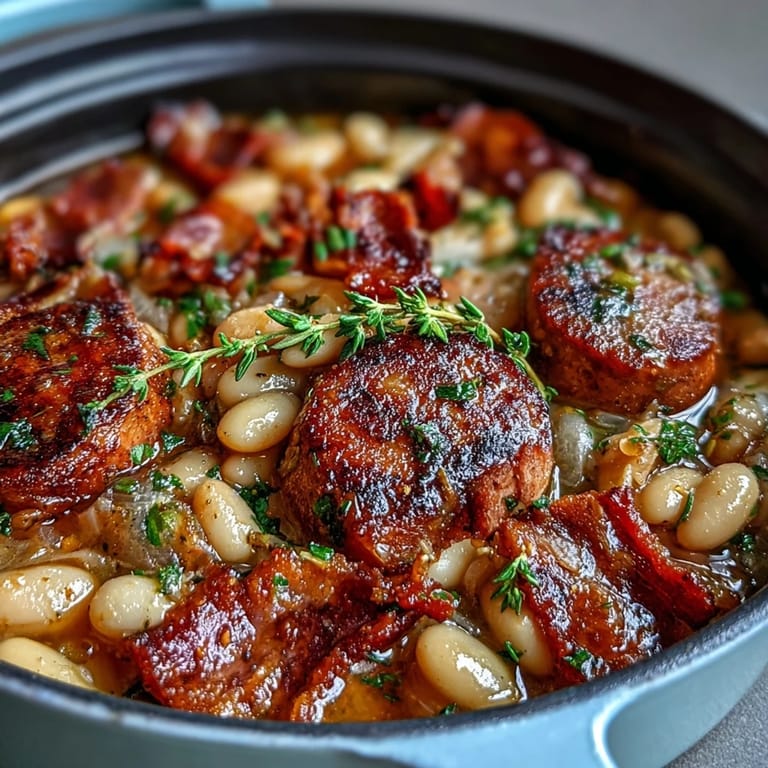
 There was a Tuesday when my neighbor knocked on my door because the smell drifting from my kitchen had drawn him from his house three doors down. He stayed for dinner, and by the end, we were talking about his childhood and what it meant to cook something that makes people linger at the table. That's the real magic of cassoulet—it's not fancy or complicated, but it stops time in the best possible way.
On Choosing Your Meats
The quality of your ham and sausage matters more than you might think because these two ingredients will season the entire pot as they cook down. I learned this the hard way when I grabbed the cheapest processed ham from the supermarket and ended up with something that tasted vaguely of salt and regret. If you can find a proper smoked ham from a butcher or a sausage that lists actual herbs and meat rather than mystery binders, your cassoulet will taste noticeably better. Some cooks prefer using a ham bone or pork shoulder instead of diced ham because they release gelatin as they cook, creating a silkier texture overall.
Why This Recipe Works for Feeding People
Cassoulet is one of those rare dishes that tastes deeply personal and special while still being forgiving enough that you won't feel nervous serving it to people you want to impress. The long cooking time means you're not stressed in the kitchen while guests arrive, and the fact that it improves with sitting means you can make it a day or even two days ahead without losing anything. It also feeds a crowd generously; six servings from one pot means you can focus on setting a nice table or having a real conversation instead of fussing in the kitchen.
Wine Pairings and Serving Suggestions
A robust red wine from the south of France, like Cahors or Côtes du Rhône, is traditional with cassoulet because these wines have enough tannin and body to stand up to the richness without being overwhelmed. Serve the cassoulet in deep bowls with thick, crusty bread on the side for soaking up the savory broth that pools at the bottom. If you want to get fancy, grate a little aged Gruyère over the top before serving, or just let the cassoulet speak for itself with a sprinkle of fresh parsley.
- Crusty bread and good butter on the side turns the meal into something people will still be talking about weeks later.
- A simple green salad dressed with lemon and Dijon mustard cuts through the richness perfectly and cleanses the palate between bites.
- Save any leftovers because cassoulet tastes even better reheated gently the next day, as if it's had time to think about what it wants to be.
 Pin It
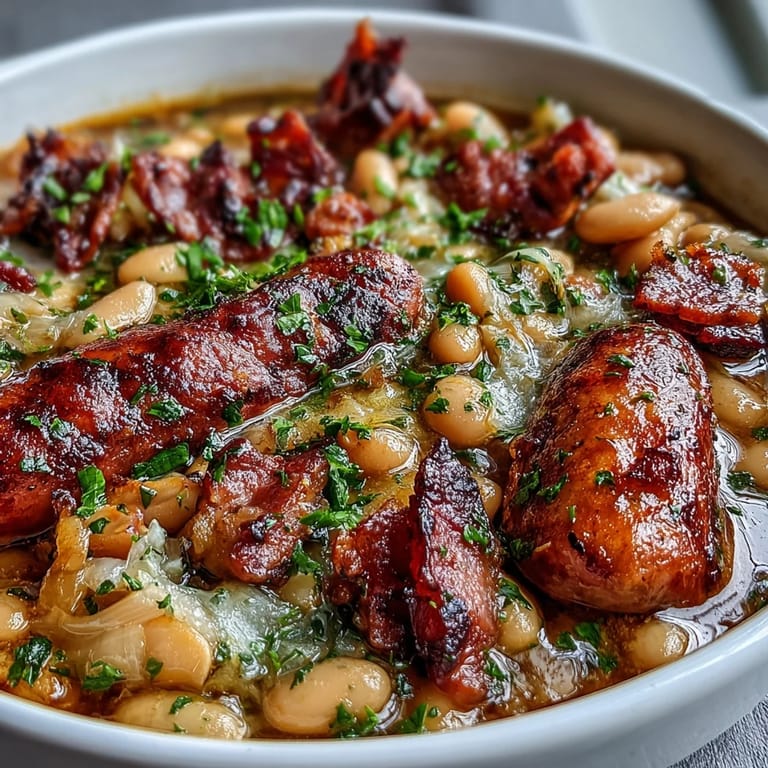
 Make this cassoulet when you need to slow down and remember why cooking matters in the first place. It's the kind of dish that reminds you that the best meals aren't about impressing anyone—they're about creating a moment where everyone at the table feels genuinely seen and cared for.
Recipe FAQs
- → What type of beans are best for the dish?
Cannellini or Great Northern beans work well due to their creamy texture after slow cooking.
- → Can I prepare the dish ahead of time?
Yes, flavors deepen if made a day prior and reheated before serving.
- → What is the purpose of smoked paprika in this meal?
It adds a subtle smoky depth that complements the ham and balances the beans' creaminess.
- → How do I achieve a crispy topping?
Sprinkling fresh breadcrumbs in the final baking phase and baking uncovered creates a delightful crust.
- → Is there a vegetarian alternative?
Omitting all meats and enhancing with smoked paprika provides a rich, smoky flavor without meat.