 Pin It
 One rainy afternoon, I stood in my kitchen watching the oven glow as vegetables began to char and sweeten, their edges curling into little caramelized promises. My apartment smelled incredible—like something was happening without me having to fuss over it constantly. That's when I realized this soup wasn't just another weeknight dinner; it was proof that simple ingredients, treated with a little respect, could become something genuinely nourishing and comforting without any fuss or pretension.
I made this for my neighbor who had just moved in, and watching her face when she tasted that first spoonful—the way her shoulders relaxed—reminded me that food is really just an invitation to slow down together. She came back the next week asking for the recipe, and I realized the best compliment isn't always words; sometimes it's someone wanting to recreate the moment in their own kitchen.
Ingredients
- Dried green or brown lentils (1 cup): These hold their shape beautifully and don't turn to mush, which is exactly what you want in a soup where texture matters—always rinse them first to catch any tiny stones hiding among them.
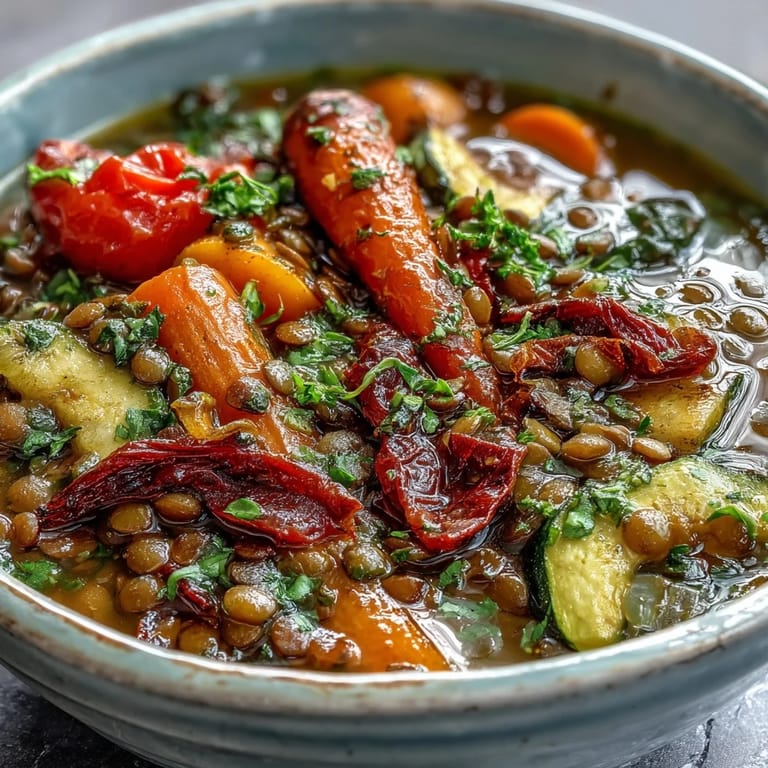
- Carrots, celery, and zucchini: The holy trio that builds flavor, though you'll notice we roast them first to concentrate their sweetness before they hit the broth.
- Red bell pepper and cherry tomatoes: These add brightness and a slight natural acidity that keeps the soup from feeling heavy, even when it's loaded with protein.
- Yellow onion and garlic: The aromatics sautéed gently in the pot create the savory base that everything else builds on.
- Vegetable broth (6 cups): Use something with real flavor here—the broth is the foundation, and a bland one will show.
- Dried thyme, oregano, and smoked paprika: These spices work together to create warmth without heat, and the smoked paprika gives it a subtle depth that hints at something more complex than it actually is.
- Bay leaf: One bay leaf transforms the whole pot into something more intentional; remember to fish it out before serving or your guests will find it.
- Olive oil (2 tablespoons total): Split between the roasting pan and the pot, it carries flavor and helps everything cook evenly.
- Fresh parsley and lemon juice: These finishing touches are optional but highly encouraged—the brightness cuts through the earthiness and makes each spoonful feel alive.
Tired of Takeout? 🥡
Get 10 meals you can make faster than delivery arrives. Seriously.
One email. No spam. Unsubscribe anytime.
Instructions
- Get your oven ready and prep the vegetables:
- Heat your oven to 425°F and while it's warming, dice your carrots, celery, zucchini, bell pepper, and halve your cherry tomatoes—this is where a sharp knife makes the job feel less tedious. Toss everything with 1 tablespoon olive oil, a pinch of salt, and a crack of pepper, then spread it across a baking sheet so nothing's crowded and let the oven work its magic for about 20 minutes until you see caramelization on the edges.
- Build the flavor base while vegetables roast:
- In your large pot, warm the remaining tablespoon of olive oil over medium heat and add your chopped onion, stirring occasionally until it becomes translucent and soft, about 4 minutes. Once you smell the garlic sweetening after you add it, you'll know you're ready for the next step—that fragrance means you're on the right track.
- Combine everything and let it simmer:
- Pour in your rinsed lentils, add the roasted vegetables straight from the sheet, then pour in the vegetable broth and drop in the thyme, oregano, smoked paprika, and bay leaf. Bring it to a boil, then lower the heat and let it bubble gently uncovered for about 25 minutes—the lentils should be tender, not falling apart, and the flavors should taste like they've had time to get to know each other.
- Taste, adjust, and finish:
- Fish out the bay leaf, then taste it—add salt and pepper and lemon juice to your preference, remembering that a squeeze of lemon can completely change how the soup tastes. The acidity wakes everything up in a way that feels almost magical.
 Pin It
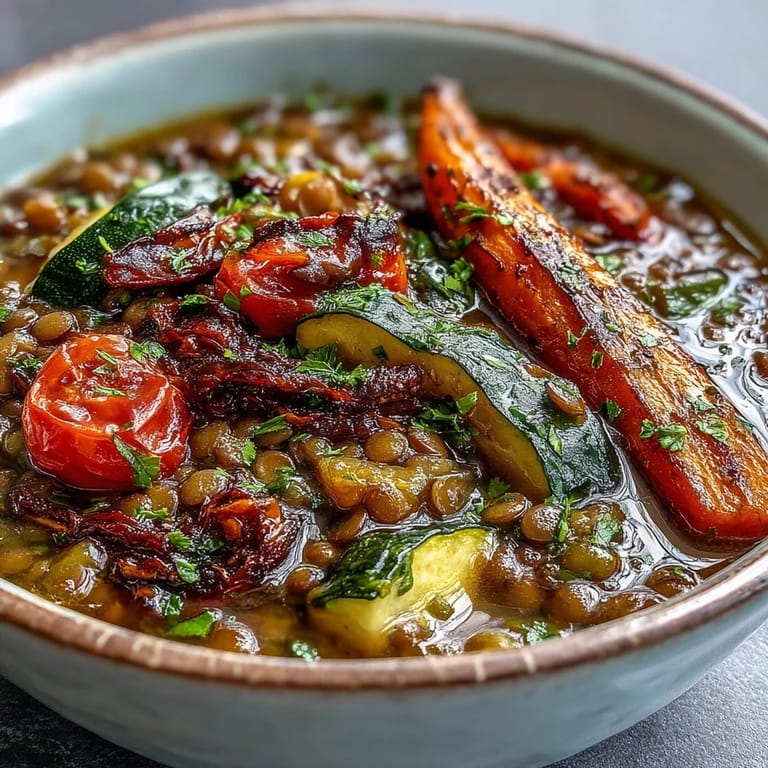
 There's something almost meditative about ladling this soup into bowls, watching the steam rise and the colors swirl together. It became my go-to when I wanted to feel like I'd actually made something worthwhile without spending my entire evening in the kitchen.
Why Roasting Changes Everything
I learned the hard way that throwing raw vegetables straight into broth creates a muddy, one-note flavor that tastes more like you're boiling rather than cooking. The 20 minutes in the oven transforms those vegetables—their natural sugars concentrate, their edges caramelize, and they develop this subtle complexity that makes the whole soup taste intentional. It's the difference between a soup you make because you have to and one you actually want to eat.
Building Depth with Spice
The smoked paprika isn't trying to make your soup spicy; it's creating a whisper of something deeper that makes people lean in closer and take another bite, wondering what makes it taste so good. I used to think I needed complicated spice blends, but this combination—thyme, oregano, and smoked paprika—taught me that restraint is its own kind of elegance. Three spices working together in harmony beat a dozen fighting for attention.
Serving and Variations
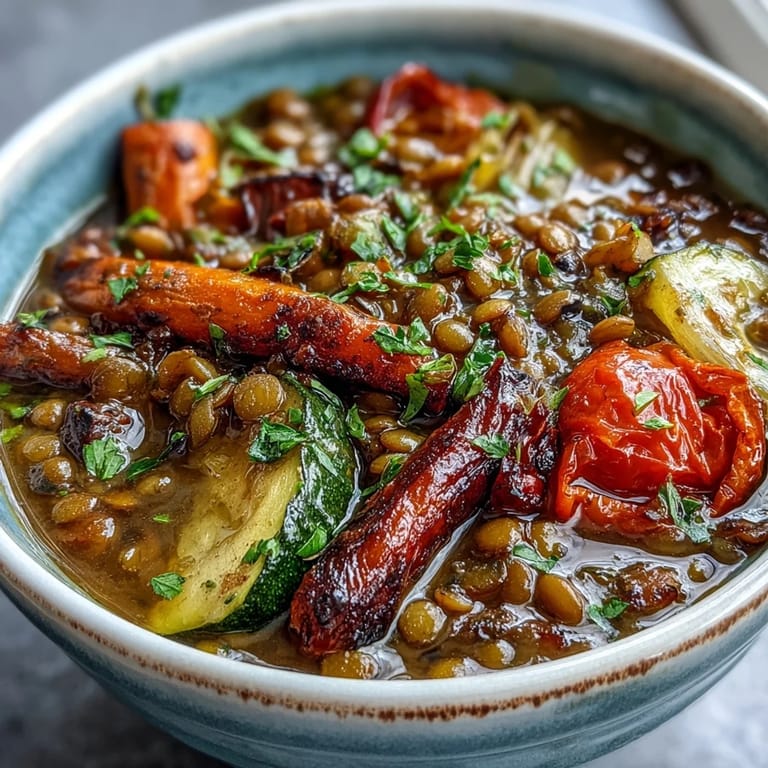
This soup tastes even better the next day once the flavors have settled into comfort, so don't hesitate to make it ahead and reheat gently. A crusty piece of bread is non-negotiable for soaking up the last sips from your bowl, and those fresh herbs scattered on top aren't just decoration—they're flavor, texture, and a visual reminder that you made something real.
- If you want to add richness, stir in a tablespoon of tomato paste after sautéing the garlic and it'll deepen the whole soup into something almost velvety.
- Sweet potato or butternut squash swap beautifully for the zucchini or bell pepper if that's what you have or what the season offers.
- A squeeze of fresh lemon juice at the end—even if the recipe doesn't call for it—will brighten everything and make you wonder why anyone ever forgets this step.
 Pin It
 This soup has become my answer to almost every cooking question—when I'm tired, when someone's sick, when the weather turns cold and comfort feels non-negotiable. It's proof that you don't need complicated techniques or obscure ingredients to make something genuinely nourishing and delicious.
Recipe FAQs
- → Can I use different types of lentils?
Red lentils work well but will break down more, creating a thicker consistency. Black lentils hold their shape beautifully but may require slightly longer cooking time. Avoid using pre-cooked or canned lentils as they won't absorb the flavors properly.
- → How long does this soup keep in the refrigerator?
This soup stores excellently in an airtight container for up to five days. The lentils will continue absorbing the broth, so you may need to add additional liquid when reheating. It also freezes well for up to three months.
- → Can I make this without roasting the vegetables first?
While roasting adds wonderful caramelized depth, you can sauté all vegetables directly in the pot. Start with the onions and hard vegetables like carrots, then add softer vegetables like zucchini and tomatoes a few minutes later.
- → What can I serve with this soup?
Crusty bread, warm rolls, or garlic bread make perfect accompaniments for dipping. A simple green salad with vinaigrette provides a nice contrast. For extra protein, serve with a dollop of Greek yogurt or sprinkle with nutritional yeast.
- → How can I make this soup more filling?
Add diced potatoes during the simmering stage, stir in cooked pasta or rice during the last 10 minutes, or serve with a slice of whole-grain bread. A tablespoon of coconut cream stirred in at the end adds richness and calories.