 Pin It
 My neighbor Maria taught me this soup on a chilly October afternoon when she showed up at my door with a pot and a knowing smile. She said minestrone wasn't really a recipe but a conversation between what was in your garden and what was in your pantry, adjusted by hunger and mood. Watching her work, I realized she never measured twice the same way, tasting and adjusting as steam rose from the pot. That afternoon shifted how I thought about cooking—not as following orders, but as listening to what the vegetables needed.
Years later, I made this for my daughter's first week in her own apartment, knowing she'd been living on takeout. I watched her face when she realized it cost almost nothing to make and tasted like care. She started asking questions mid-bite, pencil in hand, and I understood then why Maria had shared it with me—it's the kind of dish that wants to be passed forward.
Ingredients
- Olive oil: Use a decent one you don't mind tasting; it's the foundation and actually matters here.
- Yellow onion, carrots, and celery: This trio is where the soup's backbone comes from, and taking five full minutes to soften them properly makes everything that follows richer.
- Garlic, fresh: Minced, not sliced, so it dissolves into the broth rather than surprising you with chunks.
- Zucchini and potato: The potato makes the soup feel substantial while zucchini keeps it bright; together they're why people ask for seconds.
- Green beans: They stay just firm enough if you don't overcook the final stage, adding a little resistance you actually want.
- Canned tomatoes: Good quality matters since they're not cooked down for hours; I've learned to taste for acidity and adjust with a pinch of sugar if needed.
- Cannellini beans: Drain and rinse them well so the soup doesn't turn cloudy or starchy.
- Small pasta: Ditalini is traditional but elbow works just fine; the size matters more than the exact shape because small pasta releases starch gently.
- Vegetable broth: Buy the kind that tastes like something; weak broth will make a weak soup no matter what else you do.
- Dried Italian herbs: A teaspoon more than the recipe suggests won't hurt, and fresh herbs can't replace dried ones here because the dried steep into the broth.
- Bay leaf: Don't skip this—it's subtle but essential.
- Spinach or kale: Add it at the very end so it stays vibrant and slightly toothsome.
- Fresh parsley: Bright, grassy, the thing that reminds your mouth why you're eating something green.
Tired of Takeout? 🥡
Get 10 meals you can make faster than delivery arrives. Seriously.
One email. No spam. Unsubscribe anytime.
Instructions
- Build your base with heat and patience:
- Pour the olive oil into your largest pot and let it shimmer just a moment before adding the onion, carrots, and celery together. You're not rushing this—five minutes means actually five minutes, until the kitchen smells sweet and the vegetables soften enough to give slightly when you press with your spoon.
- Deepen the flavor with aromatics:
- Stir in the minced garlic along with the zucchini, potato, and green beans, cooking for three minutes so the garlic perfumes everything without burning. The vegetables should be raw-tender still, not soft, because they'll cook further in the broth.
- Bring everything together:
- Add the tomatoes straight from the can, the drained beans, broth, dried herbs, and that bay leaf. Stir once, then let the heat rise—you're looking for an actual boil where bubbles break the surface, not just steam.
- Let time do its work:
- Cover the pot, lower the heat to medium-low, and simmer for twenty minutes. This is when the soup actually becomes itself, flavors merging and the broth deepening. Don't stir constantly; let it be.
- Add the pasta at exactly the right moment:
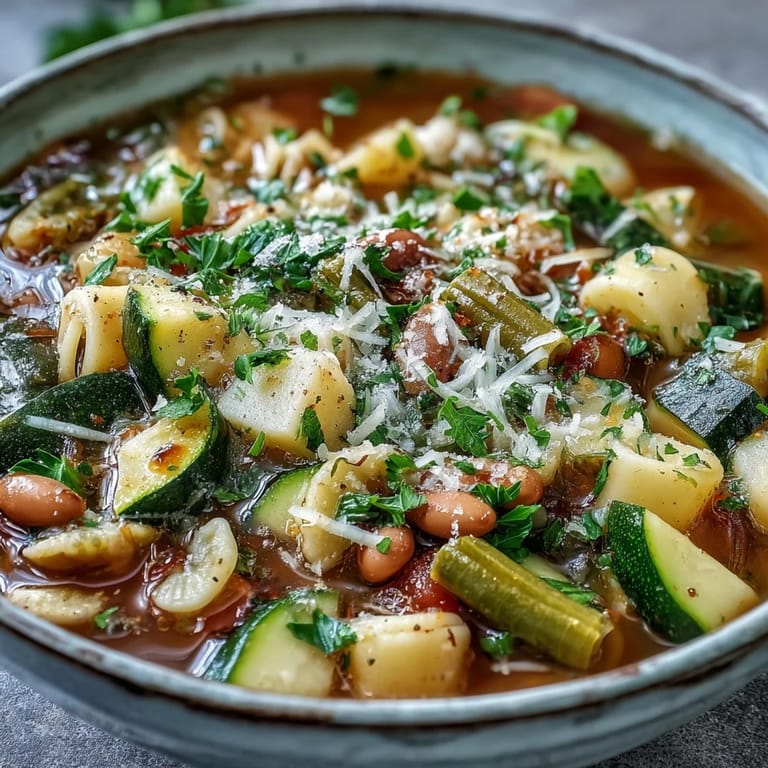
- Stir in the pasta and simmer uncovered for eight to ten minutes, tasting at eight because pasta finishes faster than you expect and mushy pasta is the only real mistake in minestrone. The vegetables should be tender but not falling apart, the pasta just tender enough to bend but still with a whisper of resistance.
- Finish with greens and seasoning:
- Remove the bay leaf, add the spinach or kale, and cook for two minutes until it's wilted and deep green. Taste now—you might need more salt than you think, or a crack of pepper that makes you notice.
- Serve with intention:
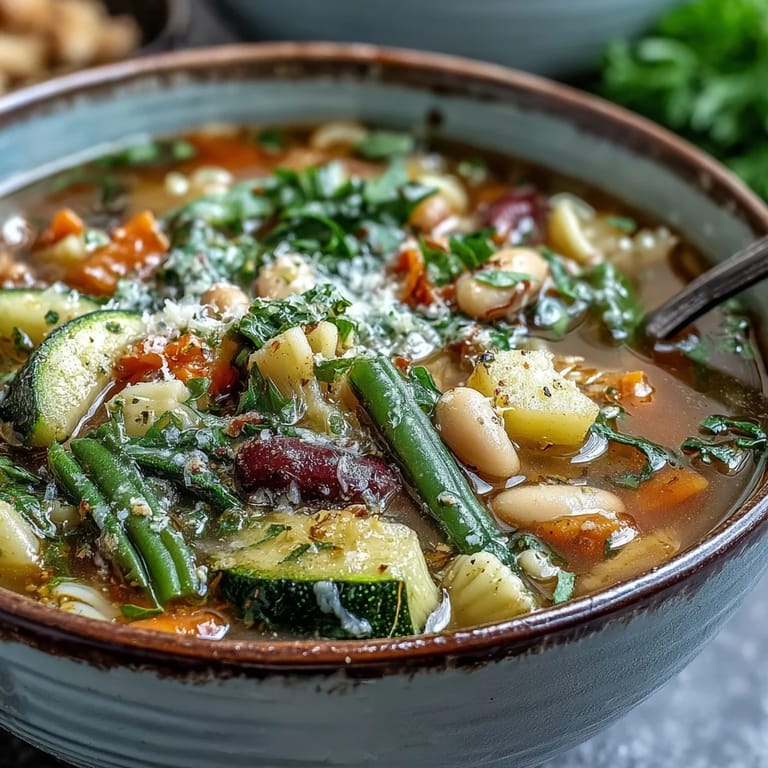
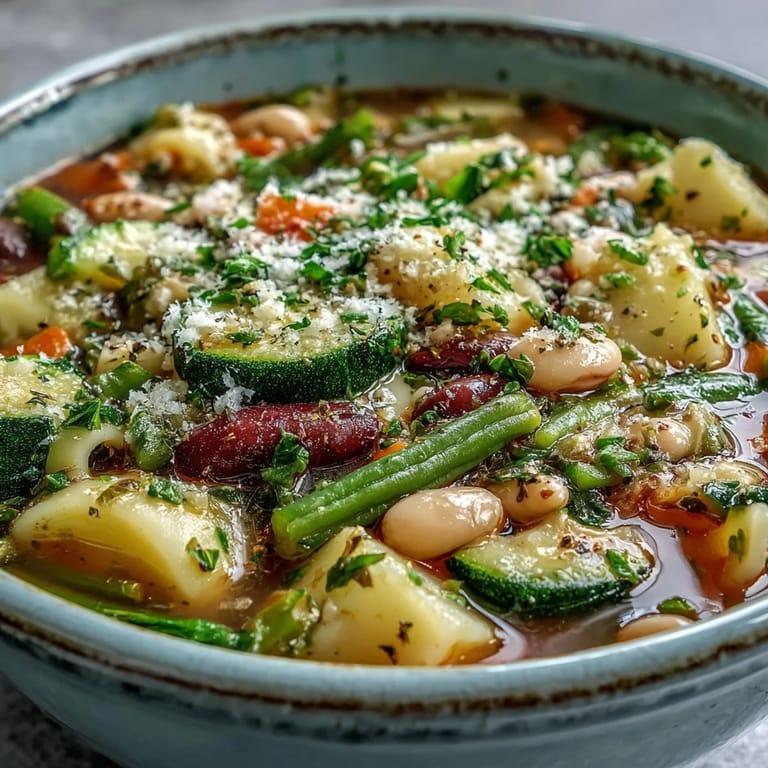
- Ladle the soup into bowls while it's hot, top with parsley so you can see the green, and offer Parmesan to anyone who wants it. This is the moment the soup stops being an idea and becomes what it was always meant to be.
 Pin It
 There was a morning when my youngest came down with a cold and asked for minestrone instead of the usual remedies. I made it quickly, and she sat at the kitchen counter watching steam rise, asking why it smelled like home. That's when I realized this soup carries something beyond nutrition—it's the edible version of someone saying they're thinking about you.
The Rhythm of Vegetable Prep
I used to think minestrone was about throwing everything in at once, but it's actually orchestrated. The onion, carrot, and celery need their own moment to release sweetness and build a foundation that the entire soup rests on. When you add the other vegetables in the second wave, they're not starting from scratch—they're joining something already alive and warm. This sequencing is why minestrone tastes like more than the sum of its parts, and why rushing through prep actually costs you flavor later.
Playing with Seasons
The genius of minestrone is that it adapts without losing its soul. In summer I add chopped cabbage or fresh peas because that's what's available and it keeps the soup from feeling heavy in heat. In winter I double down on root vegetables and maybe add kale instead of spinach for something earthier. Once I tried adding a splash of wine when I was feeling fancy, and it was wonderful but not more wonderful than the version without it—a good reminder that refinement isn't always improvement.
Why This Soup Teaches You to Cook
Making minestrone repeatedly teaches you how flavors develop, how vegetables transform with heat, and what your specific stove actually does versus what recipes assume it does. You learn to taste as you go, to adjust salt knowing it compounds, to recognize when something needs acid or richness to come alive. By the third time you make it, you're not following instructions—you're having a conversation with ingredients you now understand.
- Save that Parmesan rind if you have one; it's a secret weapon that costs nothing and changes everything.
- If your soup tastes flat halfway through, it usually needs salt or a squeeze of lemon juice, not more herbs.
- Leftover minestrone is better the next day, which is the best quality a soup can have.
 Pin It
 This soup is a gift you give yourself over and over, and each time it tastes like someone remembered that you needed feeding. Make it, share it, adjust it, and let it become yours.
Recipe FAQs
- → What vegetables work best in minestrone?
Classic minestrone includes carrots, celery, onions, zucchini, potatoes, and green beans. You can also add seasonal vegetables like cabbage, peas, or Swiss chard based on what's available.
- → Can I make this gluten-free?
Absolutely. Simply substitute regular pasta with gluten-free varieties like rice pasta, corn pasta, or chickpea pasta. Check that all other ingredients, particularly bouillon and seasonings, are certified gluten-free.
- → How long does minestrone keep in the refrigerator?
Stored in an airtight container, minestrone keeps well for 4-5 days in the refrigerator. The pasta will absorb more liquid over time, so you may need to add extra broth when reheating.
- → Can I freeze minestrone soup?
Yes, minestrone freezes beautifully for up to 3 months. For best results, freeze without the pasta and add freshly cooked pasta when reheating to prevent it from becoming mushy.
- → What pasta shape is traditionally used?
Small pasta shapes like ditalini, elbow macaroni, shells, or tubetti work perfectly as they spoon up easily with the vegetables and beans. Choose shapes that hold onto the broth well.
- → How can I add more protein to this soup?
You can increase protein by adding more beans, incorporating lentils, or stirring in some shredded chicken or Italian sausage during the last 10 minutes of cooking.