 Pin It
 There's a particular kind of magic that happens when you're standing in front of your stove at 7 PM on a weeknight, hungry and slightly frazzled, and you remember you have chicken thighs and leftover rice noodles hiding in the back of your fridge. That's when I discovered Mongolian chicken—not through a fancy cookbook, but through sheer necessity and the happy accident of throwing together what I had on hand. The first time I made it, the kitchen filled with this incredible sweet and savory aroma that made everyone pause mid-conversation. It's become my go-to when I need something that feels both impressive and effortless, ready in about 35 minutes flat.
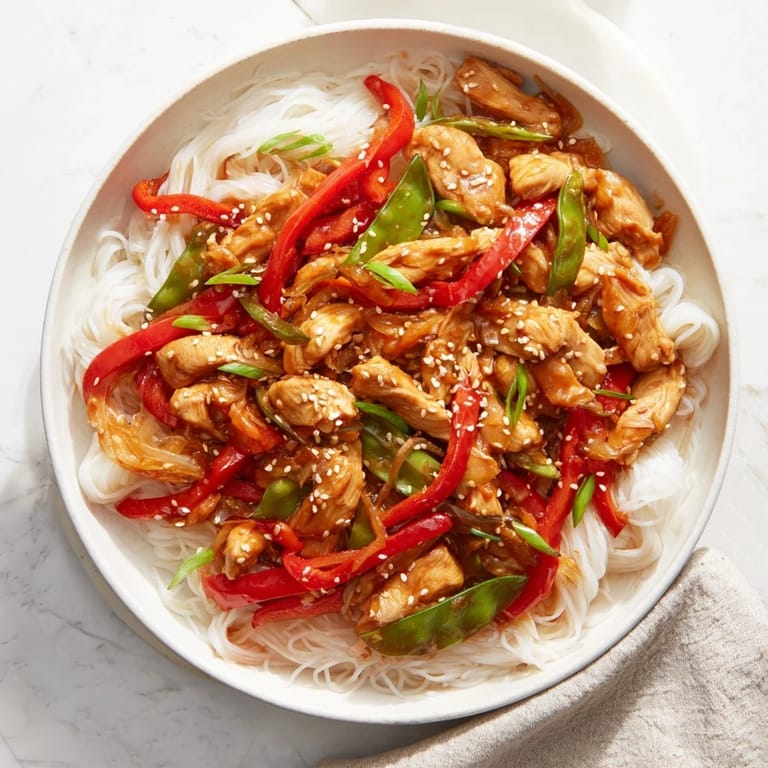
I made this for my sister on a random Thursday, and she kept going back for seconds while telling me how it tasted "restaurant-quality but not trying too hard." That's when I realized this dish had crossed from weeknight dinner into something I'd actually want to serve people on purpose. The way the caramelized edges on the chicken catch light, the vibrant colors from the peppers and snap peas—it all comes together looking far more polished than it actually is.
Ingredients
- Chicken thighs or breasts (500 g): Thighs stay more forgiving and juicy, but breasts work fine if you slice them thin and don't overcook—I've learned that lesson the hard way.
- Cornstarch (1 tbsp): This creates that silky coating on the chicken that catches the sauce beautifully; it's the secret to restaurant texture.
- Soy sauce (4 tbsp): The umami backbone of everything; use a good quality one if you have it, the difference is noticeable.
- Hoisin sauce (2 tbsp): This adds depth and a subtle sweetness that balances the savory elements.
- Brown sugar (2 tbsp): Adjust this to taste—I like mine slightly less sweet, but some nights I add an extra half tablespoon.
- Rice vinegar (1 tbsp): The brightness that keeps this from feeling heavy; don't skip it.
- Oyster sauce (1 tbsp, optional): If you have it, use it; if not, the dish still works, but you lose a layer of umami richness.
- Sesame oil (1 tsp): Just a whisper of this goes a long way—it's potent in the best way.
- Fresh garlic and ginger (2 cloves and 1 tbsp): Mince these finely; they dissolve into the sauce and become its aromatic soul.
- Red pepper flakes (1/2 tsp, optional): A gentle heat that builds slowly; add more if you like your food to have a kick.
- Bell pepper and snap peas: These stay crisp and bright if you don't overcook them; that textural contrast matters.
- Spring onions (4, plus garnish): Split the difference—some goes into the stir-fry, some scattered on top for freshness and color.
- Rice noodles or cooked pasta (200 g dried or 3 cups cooked): This is where leftover magic happens; any pasta works beautifully here.
- Neutral oil (2 tbsp total): Canola or sunflower won't compete with the sauce flavors.
- Toasted sesame seeds (2 tbsp): Toast these yourself if you can; the smell alone is worth it, and they taste noticeably better.
Tired of Takeout? 🥡
Get 10 meals you can make faster than delivery arrives. Seriously.
One email. No spam. Unsubscribe anytime.
Instructions
- Cook your noodles if needed:
- If using dried rice noodles, follow the package instructions—usually just a few minutes in boiling water. Drain and rinse with cold water so they don't stick together in a clump. If you're using leftover pasta, you're already ahead.
- Coat the chicken:
- Toss your sliced chicken with cornstarch, salt, and pepper in a bowl, making sure each piece gets a light, even coating. This is what creates that silky, restaurant-quality texture when it hits the hot oil.
- Build your sauce:
- Whisk together soy sauce, hoisin, brown sugar, water, rice vinegar, oyster sauce if using, sesame oil, minced garlic, ginger, and red pepper flakes in a small bowl. Taste it on a spoon—it should taste bold and balanced, slightly sweet with a savory depth.
- Sear the chicken:
- Heat 1 tablespoon of oil in a large wok or skillet over medium-high heat until it shimmers, then add the chicken in a single layer. Let it sit undisturbed for a minute or two so it gets golden and crispy on one side, then stir-fry until cooked through, about 4–5 minutes total. It should be golden with a slightly caramelized edge.
- Cook the vegetables:
- Push the chicken to the side, add the remaining oil, then add bell pepper and snap peas. Stir-fry for 2–3 minutes until they're just tender but still have a bite to them; this is the moment they're at their best.
- Bring it together:
- Return the chicken to the pan with the spring onions, then pour in your sauce. Stir everything so the chicken and vegetables get coated, then let it bubble gently for 1–2 minutes until the sauce thickens slightly and becomes glossy.
- Add the noodles:
- Toss in your cooked noodles and mix everything together, making sure the sauce coats every strand. Heat through for another minute or so until the noodles are warm.
- Plate and finish:
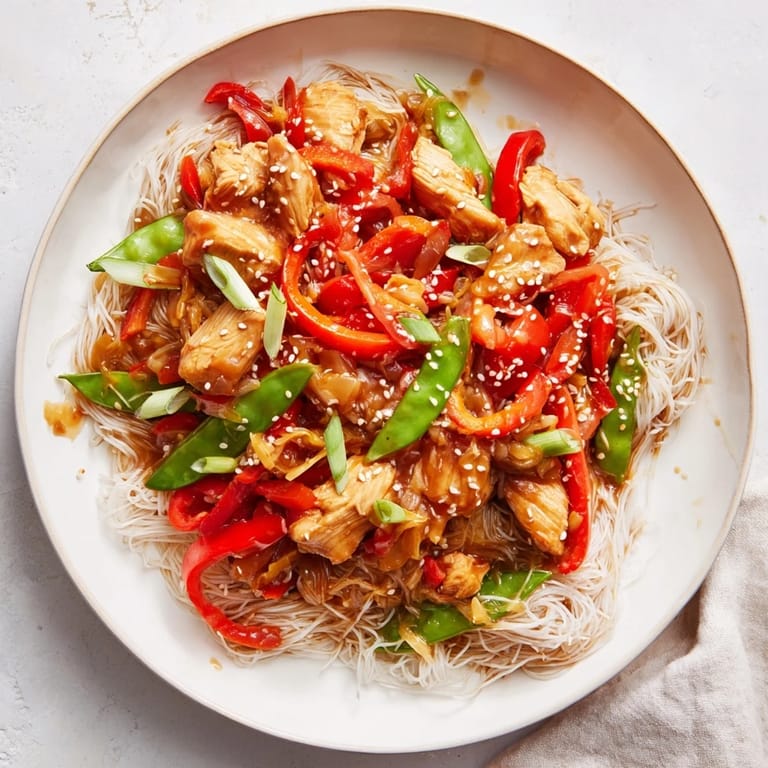
- Serve immediately while everything is still hot, scattered with extra spring onions and a generous handful of toasted sesame seeds. The contrast of warm, saucy noodles with those fresh, crunchy toppings is what makes this complete.
 Pin It
 This dish has this quiet power where it transforms how you think about weeknight cooking. I've made it dozens of times now, and it never feels like "settling" for a quick dinner—it feels like choosing something genuinely good.
The Art of the Stir-Fry
The real secret to making this shine is understanding that stir-frying isn't about moving things around constantly; it's about giving ingredients moments to sear and develop flavor before you move them. When I first started cooking this way, I used to panic and keep stirring, thinking that's what you're supposed to do. Now I know better—a little patience, hot oil, and deliberate stillness create something so much more flavorful. The chicken gets crispy edges, the vegetables stay bright and firm, and the whole thing tastes more alive.
Making It Your Own
One of my favorite things about this recipe is how forgiving it is. Swap chicken for shrimp if you're feeling fancy, or crumbled tofu if you want something lighter. The sauce stays the same, perfectly balanced, so it works with almost any protein you have on hand. I've also added water chestnuts for crunch, tossed in some baby corn, even thrown in leftover roasted broccoli when my fridge needed cleaning. The framework is strong enough that it carries whatever you want to add.
Wine and What Comes After
If you want to pour a glass of something alongside this, lean toward a crisp white like Riesling—something with a little sweetness that echoes the sauce without competing with it. The acidity cuts through the richness beautifully, and the aromatic quality feels right with all those ginger and garlic notes. But honestly, this is a dinner that stands perfectly well on its own, no glass required.
- Make extra sauce—you might find yourself wanting more than you expected.
- Prep all your ingredients before you start cooking; once the pan is hot, everything moves fast.
- Leftovers rewarm beautifully in a hot wok, though the noodles soak up the sauce overnight, which some people love and others find too thick.
 Pin It
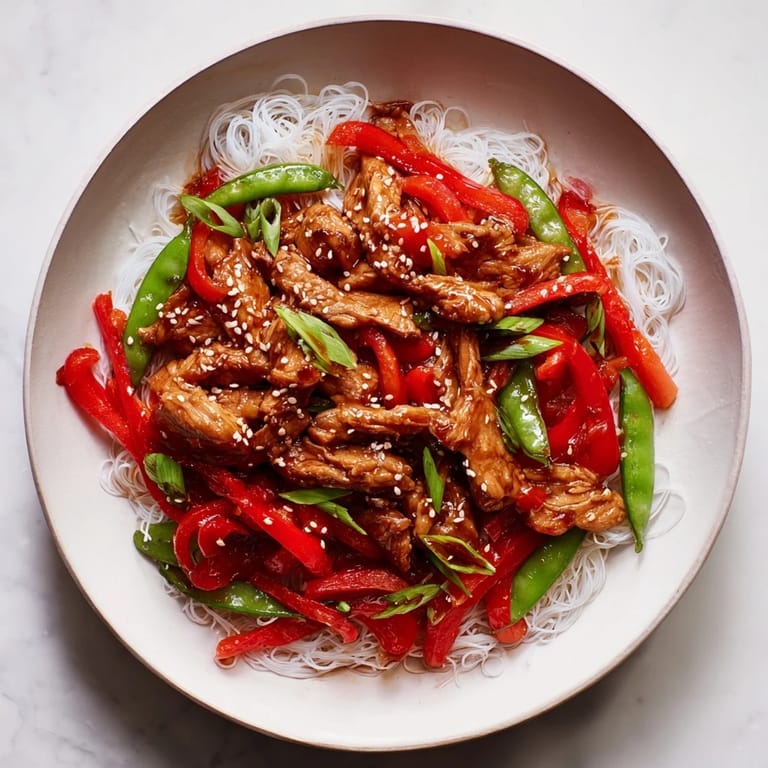
 This is the kind of meal that reminds you why you love cooking in the first place—something that tastes impressive but doesn't demand hours from you. It's genuinely good, and it comes together with a kind of effortless ease that makes you feel like you know what you're doing.
Recipe FAQs
- → Can I substitute chicken with other proteins?
Yes, tofu or shrimp can be used as alternatives to chicken for varied textures and flavors.
- → What type of noodles works best here?
Rice noodles provide a silky base, but leftover cooked pasta is also a convenient substitute.
- → How can I adjust the sauce sweetness?
Adjust brown sugar quantity to increase or decrease sweetness according to your preference.
- → Are there options to add crunch to this dish?
Incorporate water chestnuts or baby corn for extra crispy bites within the stir-fry.
- → What tools are essential for cooking this dish?
A large wok or skillet, mixing bowls, and a spatula are needed to prepare and stir-fry the ingredients efficiently.
- → Is this dish suitable for those with soy or gluten allergies?
Carefully select gluten-free soy and hoisin sauces, and omit oyster sauce if shellfish allergens are a concern.