 Pin It
 I first encountered a spread like this at a friend's dinner party where the host had arranged everything so deliberately that it looked almost too beautiful to eat. The vegetables were fanned out like a proper tent, the dips nestled at the center, and watching everyone lean in to build their own combinations was pure joy. There's something magical about appetizer platters that invite people to explore and play with their food, and this Moroccan version somehow made that feeling even more special with its warm spices and vibrant colors.
The first time I made this for a party, I spent way too much time obsessing over the tent shape, rotating vegetables back and forth like I was arranging an art installation. Then my partner walked in, took one look, and just started eating while the platter was still being adjusted, which somehow made me realize the real magic wasn't perfection but rather how quickly it brings people together.
Ingredients
- Cucumber: Slice lengthwise for elegant planks that hold their shape and stay refreshingly crisp throughout the gathering.
- Red and yellow bell peppers: These strips provide sweetness and visual drama; keep them uniform so they stack beautifully in your tent formation.
- Carrots: Cut into sticks that are thick enough to scoop dip without snapping, and their natural sweetness plays nicely against the spiced dips.
- Cherry tomatoes: Halving them prevents rolling chaos and makes them easier for guests to grab without the platter shifting.
- Red onion: Slice paper-thin so the sharpness softens slightly as it sits; it adds a necessary bite that keeps the platter from feeling one-dimensional.
- Radishes: Thin slices give you peppery crunch that nobody expects but everyone enjoys once they taste it.
- Pita or msemen: Warm them just enough to release their aroma; cold bread feels forgotten, but overcooking makes them tough and brittle.
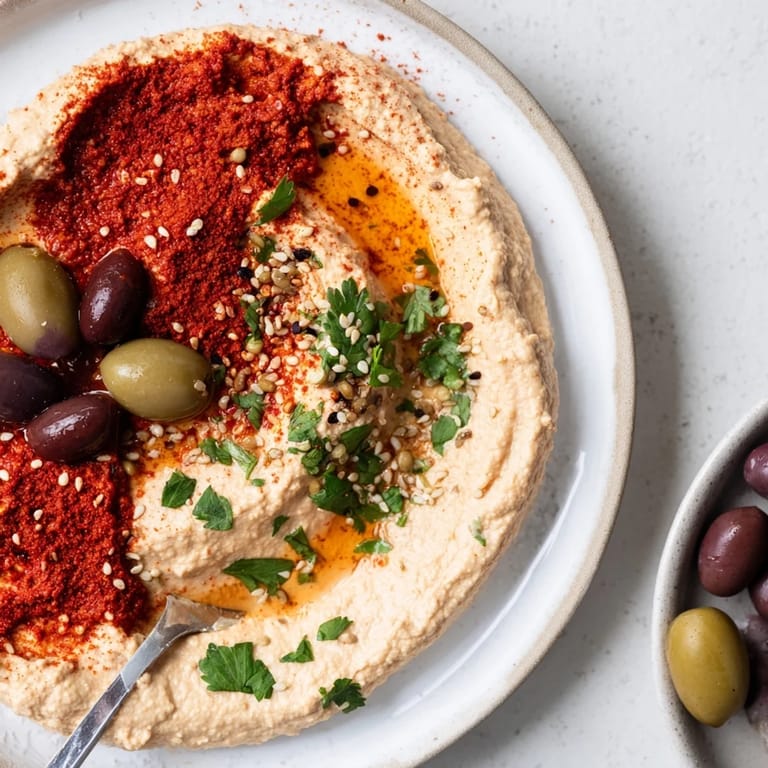
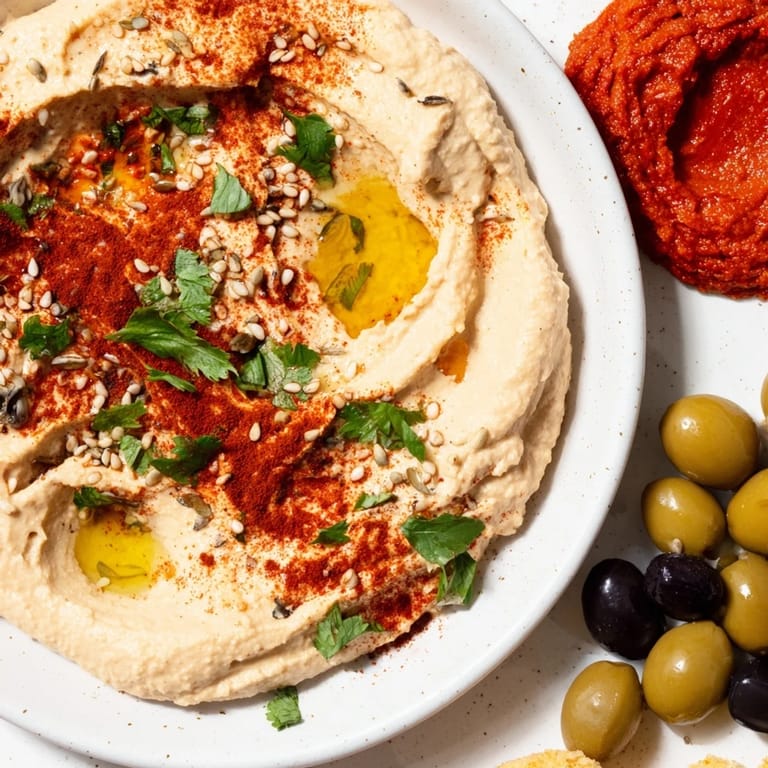
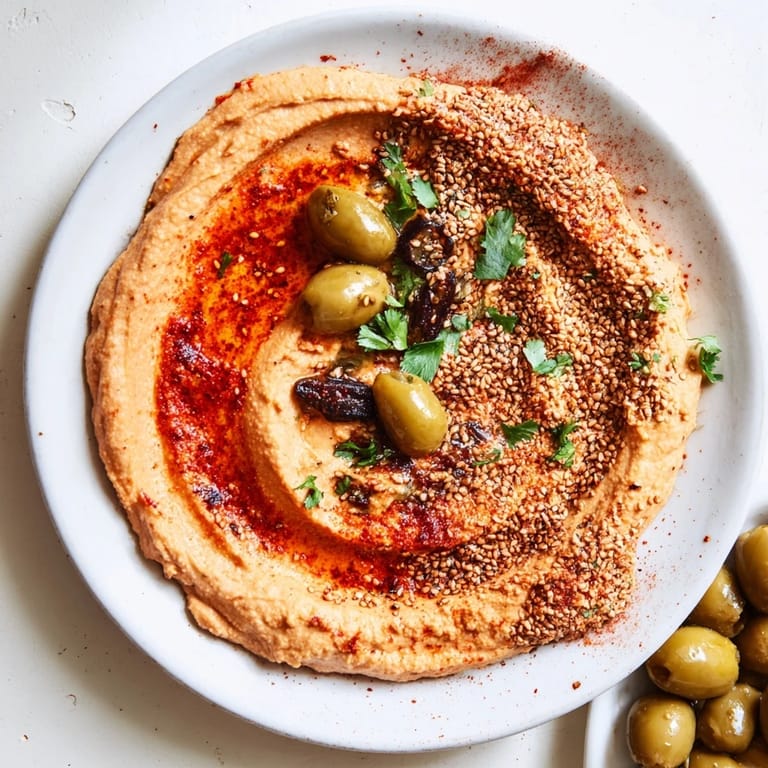
- Hummus, muhammara, and baba ganoush: Buy or make these three to create a trio of flavors that feel complete; together they tell a fuller story than any single dip.
- Green and black olives: Pit them yourself if you have time because the texture of freshly pitted olives feels noticeably better in your mouth than the pre-pitted variety.
- Fresh cilantro or parsley: This is your finishing touch that lifts the whole arrangement from nice to memorable with just a sprinkle of green.
- Toasted sesame seeds and spices: Toast the sesame seeds yourself if possible because their fragrance when warm is incomparable, and the cumin and paprika should be fresh enough that you can smell their complexity.
Tired of Takeout? 🥡
Get 10 meals you can make faster than delivery arrives. Seriously.
One email. No spam. Unsubscribe anytime.
Instructions
- Prep your vegetables with intention:
- Slice everything and lay it out on a clean surface so you can see what you're working with before building. This moment of pause prevents the scramble later and lets you notice any colors that might need rebalancing.
- Form your tent canopy:
- Arrange the vegetable slices in pointed, triangular groupings radiating outward from the center like a real tent would, alternating colors so each row catches the eye. Step back and tweak positions; this is where the platter transforms from ingredient list into an actual visual moment.
- Warm and arrange the bread:
- Toast the pita or msemen in a dry skillet over medium heat for about two minutes per side, just until you hear it whisper and smell its warmth. Cut them into triangles and fan them out at the base of your vegetable tent so they frame the whole presentation.
- Prepare the dips with flair:
- Spoon hummus, muhammara, and baba ganoush into three small bowls and nestle them at the center base of your arrangement where they become the focal point. Dust each with a pinch of cumin and paprika, then scatter sesame seeds on top so everything gleams.
- Add the finishing garnish:
- Scatter olives throughout the vegetable sections and finish with chopped cilantro or parsley across the whole platter, which makes it look like you took way more care than you actually did. Serve immediately so everything is at its crispest and guests can dive in while the warmth is still rising from the bread.
 Pin It
 I'll never forget the moment when my nephew, who usually pushes vegetables away, started asking what each dip was and why it tasted different. He spent twenty minutes building combinations, and somehow the Moroccan Tent became less about me cooking and more about him discovering flavors he didn't know he liked.
The Story Behind the Presentation
Moroccan food culture celebrates communal eating and shared platters, where everyone reaches and tastes from the center. This tent shape honors that tradition while adding a playful visual element that makes people smile the moment they see it. I learned that presentation isn't pretentious when it serves a purpose, and here it actually encourages the kind of casual, exploratory eating that makes gatherings memorable.
Building Your Own Flavor Combinations
The beauty of this platter is that nobody eats it the same way twice. One guest might prefer hummus with carrots and cilantro sprinkled on top, while another builds little sandwiches with muhammara and roasted peppers tucked into warm bread. I started paying attention to these combinations and realized people are actually quite sophisticated when given permission to experiment.
Customizing for Your Crowd
Since this platter sits at the intersection of so many cuisines and dietary needs, it adapts beautifully to whatever restrictions or preferences your guests have. Just check your store-bought dips for hidden ingredients and swap in roasted chickpeas or marinated feta if you want to add substance without changing the vibe.
- Snap peas and blanched green beans work wonderfully alongside the warmer vegetables if you want to add crispness.
- A drizzle of good olive oil over the dips before serving makes everything feel more luxurious and intentional.
- If you're making this for a vegan gathering, double-check that all breads and dips are dairy-free, and everything still comes together beautifully.
 Pin It
 This platter has become my go-to for moments when I want to feed people something that feels special without spending the whole day in the kitchen. There's something quietly powerful about creating a space where everyone finds something they love.
Recipe FAQs
- → What flatbreads work best for this dish?
Classic pita or Moroccan msemen are ideal; warm them slightly before cutting into triangles to enhance texture and flavor.
- → Can I substitute the dips for dietary needs?
Yes, opt for dairy-free hummus and muhammara for a vegan option, and check all ingredients for allergens.
- → How should the vegetables be prepared?
Slice cucumbers lengthwise, bell peppers into strips, carrots into sticks, and radishes into thin slices for visual contrast and easy dipping.
- → What spices elevate the dips' flavor here?
Ground cumin, smoked paprika, and toasted sesame seeds add depth and smoky warmth to the hummus and muhammara.
- → How to create the tent-like presentation?
Arrange the vegetables in pointed triangular groupings atop a platter, with flatbread fans at the base and dips centered for a festive canopy effect.