 Pin It
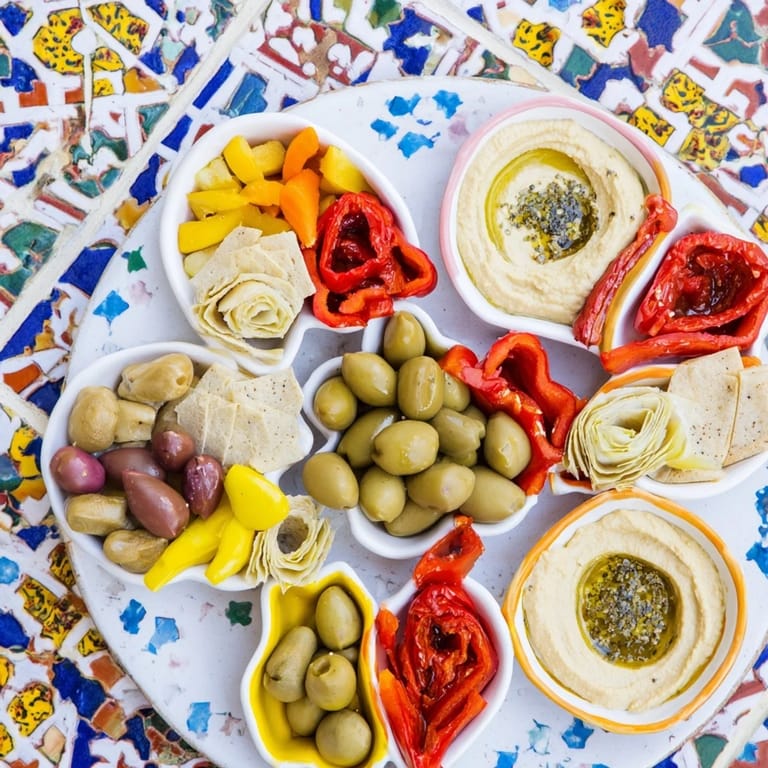
 I first encountered a Moroccan tile mosaic platter at a sunset gathering in Marrakech, where a friend's mother spread out the most stunning arrangement of small bowls across a low brass table. Each dish was a different color—golden hummus, deep purple baba ganoush, ruby-red muhammara—and I remember thinking this wasn't just food, it was edible art. That moment taught me that the most memorable meals are the ones where everyone gathers around something beautiful and shares without pretense.
I hosted a dinner party last spring where I served this platter to a group of friends who all brought different wines. What struck me most was watching people relax as they grazed, mixing flavors without the formality of a seated meal. The conversation flowed, everyone was happy, and somehow the food became the connective tissue of the evening rather than the main event.
Ingredients
- Hummus: The creamy foundation that anchors any mezze platter. Make it yourself if you have time, but a quality store-bought version works beautifully—what matters is that it tastes like roasted chickpeas and tahini, not something processed.
- Baba ganoush: That smoky, luxurious eggplant dip that converts skeptics. The depth comes from charred eggplant, so don't skip that step if making from scratch.
- Muhammara: Red pepper and walnuts create an addictive sweetness with nutty undertones. This one tastes best when you use roasted red peppers from a quality source.
- Labneh or Greek yogurt: The tangy element that keeps your palate fresh. Drizzle it generously with olive oil and zaatar—this is where those earthy spices live.
- Roasted red peppers: Silky and slightly charred, they add visual punch and gentle sweetness. Jarred ones are perfectly acceptable here.
- Marinated artichoke hearts: These tender hearts carry the flavor of their brine, creating little pockets of briny joy. Quarter them so guests can eat them easily.
- Moroccan carrot salad: The freshness and citrus wake up every other flavor on the board. Shred the carrots finely and don't be shy with the lemon juice.
- Preserved lemons: If you haven't worked with these before, know that they're salty and intensely lemony. They're not an afterthought—they're a flavor anchor. Slice them thin.
- Mixed Moroccan olives: Choose a variety with different colors and flavors—some briny, some herbaceous. This is where personality enters the platter.
- Quick-pickled red onions: The snap and sharpness they bring is essential. Make these ahead so the flavors marry.
- Cornichons or baby gherkins: Small pickles that pack a vinegary punch. They're like little flavor grenades.
- Roasted almonds and pistachios: Unsalted is best so you control the salt balance. Their crunch against creamy dips is textural poetry.
- Toasted sesame seeds: Nutty, fragrant, and they settle into every crevice, adding warmth. Toast them yourself if you can—the difference is real.
- Bread for toasting: A good baguette, sliced and toasted until it's crisp but not hard. The goal is something you can dip without it crumbling.
- Mini pita breads: Quartered so they're easy to grab. These soften slightly as they absorb the moisture from dips.
- Pomegranate seeds: Jewel-toned and tart-sweet, they add visual drama and little bursts of flavor.
- Fresh mint and cilantro: These aren't garnish—they're flavor. Use them generously, not sparingly.
- Sumac: This crimson spice tastes like lemon without the moisture. It's the secret that makes people ask what you did.
- Extra virgin olive oil: The final drizzle that makes everything taste intentional. Use one you actually enjoy.
Tired of Takeout? 🥡
Get 10 meals you can make faster than delivery arrives. Seriously.
One email. No spam. Unsubscribe anytime.
Instructions
- Gather your vessels:
- Collect 8 to 12 small bowls or ramekins in different colors if you have them—ceramics, small glasses, whatever feels right. Wash and dry them. This is the first step toward beauty.
- Prepare the dips:
- If making from scratch, blend hummus until it's silky, taste it, adjust with lemon juice and salt. Do the same for baba ganoush—that smoky char matters. For muhammara, pulse roasted red peppers with walnuts until it's chunky-smooth. For labneh, dollop it into a bowl and create a shallow well with the back of a spoon, then drizzle olive oil into that well and sprinkle zaatar over the top. Each dip should taste complete on its own.
- Organize your vegetables and pickles:
- Slice roasted red peppers into long strips. Quarter artichoke hearts. Make your carrot salad if starting from scratch—shred carrots, dress with lemon juice, cumin, and fresh parsley, let it sit for 10 minutes. Slice your preserved lemons into thin rounds. All of this can be done hours ahead.
- Prepare your proteins and textures:
- If making quick-pickled onions, thinly slice red onions, pack them into a jar with salt, vinegar, and a pinch of sugar, let them sit while you arrange everything else. Put olives, nuts, and seeds into their own bowls. Toast your almonds and pistachios gently in a dry pan if they're not already roasted—you're looking for fragrance, not color.
- Toast your bread:
- Slice your baguette on a diagonal, brush lightly with olive oil if you like, and toast until it's golden and crisp but still has some give. Warm your mini pitas gently—they don't need toasting, just a few seconds in a warm oven or skillet so they're pliable.
- Arrange your masterpiece:
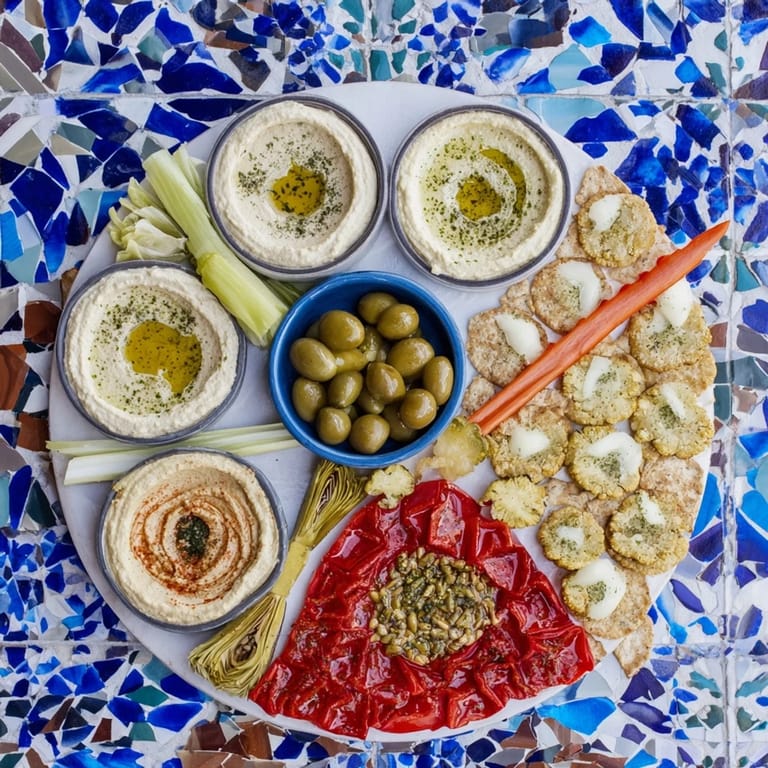
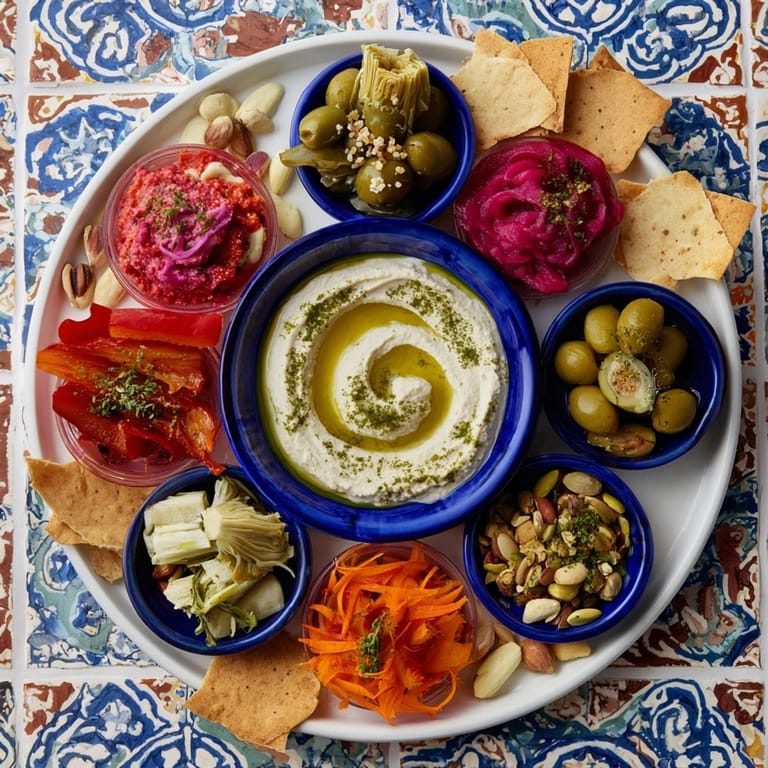
- Find a large wooden board or serving tray. This is the canvas. Start by placing your dips in their bowls—position them so the colors create visual rhythm. Fill in the spaces between bowls with vegetables, olives, nuts, and pickles. Think of it like you're creating a pattern—repeating colors, balancing sizes. Scatter pomegranate seeds in the gaps like rubies. Tuck fresh herbs around the edges. Step back. Does it look generous? It should feel abundant.
- Add the final touches:
- Drizzle extra virgin olive oil over the dips so they shimmer. Dust sumac across a few of the vegetables. Arrange your toasted bread and pita around the perimeter or on a separate smaller board nearby. The platter should look like it came from a market you'd travel to see.
- Serve with intention:
- Bring everything to the table and let people graze. Encourage mixing—a bite of muhammara with a pickled onion and a pistachio, then hummus with roasted pepper and fresh mint. This isn't about following rules. It's about discovering which combinations sing.
 Pin It
 There was a moment during that dinner party when someone reached for their fourth piece of bread and the whole table laughed because we all recognized it—that moment when you stop thinking about etiquette and just eat what makes you happy. That's when I knew this platter style had won everyone over. Food that brings people into that kind of ease is food worth learning.
Building Your Flavor Story
The magic of a Moroccan tile platter lives in the layering of contrasts. You're not meant to eat one thing in isolation—the real joy comes from the conversation between flavors. Creamy hummus sings differently when you taste it alongside the brine of an olive and the crunch of a toasted almond. The carrot salad's citrus brightness balances the richness of muhammara. The preserved lemon's intensity is softened by fresh herb leaves. This is a lesson in flavor composition that extends far beyond this one platter. Once you understand how to build these contrasts, you'll find yourself doing it in every meal you cook.
Preparing Ahead and Timeline
One of the kindest things about this recipe is that nearly everything can be prepared the day before. The dips actually taste better rested, covered, in the refrigerator. Your pickled onions improve overnight. Vegetables can be cut and arranged in containers. On the day of serving, you're really just toasting bread, warming pitas, and arranging everything on your board—maybe 15 minutes of hands-on work before guests arrive. This is how you serve something that looks like you've been cooking all day when you've barely been in the kitchen.
Variations and Invitations
This platter is a template, not a rule book. In winter, I add pomegranate molasses to brighten things, and sometimes roasted beets for earthiness. In summer, I might include fresh figs or grilled halloumi. If you have guests who eat meat, add some sliced merguez sausage or grilled chicken alongside the vegetarian options—everyone eats from the same board, just choosing different proteins. For vegan guests, swap the labneh for a cashew cream or plant-based yogurt. The skeleton of the idea remains: beautiful bowls, contrasting flavors, bread, encouragement to mix and match.
- Customize seasonally with whatever vegetables look best at your market.
- Add dried fruits like apricots or dates if you want subtle sweetness alongside the savory elements.
- Don't forget the pairing—a chilled white wine or Moroccan mint tea makes this feel intentional and complete.
 Pin It
 This platter is really an invitation to slowness and togetherness—to stand around something beautiful and shared, picking flavors that speak to you in that moment. Once you've made it once, you'll make it again and again.
Recipe FAQs
- → What types of dips are included in the mosaic platter?
The platter features classic hummus, smoky baba ganoush, spicy muhammara, and creamy labneh drizzled with olive oil and zaatar.
- → Which marinated vegetables complement the platter?
Marinated artichoke hearts, roasted red peppers, Moroccan carrot salad, and preserved lemon slices offer a bright, tangy variety.
- → How can the platter accommodate dietary restrictions?
Use plant-based yogurt instead of labneh for vegan needs, and opt for gluten-free crackers or bread to keep it gluten-free.
- → What garnishes enhance the Moroccan mosaic presentation?
Fresh mint, cilantro leaves, pomegranate seeds, sumac, and drizzles of extra virgin olive oil add freshness and vibrant color.
- → Are there suggested pairings to enjoy with this platter?
Traditional Moroccan mint tea or a crisp white wine offer excellent beverage pairings complementing the bold, fresh flavors.
- → What tools are recommended for assembling the mosaic?
Use 8–12 small colorful bowls or ramekins, a large serving tray or wooden board, a bread knife, and small spoons for an attractive presentation.