 Pin It
 There's something about the smell of basil pesto hitting a hot skillet that makes you feel like you're cooking something special, even on a Tuesday night when you're just trying to get dinner on the table. My cousin brought a jar of homemade pesto to a casual dinner last summer, and I'd been saving it for something worthy. When I finally tossed it with chicken and served it over rice with whatever vegetables were lingering in my crisper drawer, everyone at the table went quiet for a moment—the good kind of quiet. That's when I realized this simple bowl had somehow become the meal I'd make again and again, whenever I wanted to feel like I was feeding people something that actually mattered.
I made this for my partner one evening when they'd had a particularly exhausting day at work, and I watched their shoulders actually relax as they ate. There was something about the combination of tender chicken, cool fresh vegetables, and that vibrant green pesto that felt both comforting and energizing at the same time. That's when I understood—this wasn't just a recipe; it was a moment of care served in a bowl.
Ingredients
- Boneless, skinless chicken breast or thighs (500 g): Thighs stay juicier if you accidentally overcook them, but breasts work beautifully too—just watch them closely so they don't dry out.
- Basil pesto (4 tbsp): Store-bought is perfectly honest and saves time, but homemade pesto made in a mortar and pestle tastes noticeably fresher and more vibrant.
- Olive oil (1 tbsp): This helps the pesto coat the chicken evenly and prevents sticking in the pan.
- Salt and black pepper: Season generously—the marinade is where the chicken learns its flavor.
- Jasmine or basmati rice (240 g): Jasmine rice has a subtle floral note that pairs beautifully with pesto, while basmati is slightly more nutty.
- Water (480 ml): The ratio matters more than the exact measurement—measure twice, cook once.
- Cherry tomatoes (200 g): They burst with sweetness when halved and add little pops of brightness throughout each bite.
- Cucumber: Diced small keeps things delicate; the coolness balances the warmth of the chicken perfectly.
- Red onion: Slice it thin so it's sharp but not aggressive, adding a hint of bite without dominating.
- Avocado: Add it right before serving so it doesn't oxidize and turn dark—presentation matters.
- Baby spinach or mixed greens: These wilt slightly from the warm rice and chicken, which is exactly what you want.
- Toasted pine nuts (2 tbsp, optional): They add a buttery crunch, but honestly, the dish shines even without them.
- Fresh basil leaves for garnish: A final shower of basil ties the whole bowl together visually and flavor-wise.
Tired of Takeout? 🥡
Get 10 meals you can make faster than delivery arrives. Seriously.
One email. No spam. Unsubscribe anytime.
Instructions
- Marry the chicken with pesto:
- Toss your chicken pieces with pesto, olive oil, salt, and pepper in a bowl, making sure every piece gets a green coat. If you have time, let it sit in the fridge while you handle the rice—the longer it marinates, the deeper the flavor settles in.
- Start the rice right:
- Rinse rice under cold water with your fingers moving gently through it until the water runs clear—this removes excess starch and prevents gumminess. Bring salted water to a boil, add rice, cover, turn heat to low, and set a timer for 12-15 minutes without lifting the lid.
- Cook the chicken until golden:
- While rice steams, heat a large skillet over medium heat and add your marinated chicken in a single layer. You'll hear it sizzle immediately, which is the sound of pesto beginning to caramelize. Stir occasionally until the chicken is cooked through and the edges are lightly browned, about 6-8 minutes.
- Prep your vegetables with intention:
- While chicken cooks, halve tomatoes, dice cucumber into bite-sized pieces, slice onion as thin as you can manage, and slice avocado just before assembly. Wash your greens and pat them dry if you have a moment.
- Build each bowl like you're creating edible art:
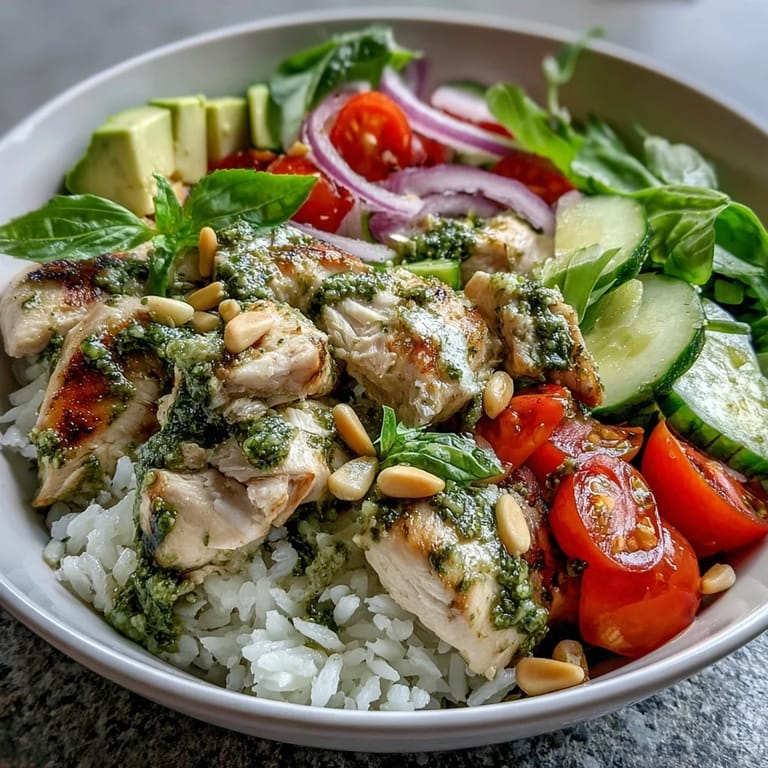
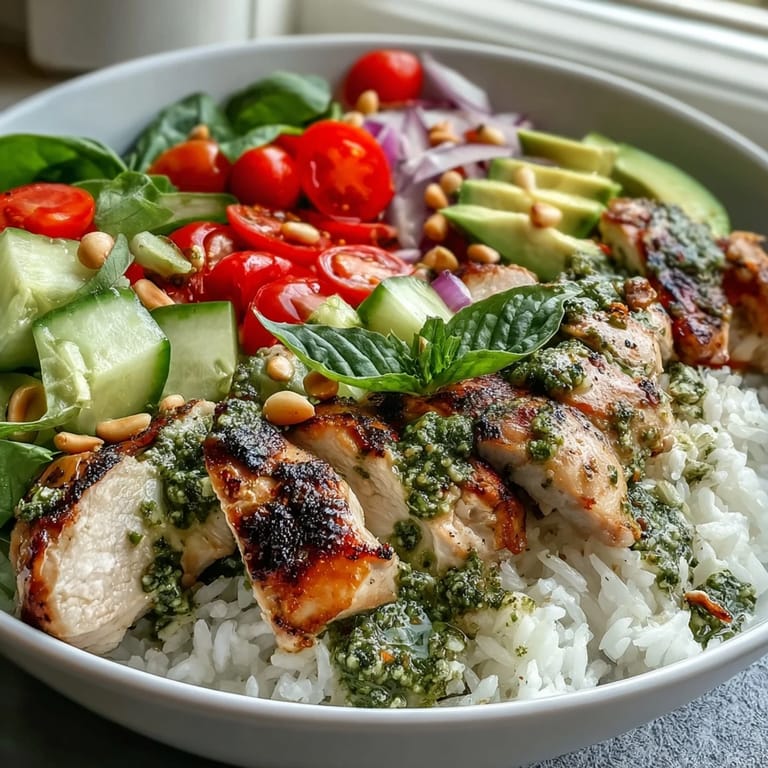
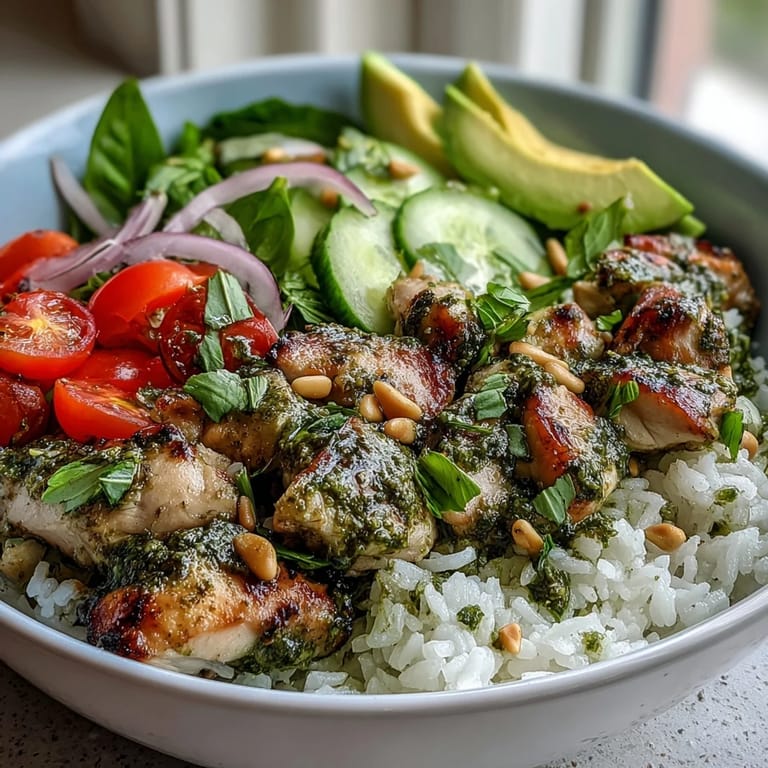
- Divide fluffy rice among four bowls, top with warm pesto chicken, then arrange your vegetables in a way that makes you happy to look at. Scatter pine nuts if using, and finish with a few fresh basil leaves that catch the light.
- Serve and savor:
- This tastes best warm, but don't hesitate to make it for lunch the next day—room temperature pesto chicken is nearly as good as the first time around.
 Pin It
 My mother tried this bowl on a random Thursday and asked for the recipe the next day, which meant everything to me. Food has a way of becoming a language when words fail us, and somehow this simple combination of green and gold and fresh vegetables said what I couldn't always express out loud.
When Pesto Goes Wrong (And How to Fix It)
I once used pesto that had been sitting in my fridge for weeks, and the color had turned dark and the flavor tasted slightly off—acrid, almost. Rather than waste the entire batch, I tossed the chicken in half pesto and half fresh lemon juice with olive oil, and it actually turned out better than my original plan. The lesson was humbling: trust your senses before your recipe, and know that mistakes in the kitchen are just discoveries waiting to happen.
The Case for Cooking Rice Like You Mean It
The difference between rice that's been rinsed and rice that hasn't is subtle but real, and I didn't fully understand it until I cooked both side by side. One was fluffy and individual, each grain holding its own identity; the other was creamy and stuck together, like it had given up. The rinsing step takes maybe ninety seconds, but it transforms everything, and that's the kind of small effort that makes a noticeable difference in your final dish.
Building Bowls That Feel Abundant
There's something about the ritual of assembling a bowl that makes eating feel more intentional, more like nourishment rather than just fuel. I started arranging vegetables in distinct sections instead of throwing everything on top at once, and suddenly the meal felt more generous and thoughtful. It's the same amount of food, but somehow it tastes better when you can see every component and choose your bites thoughtfully.
- Layer your greens directly on the warm rice so they wilt slightly and absorb that pesto-infused warmth.
- Place your vegetables in small clusters around the bowl rather than mixing them all together—it looks more professional and tastes more interesting bite by bite.
- Always, always add avocado and fresh basil at the very last moment before serving, when the dish is at its most beautiful and alive.
 Pin It
 This bowl has become my answer to that question we all ask ourselves on random Tuesday evenings: what should I make for dinner? It's honest food that never disappoints, made quickly enough that you're not exhausted before you sit down to eat it. Make it once, and you'll understand why it becomes a favorite.
Recipe FAQs
- → Can I use store-bought pesto?
Absolutely. Store-bought basil pesto works perfectly and saves time. Look for a quality brand with fresh ingredients, or make your own if you prefer. Both options deliver delicious results.
- → What type of rice works best?
Jasmine or basmati rice are ideal choices for their fragrant aroma and fluffy texture. Basmati stays slightly more separate, while jasmine is more aromatic. Both complement the pesto flavors beautifully.
- → Can I make this bowl dairy-free?
Yes. Use a dairy-free or vegan pesto, which replaces traditional Parmesan with nutritional yeast or simply omits the cheese. Double-check ingredient labels to ensure your pesto choice meets your dietary needs.
- → How long should I marinate the chicken?
Fifteen minutes is sufficient for flavor absorption, but marinating up to 2 hours in the refrigerator will infuse the chicken more deeply. Avoid marinating longer than 2 hours as the acid can affect texture.
- → What vegetables can I substitute?
Feel free to swap in bell peppers, shredded carrots, or roasted zucchini. Grilled eggplant, artichoke hearts, or sun-dried tomatoes also pair wonderfully with pesto. Use whatever fresh vegetables you enjoy.
- → Is this bowl meal-prep friendly?
Yes. Store components separately in airtight containers—rice, chicken, and vegetables each in their own container. Reheat the chicken and rice, then top with fresh vegetables just before serving for best texture.