 Pin It
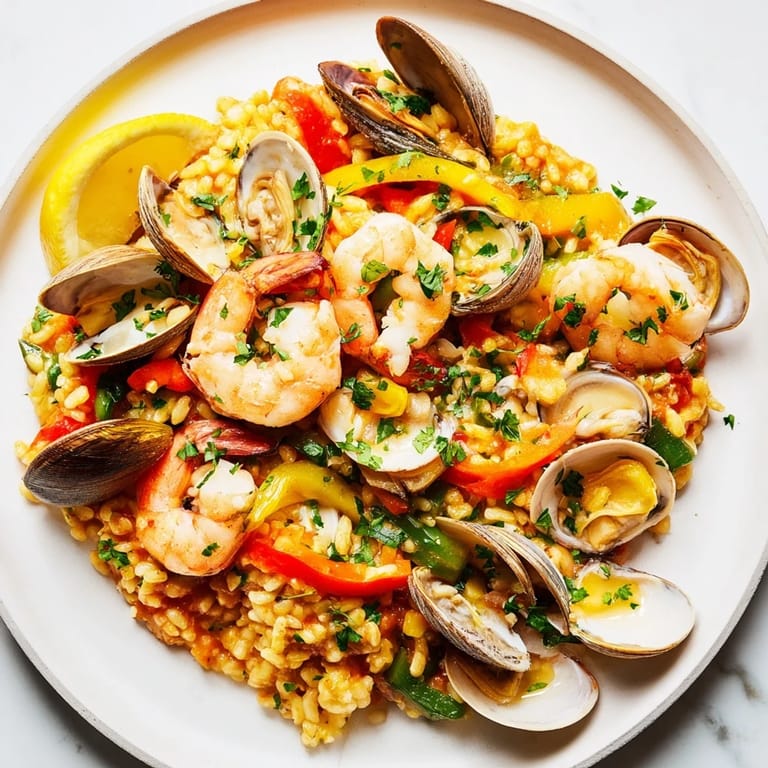
 There's something about the smell of saffron hitting hot oil that stops you mid-conversation. I was visiting Barcelona on a gray October afternoon, standing in my cousin's kitchen while she assembled this paella without measuring anything, and I realized I'd been holding my breath. The way she scattered those threads into warm stock, the casual confidence in her hands—it made me want to learn. Now whenever I make this, I'm transported back to that moment, watching the golden rice begin to shimmer under the light.
I made this for my partner's birthday once, and they walked into the kitchen while the paella was still cooking. The look on their face when they saw all those mussels nestled into the rice—they didn't even need to taste it yet. That's the power of this dish; it announces itself before anyone takes a bite.
Ingredients
- Saffron threads: Yes, they're expensive, but a quarter teaspoon is all you need, and they transform everything they touch into gold—literally and flavor-wise.
- Short-grain paella rice (Bomba or Arborio): This rice has a stubborn texture that refuses to turn into mush, which is exactly what you want.
- Fish or seafood stock: Homemade is beautiful, but good store-bought stock saves you hours and still delivers that briny depth.
- Shrimp, mussels, and clams: The fresher the better, and don't skip the scrubbing—you're about to eat these, after all.
- Smoked paprika: This isn't just seasoning; it's the whisper of Spanish woodsmoke in every bite.
- Bell peppers (red and green): They soften beautifully and add sweetness that balances the briny seafood.
- Olive oil: Good olive oil matters here because it's one of the main flavors carrying everything else.
Tired of Takeout? 🥡
Get 10 meals you can make faster than delivery arrives. Seriously.
One email. No spam. Unsubscribe anytime.
Instructions
- Infuse the saffron:
- Warm your stock gently in a saucepan and drop in those saffron threads like they're precious (they are). Let them steep for a few minutes—the stock will shift from pale gold to something that looks almost unreal.
- Build your base:
- Heat olive oil in your paella pan and let the onion soften into sweetness, about two minutes. Add garlic next, and listen for it to sizzle—that's your sign it's releasing all its good stuff.
- Cook the vegetables:
- The peppers need three to four minutes to lose their raw edge without becoming soft. Stir in grated tomato and watch the pan until the liquid mostly evaporates; you want concentration here, not soup.
- Toast the rice:
- Add your rice to the pan and stir it constantly for a minute, coating every grain with that oil and vegetable mixture. This toasting step is subtle but important—it keeps the rice from turning into porridge.
- Add the stock:
- Pour in the warm saffron-infused stock and spread the rice evenly across the pan. This is the moment you step back—no more stirring from here on.
- Cook with the shellfish:
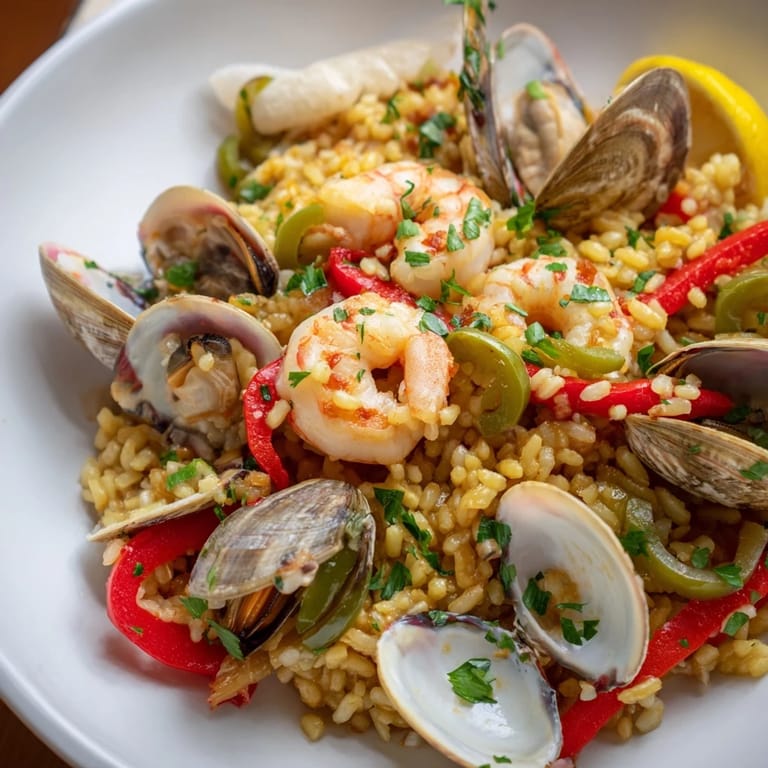
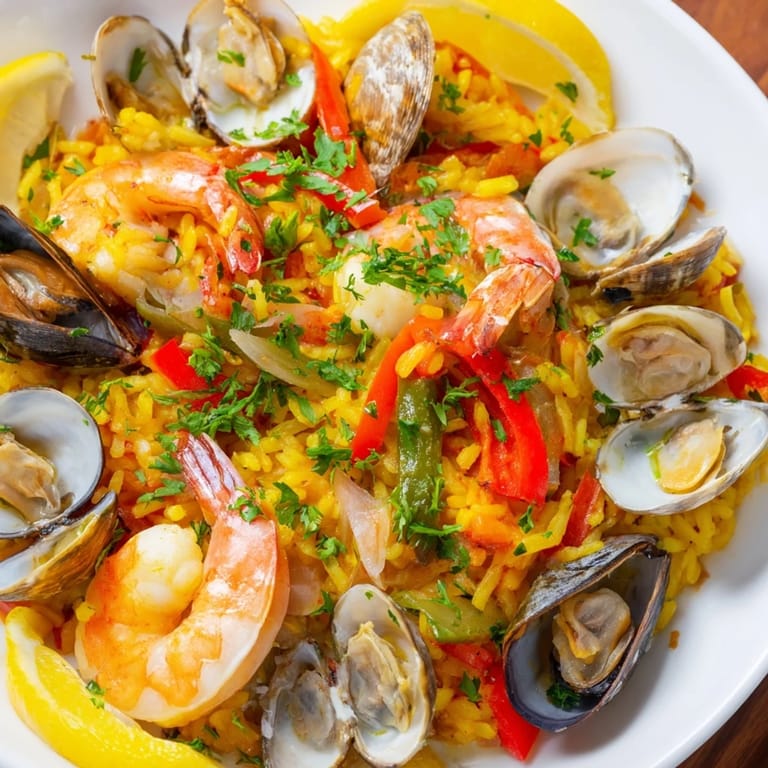
- Arrange shrimp, mussels, and clams over the rice, cover loosely with foil, and let the heat do the work for twenty to twenty-five minutes. The rice will drink in the stock, the shellfish will open, and your kitchen will smell incredible.
- Rest and serve:
- Remove from heat, keep it covered for five minutes, then scatter with parsley and serve with lemon wedges on the side.
 Pin It
 I'll never forget the quiet moment right before serving, when steam rises off the paella and everyone leans in. There's something about a dish this beautiful that makes people slow down and actually taste their food. It becomes less about feeding people and more about gathering them around something worth the effort.
The Saffron Secret
Saffron is one of those ingredients that teaches you patience. You can't rush it, and you can't fake it—those threads have to bloom in warmth to release their color and flavor. I learned this the hard way by dumping dry saffron directly into cold stock once, which is like trying to wake someone by whispering at them. Warming the stock first and letting the threads infuse is the difference between a paella that tastes like home and one that tastes like you were in a hurry.
Why This Dish Changes Dinner
Paella has this power to turn an ordinary Tuesday night into an occasion. Maybe it's because it's dramatic—the colors, the aroma, the way it looks in the pan—or maybe it's because you're committing time and intention to it. Either way, people notice. They gather closer. They put their phones away. It's one of those rare dishes that does more than fill you up; it creates a moment.
Making It Your Own
The beauty of paella is that it's flexible within its own logic. Some versions add peas or artichokes, others swap in white fish or squid. I've even seen versions with chorizo for those who aren't seafood people. The structure stays the same—the saffron rice, the one-pan method, the respect for good ingredients—but the specifics can shift. The Spanish don't gatekeep their food; they invite you to understand the principles and make it speak your language.
- A handful of frozen peas stirred in with the stock adds color and a subtle sweetness.
- A splash of dry white wine (about half a cup) can replace some of the stock for extra depth.
- A pinch of smoked paprika goes a long way, so add it slowly and taste as you go.
 Pin It
 There's a reason paella shows up at celebrations and family tables across Spain. It tastes like care tastes like generosity tastes like home. Once you've made it once, you'll find yourself making excuses to make it again.
Recipe FAQs
- → What type of rice is best for paella?
Short-grain varieties like Bomba or Arborio absorb broth well and remain firm, making them ideal for a perfect texture.
- → How do you ensure shellfish cooks properly?
Cook until shells open fully; discard any that remain closed to avoid consuming unsafe seafood.
- → Can I substitute other seafood for clams or mussels?
Yes, firm white fish or calamari can be used to vary texture and flavor while maintaining moisture and richness.
- → What is the role of saffron in this dish?
Saffron adds a distinctive aroma, color, and subtle earthy notes that define the dish’s signature character.
- → How should the dish be served for best flavor?
Allow it to rest covered after cooking to let flavors meld, then garnish with fresh parsley and lemon wedges for brightness.