 Pin It
 Last summer, I was staring at a jar of bubbly sourdough starter that had been sitting on my counter for three days, and instead of feeding it again, I thought: why not bake with it? That small decision led me to this skillet cake, which has become my answer to nearly every dinner party invitation since. The combination of tangy sourdough, bright lemon, and plump blueberries creates something that feels fancy but tastes like home, and somehow it's never the same twice depending on what's in season.
My neighbor brought this to a potluck once (I'd shared the recipe), and watching people go back for thirds while sitting on the porch in the fading light reminded me that the best recipes aren't about impressing anyone—they're about being generous with something that genuinely tastes good. She later told me she'd made it three times that month for her kids' school bake sales.
Ingredients
- All-purpose flour (1 cup): The foundation of structure; I've learned that whisking it with the leavening agents before mixing prevents lumps and ensures even rise.
- Unsalted butter (1/2 cup, softened): Softness is key here—room temperature butter creams properly with sugar to trap air bubbles that make the cake tender.
- Granulated sugar (3/4 cup): This sweetens the batter and helps create that golden, slightly crispy top crust when it bakes in the skillet.
- Large eggs (2): They bind everything together and add richness; I always crack them into a small bowl first to check for shells.
- Active sourdough starter (1/2 cup): This is the magic ingredient that adds depth—use your discard starter here, so you're never wasting it, and the live cultures make the cake incredibly moist.
- Whole milk (1/4 cup): It keeps the batter at the right consistency and adds a subtle creaminess that butter alone can't achieve.
- Vanilla extract (1 tsp): Just a whisper of vanilla rounds out the flavors without overpowering the lemon.
- Lemon zest and juice (1 zest plus 2 tbsp juice): The zest carries aromatic oils while the juice provides brightness; I always use a microplane to get the finest zest possible.
- Baking powder and baking soda (1 tsp and 1/4 tsp): Together they create lift without baking powder alone would taste slightly flat.
- Salt (1/4 tsp): A small pinch amplifies all the other flavors, especially the lemon and tang from the sourdough.
- Fresh blueberries (1 1/4 cups plus extra): Toss them lightly in a bit of flour before folding in to help them stay suspended rather than sinking to the bottom.
- Powdered sugar (1/2 cup): For the icing drizzle, which adds a sweet, polished finish.
Tired of Takeout? 🥡
Get 10 meals you can make faster than delivery arrives. Seriously.
One email. No spam. Unsubscribe anytime.
Instructions
- Warm your oven and prep the skillet:
- Set your oven to 350°F and let it reach temperature while you grease a 10-inch oven-safe skillet with butter or nonstick spray, making sure to get into the corners. I prefer cast iron because it distributes heat beautifully and the crust becomes golden and slightly crispy.
- Mix your dry ingredients:
- In a medium bowl, whisk together flour, baking powder, baking soda, and salt until everything is evenly distributed. This step prevents lumps and ensures the leavening agents are spread throughout the batter.
- Cream butter and sugar together:
- In a large bowl, beat softened butter and sugar until the mixture is pale, fluffy, and looks almost like wet sand, about 2-3 minutes with an electric mixer. This traps tiny air bubbles that will help your cake rise and become wonderfully tender.
- Add eggs one at a time:
- Crack each egg into the butter mixture and beat well before adding the next one. Taking your time here helps the eggs emulsify properly, creating a stable batter.
- Bring in the brightness:
- Stir in vanilla extract, lemon zest, and fresh lemon juice until combined. The smell at this moment is incredible—bright and alive—and that's your signal that the flavor is waking up.
- Layer in the sourdough starter:
- Mix in the active sourdough starter until you don't see streaks of it anymore. The batter will look slightly looser and more luxurious with that tangy ingredient woven through.
- Fold in the dry ingredients gently:
- Add half the flour mixture and stir until just barely combined, then add the milk, then the remaining flour mixture, stirring gently but thoroughly. Overmixing develops gluten and toughens the crumb, so you're aiming for a batter that looks smooth but not overworked.
- Fold in the blueberries:
- Using a spatula, gently fold in the blueberries, being careful not to crush them or overstir the batter. If you're worried about them sinking, toss them in a tiny bit of flour first.
- Into the skillet:
- Pour the batter into your prepared skillet and spread it evenly with a spatula. Sprinkle extra blueberries on top if you're feeling generous.
- Bake until golden:
- Bake for 30-35 minutes until the cake is golden brown and a toothpick inserted in the center comes out clean or with just a few moist crumbs. The edges should look slightly darker and pull away from the sides of the skillet.
- Cool slightly before icing:
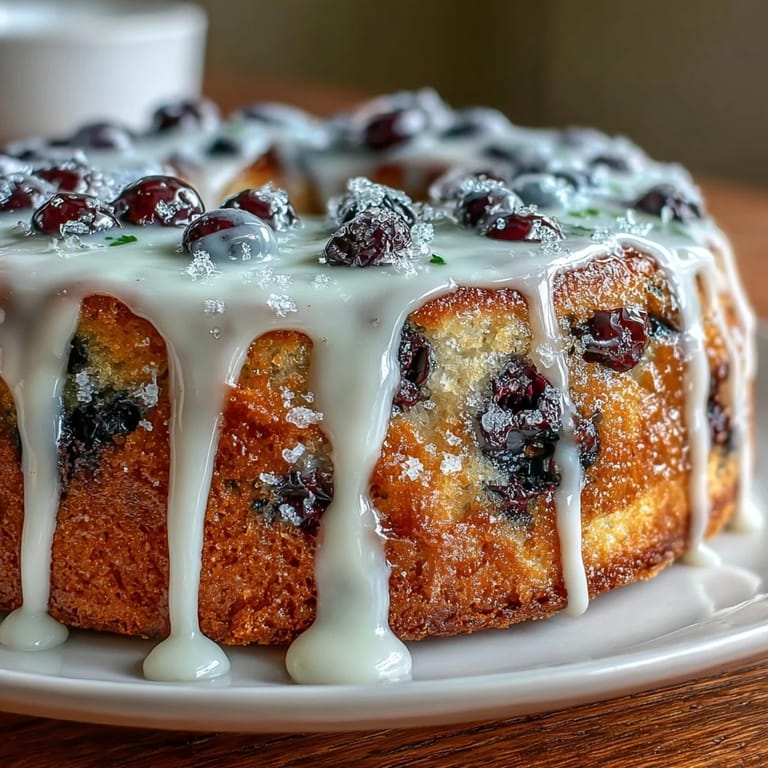
- Let the cake cool in the skillet for 15 minutes so it sets up enough to slice cleanly but is still warm enough that the icing will soak in slightly. While it cools, whisk powdered sugar with 1-2 tablespoons of fresh lemon juice until thick but pourable.
- Finish with the icing drizzle:
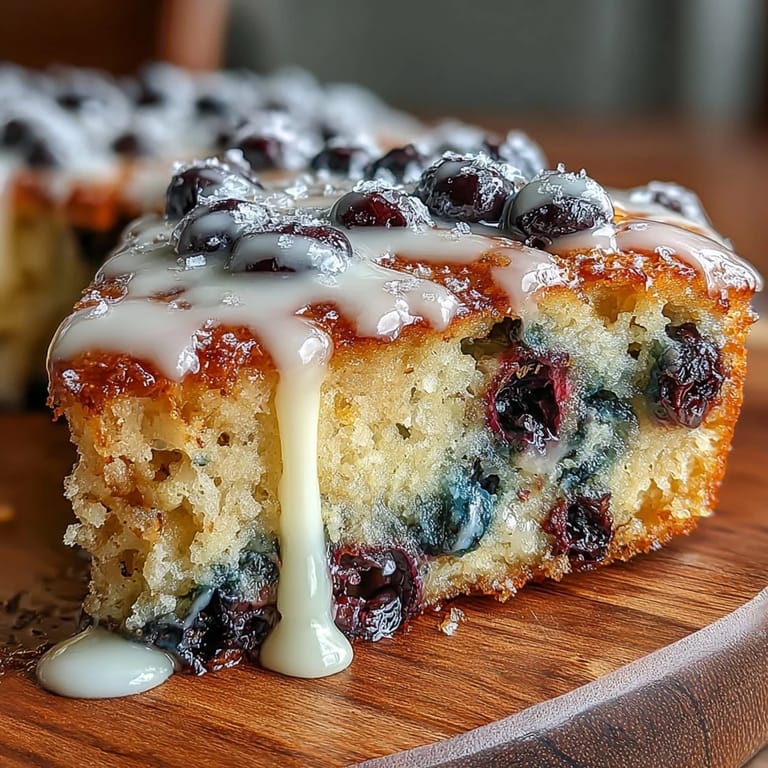
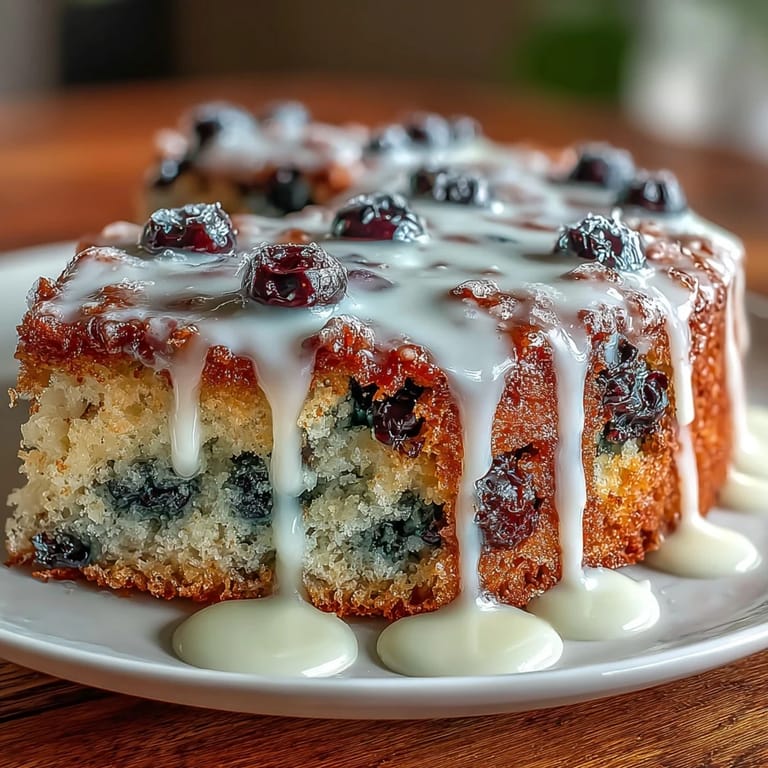
- Once the cake has cooled, drizzle the icing in a gentle zigzag pattern across the top, letting it pool in little crevices. Slice warm or at room temperature and watch people's faces light up.
 Pin It
 There's a quiet moment after you pull this cake from the oven when the kitchen fills with the smell of caramelized lemon and sourdough, and you realize you're about to share something that tastes exactly like it took hours to make, even though you've barely been in the kitchen for an hour. That's when baking feels less like a task and more like a small gift you're giving yourself and everyone lucky enough to eat it.
Why Cast Iron Makes a Difference
The first time I made this in a regular cake pan, the result was good but a little soft around the edges, and I realized I'd been missing the secret weapon all along. Cast iron conducts heat so evenly that your cake bakes uniformly, and the slightly crispy, caramelized edges that form against the sides of the skillet are honestly the best part. If you don't have cast iron, a 10-inch round cake pan lined with parchment paper will work, but you'll lose some of that golden crust magic.
The Sourdough Starter Secret
Using your sourdough discard is the best part of this recipe because you're not wasting anything—you're transforming what you'd normally throw away into something delicious. The live cultures in the starter don't just add tang; they also interact with the leavening agents to create a more open crumb and keep the cake moist longer. I've made this cake with different brands of sourdough starter and different strengths of starter (newly fed versus older discard), and honestly, the variation is part of the charm.
Variations and Flavor Adventures
Once you understand how this cake works, it becomes a canvas for whatever you're craving that day or whatever's ripe in your kitchen. I've made it with raspberries and vanilla, with orange zest instead of lemon, with a light dusting of cardamom sprinkled over the top, and each version felt equally at home in that skillet. The structure is flexible enough that you can swap citrus, change berries, or even add a pinch of nutmeg without worrying about the whole thing falling apart.
- Try swapping blueberries for raspberries or blackberries, adjusting nothing else and watching the flavor completely transform.
- Orange zest and juice work beautifully in place of lemon if you want a warmer, less sharp citrus flavor.
- A light sprinkling of coarse sugar or sliced almonds on top before baking adds crunch and makes it feel slightly more elegant for company.
 Pin It
 This skillet cake has become my go-to when I want something that feels special but doesn't require a complicated plan. It's the kind of recipe that proves you don't need fancy techniques or hard-to-find ingredients to make something memorable.