 Pin It
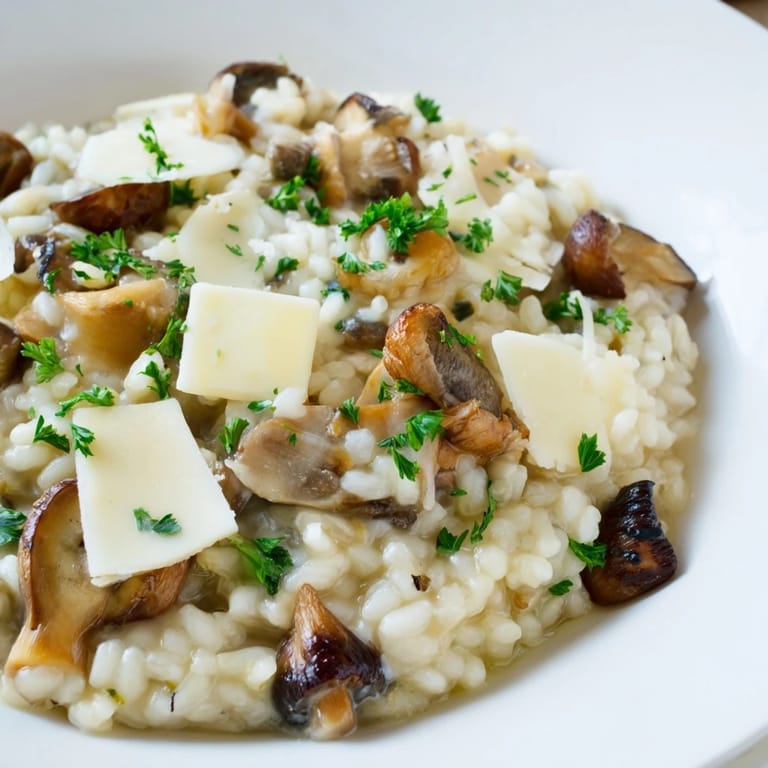
 There's a particular kind of quiet that settles over the kitchen when you're making risotto—the rhythmic stirring becomes almost meditative, the steam rising off the pan carrying the earthy perfume of mushrooms that have been kissed golden in hot butter. I discovered this dish not from a fancy restaurant but from my neighbor Marco, who insisted one autumn evening that I was overthinking rice entirely. He taught me that risotto isn't about precision; it's about listening to the rice as it drinks in the broth, about patience rewarding itself with creaminess that feels like a small luxury.
I made this for my sister's surprise dinner party once, terrified I'd mess it up in front of her food-critic friend. Instead, what happened was everyone gathered around the stove mid-cooking, drawn by the smell, and we ended up talking and laughing while I stirred. By the time we sat down to eat, the risotto had become the backdrop to something better—a moment where fancy food didn't matter as much as sharing something warm and intentional.
Ingredients
- Arborio rice: This short-grain variety has a high starch content that creates that signature creamy texture without falling apart; don't substitute with long-grain rice or the whole dish loses its soul.
- Mixed wild mushrooms: Cremini, shiitake, and porcini each bring different earthy notes, and slicing them uniformly helps them cook evenly and brown beautifully.
- Vegetable broth: Keeping it warm in a separate pot means each ladleful incorporates smoothly without shocking the rice and disrupting the cooking process.
- Yellow onion and garlic: These build the aromatic foundation; don't rush the onion's translucency, as this base flavoring matters more than you'd think.
- Dry white wine: The acidity cuts through the richness and adds complexity that plain broth never could.
- Parmesan cheese: Freshly grated cheese melts better than pre-shredded, and the quality makes a noticeable difference in the final flavor.
- Cold butter cubes: Added at the very end, this finishing butter emulsifies with the cheese and creates that glossy, luxurious finish.
- Fresh parsley: A garnish that feels like the final brushstroke on a painting.
Tired of Takeout? 🥡
Get 10 meals you can make faster than delivery arrives. Seriously.
One email. No spam. Unsubscribe anytime.
Instructions
- Sauté the aromatics:
- Heat olive oil and butter together over medium heat, then add your finely chopped onion. You want it soft and translucent, about 3 to 4 minutes—this is when your kitchen starts to smell like something good is happening. Add the garlic next, stirring just long enough so it wakes up without browning.
- Build the mushroom layer:
- Stir in your sliced mushrooms and let them have some time in the pan, about 5 to 7 minutes, until they release their moisture and turn golden. This is where the deep, earthy flavor comes from, so don't skip this step or rush it.
- Toast the rice:
- Add the Arborio rice and stir it around for a minute or two, coating each grain in the buttery mixture. You'll notice the rice grains become slightly translucent at the edges—that's the signal it's ready for the wine.
- Add the white wine:
- Pour in the wine and stir constantly until it's fully absorbed, about a minute or so. The rice will drink it up eagerly, and your kitchen will smell like an Italian afternoon.
- Begin the broth ritual:
- This is where risotto becomes a dialogue between you and the rice. Add warm broth one ladleful at a time, stirring frequently, and wait until most of the liquid is absorbed before adding more. This process takes about 18 to 20 minutes, and your constant stirring prevents the rice from sticking and helps release the starch that makes risotto creamy.
- Finish with finesse:
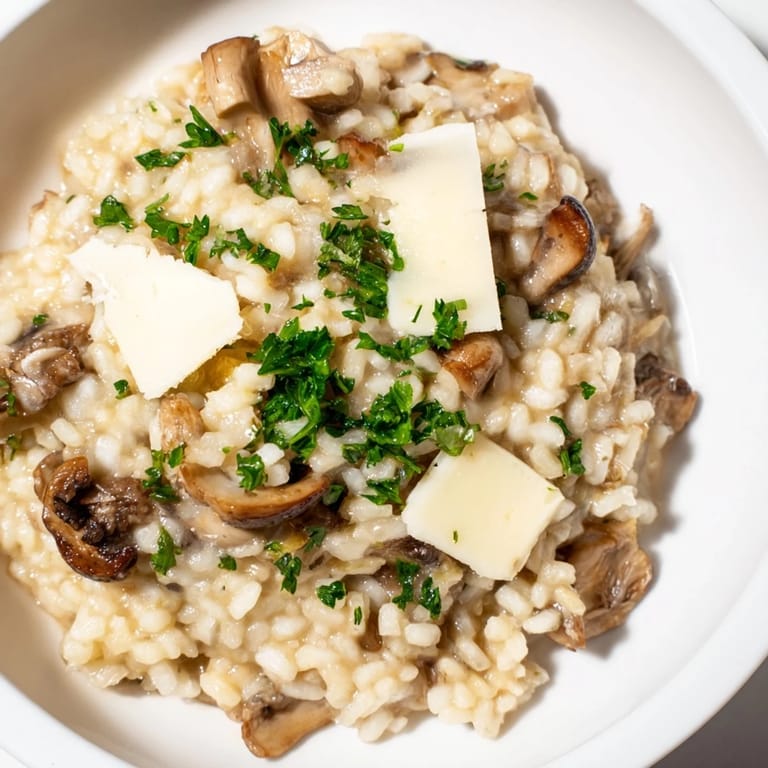
- When the rice is tender but still has a slight bite to it, remove the pan from heat and immediately stir in the cold butter cubes, freshly grated Parmesan, and half the fresh parsley. Season with salt and pepper to taste, tasting as you go since the cheese brings saltiness.
- Rest and serve:
- Let the risotto rest for just 2 minutes—this allows the texture to set slightly and feel even more luxurious. Serve immediately in warm bowls, garnished with the remaining parsley and a shower of extra Parmesan.
 Pin It
 I learned the importance of patience one evening when I tried to speed up the broth-adding process, thinking I could just dump it all in and walk away. The result was rice that stayed grainy and stubborn, a reminder that some dishes demand your presence and attention. Now I see those 20 minutes of stirring as an invitation to slow down, to be fully in the kitchen with whatever I'm making.
Deepening the Flavor
If you want to push the umami further, rehydrate some dried porcini mushrooms in warm water and use that soaking liquid (strained through a fine sieve) as part of your broth. The concentrated mushroom flavor transforms this dish into something even more sophisticated, and the dried porcini pieces add little bursts of intense earthiness throughout. It's a small effort that shifts the entire character of the risotto, turning it from comforting into something you'd order at a special restaurant.
Wine and Pairing
The dry white wine in the risotto itself should be something you'd actually drink—a crisp Pinot Grigio or unoaked Chardonnay works beautifully. Interestingly, the same wine pairs wonderfully with the finished dish, the acidity cutting through the richness of the Parmesan and butter like a palate cleanser between bites. If you're cooking for others, setting out a bottle of the same wine elevates the whole experience, creating a quiet harmony between what's in the pan and what's in the glass.
Flexibility and Substitutions
While this recipe is vegetarian, chicken broth can replace vegetable broth if that's what you have on hand, adding a subtle savory depth that some people prefer. You can also play with the mushroom varieties depending on the season and what's available—cremini, shiitake, oyster, and even button mushrooms all work, though the mix of types creates the most interesting flavor profile.
- If you don't have cold butter to finish with, a splash of heavy cream whisked in at the end creates a similar luxurious texture.
- Fresh herbs like sage or thyme can replace or join the parsley for a different aromatic note.
- Leftover risotto can be chilled, shaped into patties, and pan-fried the next day for crispy risotto cakes.
 Pin It
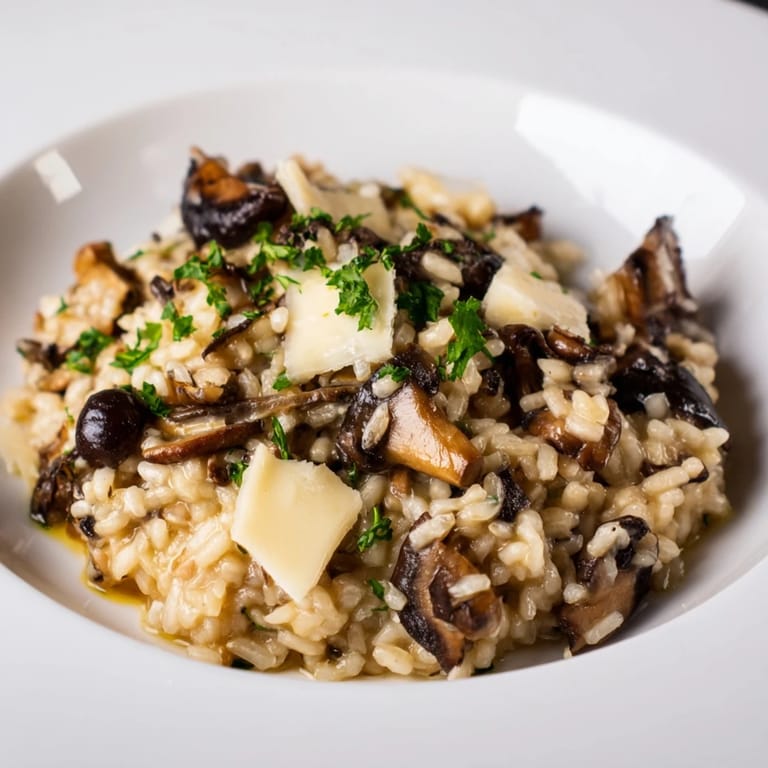
 Risotto is one of those dishes that rewards presence and intention, turning an ordinary Tuesday night into something that feels a little bit special. There's real magic in the simplicity of rice, mushrooms, and butter coming together into something creamy and nourishing that tastes far more complicated than it actually is.
Recipe FAQs
- → What type of rice is best for this risotto?
Arborio rice is ideal due to its high starch content, which helps achieve a creamy texture.
- → Can I use other mushrooms besides wild varieties?
Yes, cremini, shiitake, or porcini mushrooms enhance flavor, but feel free to use a mix depending on availability.
- → How do I know when the risotto is perfectly cooked?
The risotto is ready when the rice is creamy yet tender with a slight bite (al dente).
- → What is the purpose of adding white wine during cooking?
White wine adds acidity and depth, balancing the richness of the mushrooms and cheese.
- → How can I make the dish vegetarian-friendly?
Use vegetable broth instead of chicken broth and ensure Parmesan is suitable for vegetarians.
- → What are good beverage pairings with this dish?
Crisp white wines like Pinot Grigio or Chardonnay complement the creamy mushroom flavors well.