 Pin It
 The first time I truly understood fondue wasn't from a recipe book but from watching my Swiss neighbor lean over a bubbling pot, fork in hand, the melted cheese clinging to her bread cube like liquid gold. She caught me staring and laughed, insisting I join her that evening with a group of friends who seemed to arrive bearing wine and stories. That meal taught me that fondue isn't really about the cheese—it's about the unhurried ritual of feeding yourself and the people around you, fork by fork, conversation by conversation.
I remember one winter evening when my sister arrived unannounced with her new partner, and I panicked about dinner until I remembered I had cheese, wine, and a fondue pot gathering dust. Within twenty minutes, we were laughing over our forks, trading bread cubes and vegetables, the kitchen warm and full of the kind of easy togetherness that doesn't require planning. That night, fondue stopped being a fancy dish and became my emergency solution for whenever I want to feed people without the stress.
Ingredients
- Gruyère cheese, 200 g grated: This is the backbone—nutty, slightly sweet, and it melts like a dream without turning grainy if you treat it right.
- Emmental cheese, 200 g grated: The gentle partner that keeps everything creamy and prevents the fondue from becoming too intense or heavy.
- Dry white wine, 1 cup: The acid and moisture that keep the cheeses flowing; a cheap wine will taste cheap in the pot, so use something you'd actually drink.
- Kirsch, 1 tbsp optional: A cherry brandy that sounds fancy but acts humble—it brings a subtle warmth and prevents the cheese from sitting heavy in your stomach.
- Cornstarch, 1 tbsp: The secret that stops the cheese from breaking; it sounds unnecessary until you skip it and end up with a grainy, separated mess.
- Garlic clove, halved: You're not actually cooking it; you're just seasoning the pot with its whisper before discarding it.
- Nutmeg and white pepper: These quiet seasonings make the difference between good fondue and the kind you dream about later.
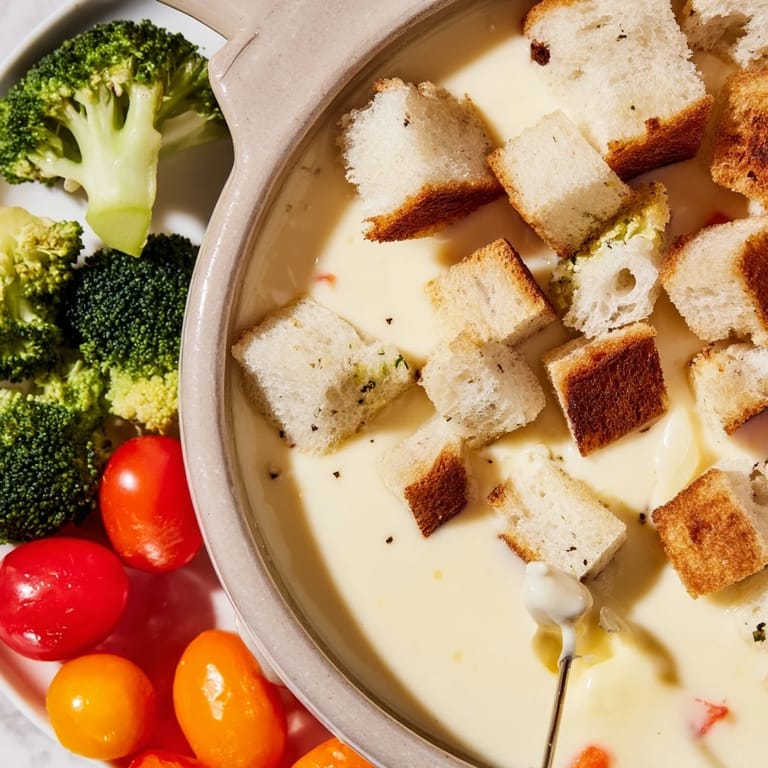
- Bread, vegetables for dipping: Slightly stale bread holds onto the fork better than fresh, and blanched vegetables stay tender without being mushy.
Tired of Takeout? 🥡
Get 10 meals you can make faster than delivery arrives. Seriously.
One email. No spam. Unsubscribe anytime.
Instructions
- Prepare your pot with intention:
- Cut your garlic clove in half and rub the inside of your fondue pot with both cut sides until the pot smells gently of garlic, then throw the garlic away. This single step flavors everything without overwhelming it.
- Heat the wine gently:
- Pour the white wine in and set it over medium-low heat until small bubbles start climbing the sides—you want a gentle simmer, not an aggressive boil that will turn your cheese into rubber.
- Coat the cheese evenly:
- In a small bowl, toss your grated cheeses with the cornstarch until every piece is lightly dusted. This prevents the cheese from clumping when it hits the hot wine.
- Melt the cheese slowly:
- Add the cheese-cornstarch mixture a handful at a time, stirring constantly in a figure-eight motion—this pattern keeps the bottom from sticking and the whole thing melting evenly. The motion matters more than you'd think.
- Season and keep warm:
- Stir in the kirsch if you're using it, then the nutmeg and white pepper, tasting as you go. Slide the heat down to low and keep the pot over a gentle flame; if it boils, the magic breaks.
- Transfer to the table:
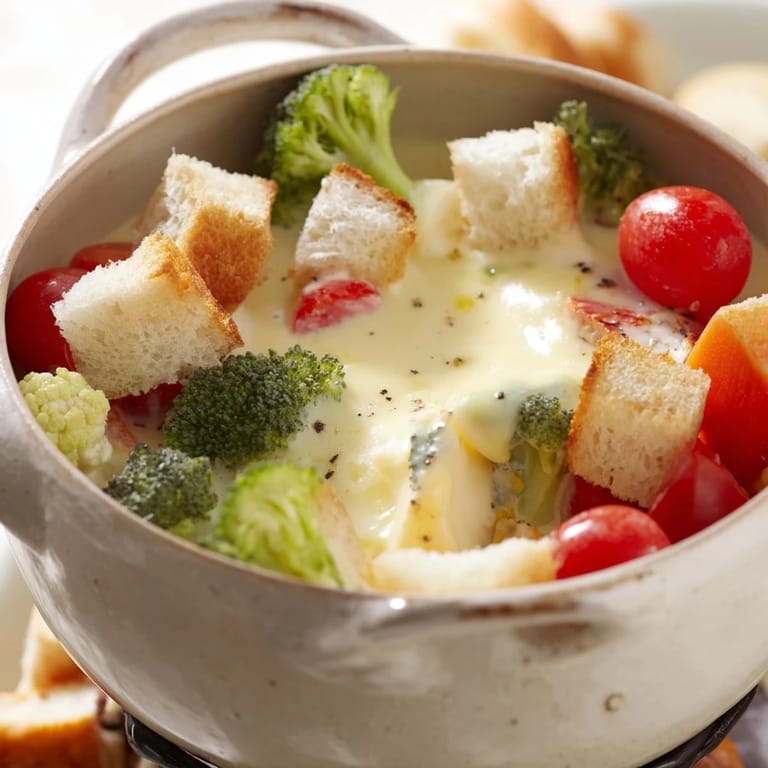
- Place the fondue pot over your tabletop burner and surround it with bread cubes, blanched vegetables, and cherry tomatoes. Hand everyone a fork and watch the evening unfold.
 Pin It
 There's a moment in every fondue dinner when someone does that thing—they lose their bread cube in the pot and have to fish it out while everyone teases them, or they dip too deep and come up with more cheese than bread, and suddenly you're not eating anymore, you're just existing together in this warm, silly, connected space. That's when you know the recipe worked.
Why the Wine Choice Matters
The wine isn't just liquid; it's the personality of your fondue. A dry white Swiss wine like Fendant brings a crisp minerality that cuts through the richness, while a light lager beer works if wine isn't your thing. The acid prevents the cheese from feeling heavy and keeps everything tasting bright instead of cloying. Pour some for drinking too—your guests will appreciate it, and so will you.
When Fondue Goes Wrong (and How to Save It)
If your fondue gets grainy or separates, it's usually because either the heat spiked too high or you didn't use the cornstarch. If this happens, whisk in a little lemon juice or more wine and turn the heat down immediately; sometimes it comes back together, sometimes you've learned a lesson. The beautiful thing about cooking in front of people is they're too busy talking to notice the small disasters.
Building the Perfect Dipping Station
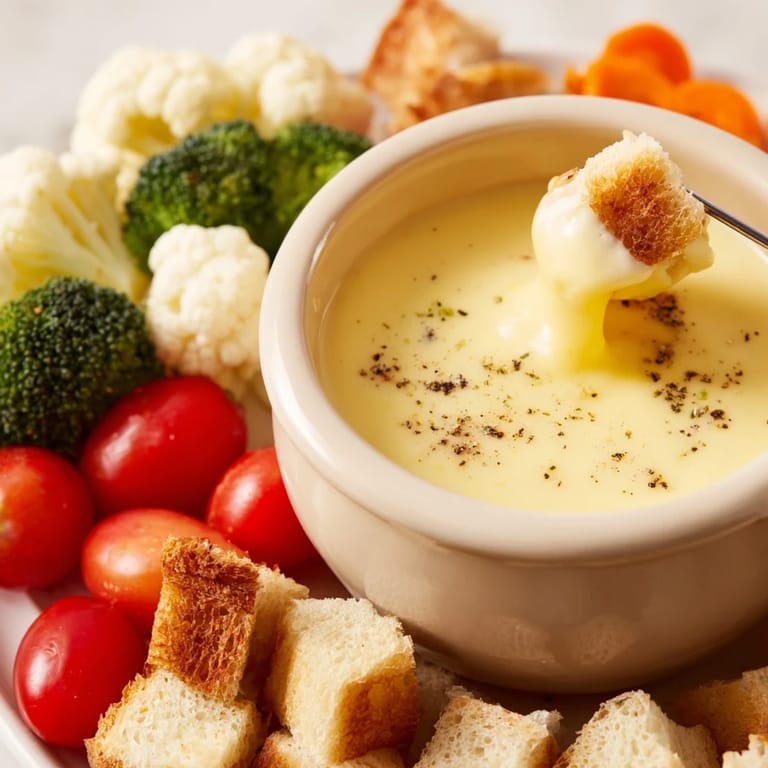
The vegetables shouldn't be raw and crunchy; blanching them for just a few minutes softens them slightly while keeping them still have structure, so they don't fall apart in the hot cheese. Bread cubes should be roughly bite-sized—any bigger and they're awkward on a fork, any smaller and they disappear.
- Cut your baguette or country bread into cubes the night before so they dry out slightly and grip the fork better.
- Blanch broccoli and cauliflower for about three minutes, then shock them in ice water to stop the cooking.
- Cherry tomatoes and baby carrots are perfect as-is, providing color and a burst of freshness against all that rich cheese.
 Pin It
 Fondue is less about perfection and more about presence—the chance to slow down and feed each other in the most literal sense. Make it when you want an excuse to linger at the table.
Recipe FAQs
- → What cheeses are best for this dish?
Gruyère and Emmental cheeses provide the ideal creamy and nutty flavors essential for the melting process and overall balance.
- → Can the alcohol in the wine and kirsch be omitted?
Yes, the kirsch is optional and can be left out. Using a non-alcoholic white grape juice substitute works, but the unique depth from wine might be less pronounced.
- → How do I prevent the cheese from separating?
Low heat and continuous stirring in a figure-eight motion help maintain a smooth blend, while cornstarch stabilizes the cheese to avoid separation.
- → What breads and vegetables pair well for dipping?
Rustic baguette cubes and blanched vegetables like broccoli, cauliflower, cherry tomatoes, and baby carrots create ideal textures and flavors for dipping.
- → How to keep bread cubes from falling off forks?
Using slightly stale bread improves adhesion on the fondue forks, preventing cubes from slipping off when dipped.