 Pin It
 There's something about a perfectly balanced rice bowl that makes everything feel manageable, even on the chaotic days. I discovered this salmon and chicken combination while trying to use up leftovers from a dinner party, and it became the dish I make whenever I need something nourishing without the fuss. The magic isn't just in the tender proteins or the creamy avocado—it's in how everything comes together in one beautiful bowl, flavors mingling with each bite. What really hooked me was learning the ice cube hack from a friend who worked in restaurant kitchens; suddenly reheating rice became something that actually preserved its moisture instead of turning it into cardboard.
I made this for my sister after she mentioned feeling burned out, and watching her face light up as she took that first bite reminded me why I love cooking in the first place. She asked for the recipe immediately, and now it's become our go-to when we need to catch up over something delicious. That moment stuck with me because the bowl felt like more than food—it was a small act of care that actually landed.
Ingredients
- Skinless salmon fillets: Salmon brings a richness and those omega-3s everyone keeps talking about; look for fillets that feel firm and smell clean, not fishy.
- Boneless, skinless chicken thighs: Thighs stay juicy when cooked, unlike breasts, and they soak up the marinade beautifully.
- Soy sauce: The backbone of the marinade; use Japanese soy sauce if you can find it, as it tastes less harsh than Chinese varieties.
- Mirin: This sweet rice wine adds shine and a gentle sweetness that balances the soy; don't skip it if you want that authentic flavor.
- Sake: Dry white wine works fine in a pinch, but sake gives an authenticity that makes you feel like you're actually cooking Japanese.
- Sesame oil: A little goes a long way; it's pungent and perfumy, so resist the urge to pour generously.
- Japanese short-grain rice: This sticks together slightly more than long-grain, creating that cohesive bowl experience; regular short-grain rice works too.
- Avocado: Choose one that yields gently to pressure; slice it right before assembly so it doesn't brown and lose its appeal.
- Fresh vegetables: The cucumber, carrot, and scallions add texture and brightness that makes the bowl sing; don't skip these even if you're in a hurry.
- Toasted sesame seeds: Toast your own if you have the time—the difference is noticeable and makes you feel like a proper cook.
- Nori sheets: Optional but worthwhile; they add a briny ocean note and visual intrigue.
- Rice vinegar: This creates a subtle tang in the sauce that prevents the whole bowl from feeling heavy.
Tired of Takeout? 🥡
Get 10 meals you can make faster than delivery arrives. Seriously.
One email. No spam. Unsubscribe anytime.
Instructions
- Prepare your rice foundation:
- Rinse the rice under cold water, stirring gently with your fingers until the water runs clear—this removes excess starch that would make the rice gluey. Cook it in a rice cooker with 2 1/2 cups water, or in a covered saucepan over medium heat until the water is absorbed and the rice is tender.
- Create the marinade magic:
- Whisk soy sauce, mirin, sake, sesame oil, and honey together in a bowl until the honey dissolves and everything smells incredible. Divide this between two shallow dishes and add your salmon to one and chicken to the other, letting them sit for at least 10 minutes while you prep everything else.
- Cook the chicken until golden:
- Heat your nonstick skillet over medium heat and add the chicken thighs, skin-side down if they still have skin, letting them cook undisturbed for 4-5 minutes until they develop a beautiful golden crust. Flip and cook another 4-5 minutes until cooked through, then remove to a plate and let them rest for a few minutes before slicing.
- Sear the salmon with care:
- In the same pan, add the salmon fillets and cook for 2-3 minutes per side—you want them just cooked through, still moist in the center. Gently flake the cooked salmon with a fork, being careful not to break it into tiny pieces.
- Prepare all your toppings:
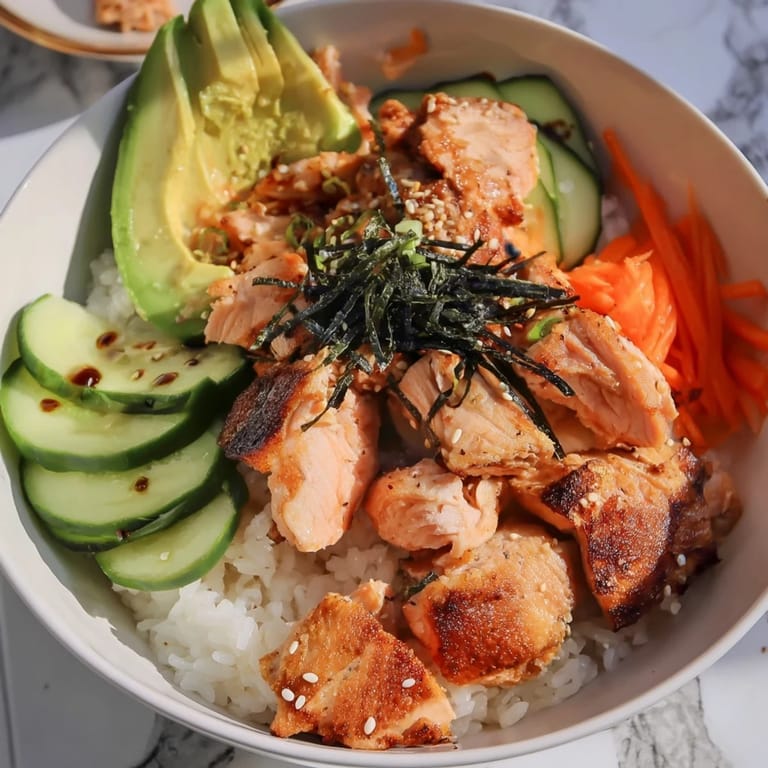
- Slice your avocado, cucumber, and carrot into thin, elegant pieces; slice your scallions; have your sesame seeds and nori ready. This is the moment where everything comes together visually, so take a breath and enjoy how beautiful it all looks.
- Mix the finishing sauce:
- Whisk together soy sauce, rice vinegar, sesame oil, and sugar until the sugar dissolves completely, creating a balanced sauce that's salty, tangy, and slightly sweet.
- Assemble your bowls:
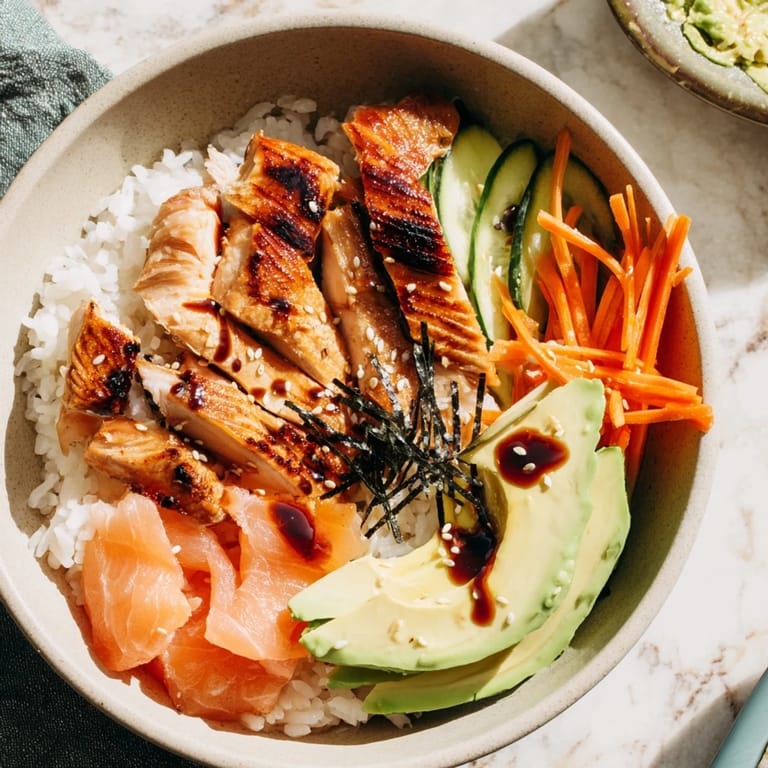
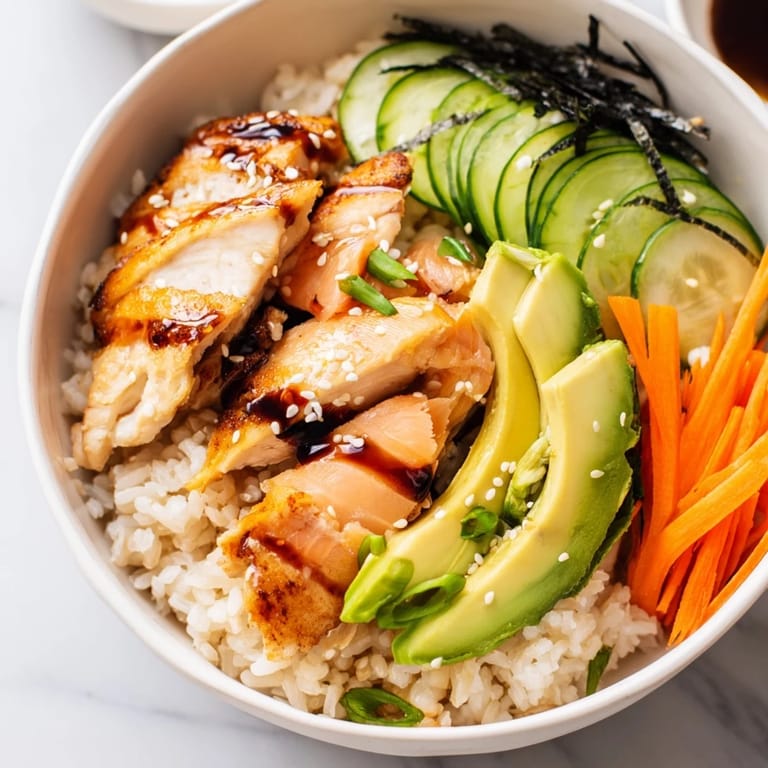
- Divide the fluffy rice among four serving bowls, then arrange the chicken, salmon, avocado, cucumber, carrot, and scallions on top in any pattern that makes you happy. Drizzle the sauce evenly, sprinkle with sesame seeds and nori, and serve immediately.
- Master the ice cube reheating hack:
- If you're reheating a pre-assembled bowl, place a single ice cube in the center of the rice and cover it with a microwave-safe lid or plastic wrap. Microwave on high for 1-2 minutes, and as the ice melts, it creates steam that warms the bowl and keeps the rice from drying out.
 Pin It
 My neighbor stopped by one afternoon while I was assembling these bowls, and the aroma of the marinade and toasted sesame pulled her right into the kitchen. I ended up making her one on the spot, and she sat at my counter talking about how it tasted like self-care in edible form, which is probably the nicest compliment a dish has ever received.
Why This Bowl Became My Weeknight Anchor
There's a rhythm to assembling these bowls that's almost meditative—the act of arranging each element makes you slow down and actually taste what you're making. I started preparing double or triple portions on Sunday, knowing that when Wednesday hits and I'm exhausted, I can grab one from the fridge and use the ice cube trick to have something genuinely delicious in two minutes. This bowl has saved me from countless nights of ordering takeout, not because I'm being virtuous, but because it actually tastes better than most places deliver.
The Marinade Is Where the Flavor Lives
The marinade is where most people miss the mark, either by skipping it entirely or by letting proteins sit too long and become over-seasoned. The balance of soy's saltiness, mirin's sweetness, sake's delicate undertone, and sesame oil's rich earthiness creates a flavor profile that makes both salmon and chicken taste like you spent hours on them. I learned this by accident when I forgot about marinating chicken for a dinner party and threw it in with just soy sauce, and everyone could taste the difference immediately—even the people who usually don't notice these things.
Making It Your Own
The beauty of a rice bowl is how forgiving it is; you can swap almost any component based on what's in your fridge or what you're craving that day. I've made it with edamame instead of avocado when I forgot to buy one, with steamed broccoli when I wanted something greener, and once with just crispy tofu when I was feeding a vegetarian friend—it worked every single time. The core of what makes this work is the marinade, the rice, and the sauce, so as long as you respect those three elements, you have permission to get creative with the rest.
- Swap avocado for edamame, steamed broccoli, or even thinly sliced raw mushrooms for earthiness.
- Tofu marinated in the same mixture becomes unexpectedly delicious and makes this bowl entirely plant-based.
- Pickled ginger on the side or a drizzle of sriracha adds brightness and heat without overwhelming the delicate flavors.
 Pin It
 This bowl has taught me that the best meals don't need to be complicated, just thoughtful. It's become the dish I make when I want to say I care, whether that's to myself or to someone else.
Recipe FAQs
- → What kind of rice is best for this bowl?
Japanese short-grain rice is ideal due to its stickiness and texture, which complements the toppings well.
- → How does the ice cube hack work for reheating rice?
Placing an ice cube on rice before microwaving creates steam as it melts, helping to keep the rice moist and prevent drying out.
- → Can I substitute the proteins used here?
Yes, tofu works well as a vegetarian alternative and still pairs nicely with the flavors and veggies.
- → What vegetables add the best texture to this dish?
Crisp vegetables like cucumber, julienned carrot, and scallions contribute freshness and crunch to balance tender proteins.
- → Is the marinade sweet or savory?
The marinade balances savory soy and mirin with a touch of honey for mild sweetness and depth of flavor.