 Pin It
 The first time I made minestrone, I was snowed in during a blizzard with nothing but a crisper drawer full of aging vegetables and a pantry full of canned goods. That impromptu pot of soup taught me that minestrone isn't really a recipe at all, it's a kitchen philosophy—use what you have, cook it slowly, and let the flavors find each other. Now I make it whenever life feels chaotic, because there's something deeply grounding about standing over a simmering pot, watching vegetables soften into something greater than themselves.
Last winter, my neighbor showed up with a bag of garden vegetables she couldn't use before traveling. We stood in my kitchen chopping and chatting while the soup bubbled away, and by the time we sat down to eat, the house smelled so incredible that another neighbor knocked on the door just to ask what was cooking. That's the thing about minestrone—it has a way of turning ordinary Tuesday afternoons into something that feels like a gathering.
Ingredients
- 2 tablespoons olive oil: Creates the aromatic foundation, so use something decent enough to drizzle over finished dishes
- 1 medium onion, finely chopped: Sweet yellow onions work beautifully here, becoming meltingly soft as they cook
- 2 cloves garlic, minced: Add it right after the onion so it blooms in the hot oil without burning
- 2 medium carrots, diced: They provide natural sweetness and hold their shape beautifully through long simmering
- 2 celery stalks, diced: Essential for that classic soup base flavor, even if you're not typically a celery fan
- 1 medium zucchini, diced: Don't cut it too small or it will disappear into the soup
- 1 medium potato, peeled and diced: Russet or Yukon Gold both work, adding body and subtle creaminess
- 1 cup green beans, cut into pieces: Fresh green beans maintain a pleasant bite that contrasts with the softer vegetables
- 1 (14 oz / 400 g) can diced tomatoes: The juices become part of the broth, so don't drain them
- 4 cups (1 liter) vegetable broth: Low-sodium gives you control over the final seasoning
- 2 cups water: Stretches the broth without diluting flavor, thanks to all those vegetables
- 1 (15 oz / 425 g) can cannellini beans: These creamy white beans become velvety as they simmer, adding protein and substance
- 3/4 cup small pasta: Ditalini holds up perfectly, but elbows or small shells work just as well
- 1 teaspoon dried oregano: Earthy and robust, it anchors the herb profile
- 1 teaspoon dried basil: Sweet and aromatic, it complements the oregano without competing
- 1 bay leaf: The secret backbone flavor that makes soup taste professionally made
- Salt and freshly ground black pepper: Season gradually as you cook, tasting along the way
- 1/4 cup chopped fresh parsley: Brightens the entire bowl with a fresh, grassy finish
- 2 tablespoons chopped fresh basil: Optional but worth it, adding that unmistakable summer sweetness
- Freshly grated Parmesan cheese: The salty, umami-rich crown that ties everything together
Tired of Takeout? 🥡
Get 10 meals you can make faster than delivery arrives. Seriously.
One email. No spam. Unsubscribe anytime.
Instructions
- Build your aromatic base:
- Heat olive oil in a large pot over medium heat until it shimmers slightly. Add onion and garlic, sautéing for 2 to 3 minutes until fragrant and translucent, stirring occasionally to prevent any sticking.
- Soften the harder vegetables:
- Add carrots, celery, zucchini, potato, and green beans to the pot. Sauté for 5 to 6 minutes, stirring occasionally, until vegetables begin to glisten and soften slightly at the edges.
- Create the soup:
- Stir in diced tomatoes with all their juices, vegetable broth, and water. Add dried oregano, dried basil, bay leaf, salt, and pepper. Bring everything to a gentle boil, watching as the tomatoes release their vibrant color into the liquid.
- Simmer deeply:
- Reduce heat to low, cover, and simmer for 15 minutes. The vegetables will continue softening and the broth will begin to thicken slightly as starches release from the potato.
- Add the beans and pasta:
- Uncover the pot and add cannellini beans and pasta. Continue simmering for 10 to 12 minutes, uncovered, until pasta is tender and vegetables are completely yielding to the touch of a spoon.
- Finish with fresh herbs:
- Remove and discard the bay leaf. Stir in fresh parsley and basil, letting them wilt slightly in the hot soup. Taste and adjust salt and pepper as needed.
- Serve with love:
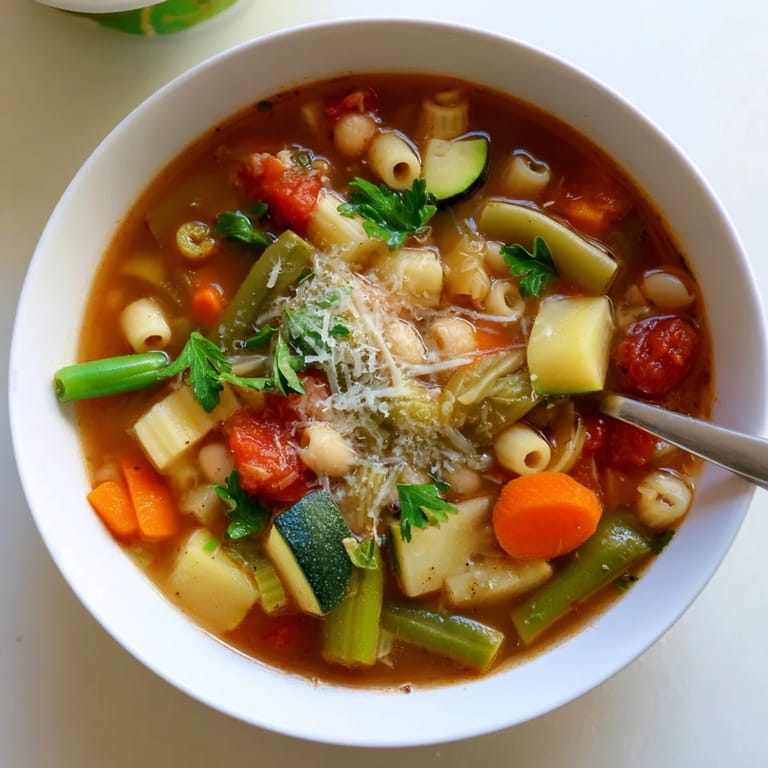
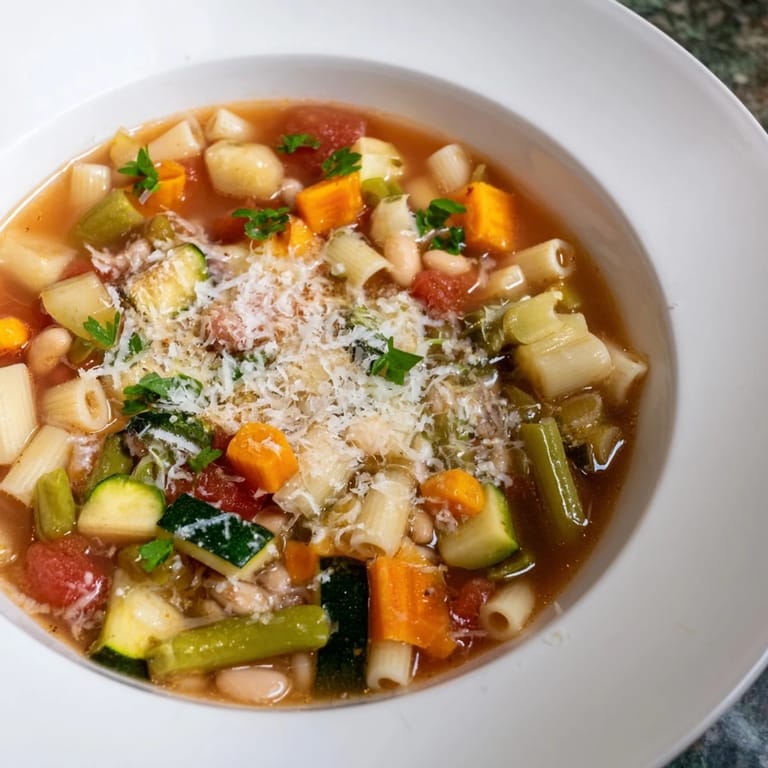
- Ladle hot soup into warmed bowls and finish with freshly grated Parmesan cheese. Let each person add more at the table, watching it melt into the steaming broth.
 Pin It
 I once brought a pot of this soup to a friend recovering from surgery, and she told me later that the first spoonful made her feel cared for in a way medicine couldn't. Food has that power, especially something as nurturing as a properly made vegetable soup, rich with the patience that went into making it.
Making It Your Own
The beauty of minestrone lies in its adaptability—swap spinach for green beans in winter, add diced butternut squash in autumn, or throw in a handful of kale when that's what needs using. The pasta can be any small shape you have in the pantry, and borlotti beans work beautifully if cannellini aren't available. Think of this as a template rather than a rigid set of rules, and let the seasons guide your choices.
The Bread Question
Some people insist on serving minestrone with crusty bread rubbed with garlic and drizzled with olive oil, while others prefer floating a thick slice directly into their bowl. I've tried both methods and can confirm that either approach is correct, though the bread-in-soup technique creates an extraordinary texture as it absorbs the broth, becoming soft and custard-like at the bottom of the bowl.
Perfecting The Broth
The difference between adequate minestrone and extraordinary minestrone comes down to time and salt. Don't rush the initial vegetable softening step—those few minutes of sautéing build layers of flavor that slow cooking alone cannot achieve. And please, taste your soup before serving, adjusting salt in small pinches until the vegetables taste their absolute best.
- Add a splash of red wine vinegar if the soup tastes flat
- Stir in a Parmesan rind during simmering for extra depth
- Never skip the final fresh herbs—they wake up the whole bowl
 Pin It
 There's something deeply satisfying about a soup that uses every last vegetable in the crisper drawer and turns them into something nourishing and complete. That's minestrone's greatest gift—it takes humble ingredients and, with time and care, transforms them into a meal that feels like an embrace.
Recipe FAQs
- → What vegetables go in minestrone?
Traditional minestrone includes onions, carrots, celery, zucchini, potatoes, and green beans. You can customize based on seasonality—spinach, kale, cabbage, or Swiss chard work beautifully. The key is using a variety of colorful vegetables for depth of flavor.
- → What type of pasta is best?
Small pasta shapes like ditalini, elbow macaroni, small shells, or tubetti work best because they spoon up easily with the vegetables and beans. Avoid larger shapes that would overwhelm the soup's texture.
- → Can I make this vegan?
Absolutely. Simply omit the Parmesan garnish or use a plant-based alternative. The soup base is naturally vegan, loaded with vegetables, beans, and pasta for a complete protein-rich meal.
- → How long does minestrone keep?
Stored in an airtight container, it keeps well for 4-5 days in the refrigerator. The pasta will absorb more liquid over time, so you may need to add extra broth or water when reheating. It also freezes beautifully for up to 3 months.
- → What should I serve with it?
Crusty Italian bread or garlic bread is perfect for soaking up the flavorful broth. A simple green salad with balsamic vinaigrette complements the hearty soup. For a complete Italian meal, pair with a glass of Chianti or your favorite red wine.
- → Can I use dried beans instead of canned?
Yes, but you'll need to cook them separately first. Soak 1 cup dried cannellini beans overnight, then simmer until tender (about 1-1.5 hours). Use them in place of the canned beans. This method adds even more depth to the broth.