 Pin It
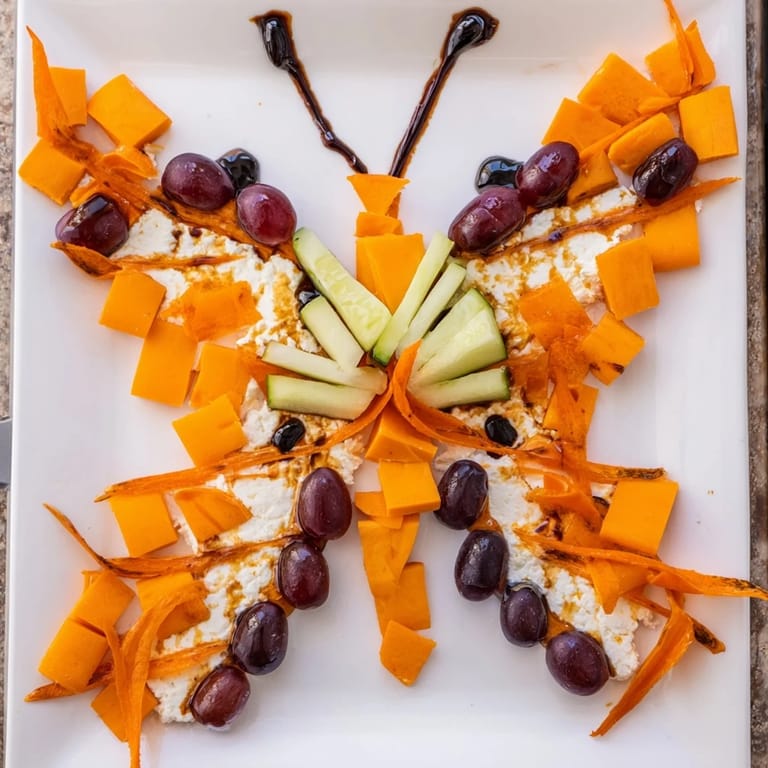
 I still remember the moment I decided to turn food into art. It was during a garden party on a late summer afternoon when my friend mentioned how much she loved monarch butterflies. That evening, as I was arranging appetizers on a platter, I had this wild idea: what if I could capture the beauty of those delicate wings using the very ingredients sitting in my kitchen? Orange vegetables, black olives, vibrant cheese—suddenly, it all clicked. That night, the Monarch Butterfly Wings platter became not just an appetizer, but a conversation starter that transformed how my guests saw food. Now, every time I make it, I'm transported back to that moment of culinary inspiration.
I'll never forget serving this at my sister's engagement party. As guests arrived and saw this stunning butterfly arrangement, their faces just lit up—before they even tasted anything, they were taking photos and sharing stories about monarch butterflies they'd seen. My sister's future mother-in-law spent ten minutes arranging pieces on her plate to match the wing pattern, and that simple act turned eating into play. That's when I realized this dish does something special: it brings people together through beauty and nostalgia.
Ingredients
- Sweet potato, thinly sliced and roasted: This becomes the warm, glowing base of your butterfly's wings. Roasting caramelizes the natural sugars, giving you that gorgeous deep orange color and a subtle sweetness that balances the savory elements.
- Carrot rounds: Their bright, cheerful orange is pure visual magic. Slice them thin so guests can pop them easily into their mouths—you want this platter to feel effortless to eat.
- Orange bell pepper strips: These add both color and a crisp, fresh crunch that keeps the platter feeling alive and vibrant.
- Cheddar cheese, cubed: Choose a good quality cheese with depth of flavor. The sharp tang complements the sweet vegetables beautifully, and the golden-orange color is essential to the design.
- Black olives, pitted and halved: These are your wing's defining edges and spots. Their salty, briny flavor is the counterpoint that makes every other ingredient shine.
- Black grapes, halved: A surprising element that adds juiciness and sweetness. They catch the light in a way that makes the platter feel almost three-dimensional.
- Black sesame or rice crackers: These create texture and structure in your design. I prefer sesame for the nutty flavor, but rice crackers work beautifully if you need gluten-free.
- Balsamic glaze: Use this sparingly—it's your artist's finest brush. Just a delicate drizzle highlights the patterns you've created.
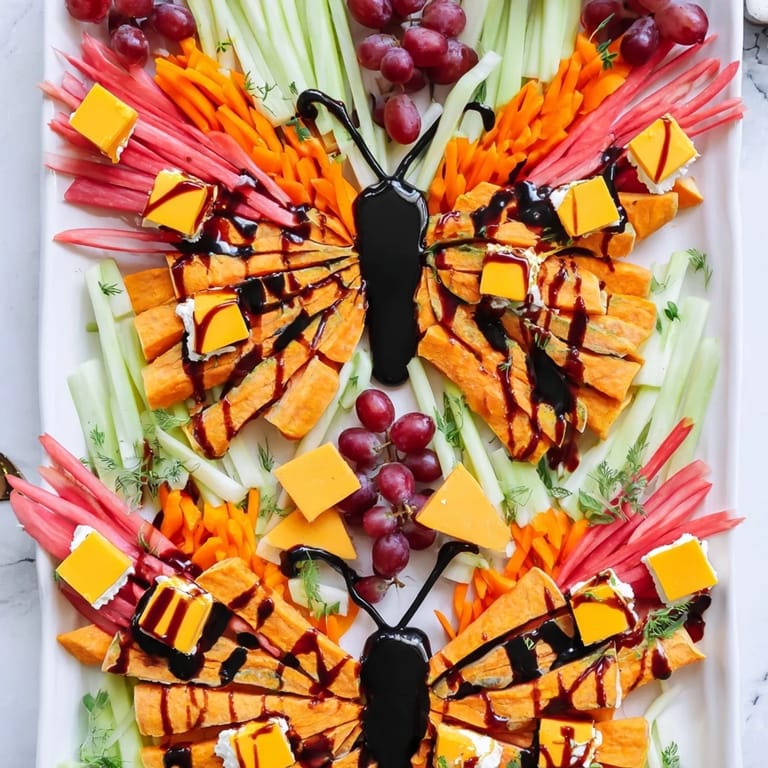
- Cucumber, sliced lengthwise: This becomes the butterfly's body, the anchor that holds your entire design together. Its mild flavor and pale green color create perfect contrast.
- Cream cheese, softened: This is your edible paint. Those little white dots along the black edges are what transform your arrangement from pretty into authentically monarch-like.
- Fresh dill or microgreens: These fragile antennae bring movement and life to the top of your butterfly. They're optional, but they're the detail that tells the world this was made with love.
Tired of Takeout? 🥡
Get 10 meals you can make faster than delivery arrives. Seriously.
One email. No spam. Unsubscribe anytime.
Instructions
- Set your stage:
- Gather everything on your counter before you touch the platter. Slice your sweet potato thin, roast it until it's tender and caramelized, then let it cool while you peel and slice the carrots into rounds. Halve your grapes and olives. Cube your cheese. This preparation ritual is meditative—you're setting intention as you prepare each ingredient.
- Find the center line:
- On your large platter, lay those cucumber sticks down the center like drawing a line through the heart of your butterfly. This is your reference point, the spine that everything else builds around. Stand back and imagine the wings spreading outward.
- Build the orange wings:
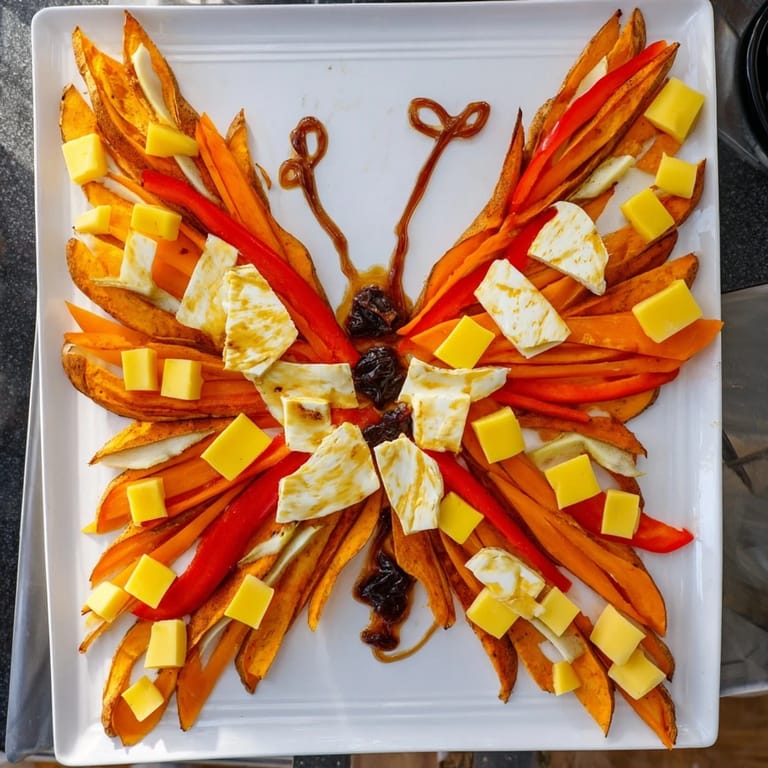
- Now comes the fun part. Starting from the cucumber center line, fan out your orange ingredients in a symmetrical pattern on both sides. Think of how a monarch's wings expand—slightly curved, balanced on each side. Layer your sweet potato slices, then your carrot rounds, then your bell pepper strips, building dimension as you go. Don't worry about perfection; nature isn't perfect, and neither are butterflies.
- Add the black definition:
- This is where your platter transforms from colorful to striking. Tuck your black olives and grapes into the spaces between the orange sections, creating the dark veining and spots that monarch wings are famous for. Use these darker elements to outline and define the wing shapes you've created. Your eyes should naturally follow the black lines, just like they do on a real butterfly.
- Paint with cream cheese:
- Using a small spoon, add tiny dots of softened cream cheese along the edges where black meets orange. These white spots are the signature detail—they're what transform your platter from a beautiful arrangement into an accurate monarch portrait. Let your hand be gentle and playful here.
- Glaze with intention:
- Very lightly drizzle balsamic glaze across parts of the black elements. This isn't about coverage—it's about highlighting. A thin line here, a subtle accent there. The glaze should shimmer like light catching on a wing.
- Crown with antennae:
- Gently place your dill or microgreens at the top of the cucumber body, creating two delicate antennae. This final touch brings the whole design to life, transforming an arrangement into a recognizable creature.
- Serve with grace:
- Place your butterfly where guests will see it first. Encourage them to notice before they eat, to really take in what you've created. Then invite them to build their own bites, mixing orange with black, finding their favorite flavor combination. This is food as experience.
 Pin It
 What struck me most when I started making these platters was how food became a vehicle for wonder. My nephew, who usually picks through appetizers, stopped mid-bite while looking at the butterfly and asked me why I'd made it so beautiful. That question—that pause for appreciation—reminded me that we eat with our eyes first, and when you honor that, every flavor tastes better.
Making It Your Own
The magic of this platter is that it's flexible. If you don't have sweet potatoes, roasted butternut squash creates the same warm glow. Orange cherry tomatoes can replace carrot rounds for a juicier texture. Purple carrot slices or thin beet rounds can add another dimension of color contrast that makes the design even more striking. I once added roasted red pepper for extra depth, and it transformed the entire mood of the butterfly. The point isn't to follow rules—it's to play with what you have and trust your instincts about color and balance.
Pairing and Presentation
This platter sits beautifully at the center of any gathering, whether it's a casual weeknight with friends or a formal celebration. A crisp white wine—something like a Sauvignon Blanc—plays perfectly off the fresh vegetables and salty olives. Sparkling water with fresh lemon or orange slices echoes the butterfly theme and keeps things light. I've found that when you pair beautiful food with thoughtful beverages, guests automatically slow down and savor the moment instead of rushing through.
The Stories Food Tells
Every time I make this platter, I think about how food is storytelling. That butterfly doesn't just represent an insect—it represents transformation, beauty, and the idea that care in the kitchen becomes care for the people eating. When you take time to arrange something thoughtfully, you're telling your guests they're worth that effort. That's the real ingredient here, and it's the one that makes everything taste better.
- Keep your cream cheese at room temperature so it's soft enough to dot smoothly onto the platter without tearing anything underneath.
- If you're transporting this to a party, assemble it on a platter with a cover or carefully wrap it in plastic wrap, then unwrap it just before guests arrive for maximum impact.
- Trust that small imperfections make it feel handmade and real—the most beautiful butterflies in nature have variations and asymmetries anyway.
 Pin It
 This platter is a reminder that the most memorable meals aren't always about complicated cooking—they're about attention, creativity, and the willingness to see ordinary ingredients as something extraordinary. Every time you make it, you're creating a moment.