 Pin It
 I discovered this arrangement by accident one autumn afternoon when I split open a pomegranate and watched the light catch its ruby seeds. The halved fruit was so striking sitting there on the counter that I couldn't help but build around it, pulling whatever colorful produce I had from the fridge. What started as visual play became something people actually wanted to eat—and photograph. It's the kind of dish that proves you don't need complicated techniques, just an eye for color and permission to arrange food like art.
I made this for my sister's engagement party last June, and I remember being nervous about whether it would hold up during a three-hour gathering. The colors stayed vibrant, people kept circling back for more, and even the skeptics—the ones who usually ignore fruit platters—were genuinely drawn to it. That's when I knew the visual drama was doing real work.
Ingredients
- 1 large pomegranate, halved: This is your anchor, your wow factor—choose one with deep color and weight in your hand, which means it's juicy and fresh.
- 1 cup dark cherries, pitted: They're small but mighty, creating those rich burgundy notes that draw the eye inward toward the center.
- 1 cup red grapes: They stay firm and glossy, giving you reliable jewel tones that won't soften or bleed.
- 1 cup strawberries, hulled: Cut them just before serving so they don't oxidize and lose that brilliant red.
- 1 cup raspberries: Delicate and crumbly, handle them last and place them gently—they're about texture and that soft pink hue.
- 1 cup watermelon, cubed: The pale pink interior provides relief and balance, breaking up the intensity of the darker fruits.
- 1 cup pink grapefruit segments: They bridge the gap between red and pale, and their slight tartness cuts through the overall sweetness.
- 1 cup dragon fruit, cubed: Almost white with those tiny black seeds, it creates drama through contrast rather than color.
- 1 cup apple slices (pink or blush varieties): Toss these in a little lime juice the moment you cut them to keep them bright and prevent browning.
- 1 cup pear slices: They're mild and pale, which is exactly why they matter—they're the whisper that balances all the shouting colors.
- Fresh mint leaves and edible rose petals (optional): These are your finishing flourish, adding fragrance and that final touch of intentionality.
Tired of Takeout? 🥡
Get 10 meals you can make faster than delivery arrives. Seriously.
One email. No spam. Unsubscribe anytime.
Instructions
- Prepare your canvas:
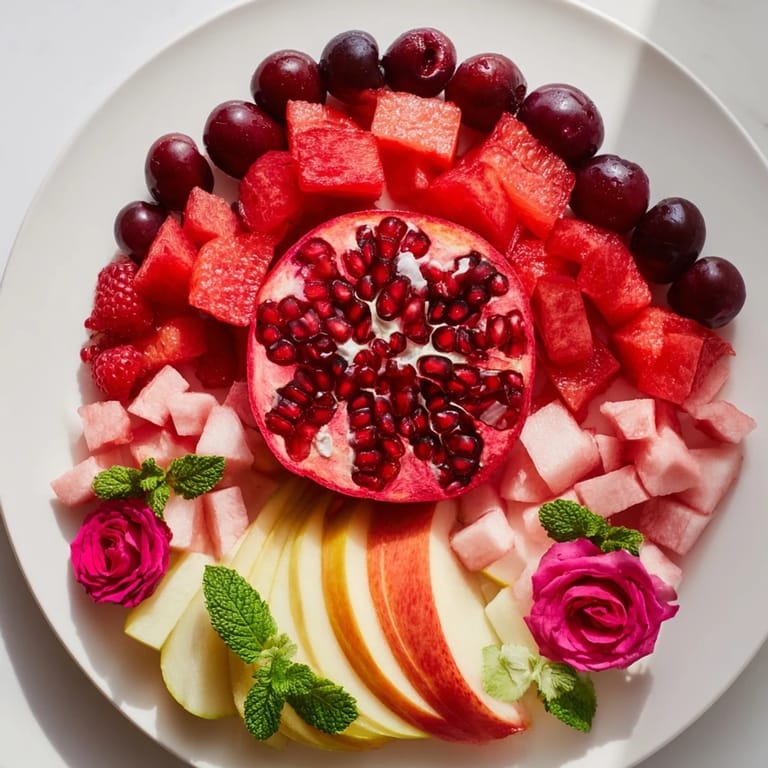
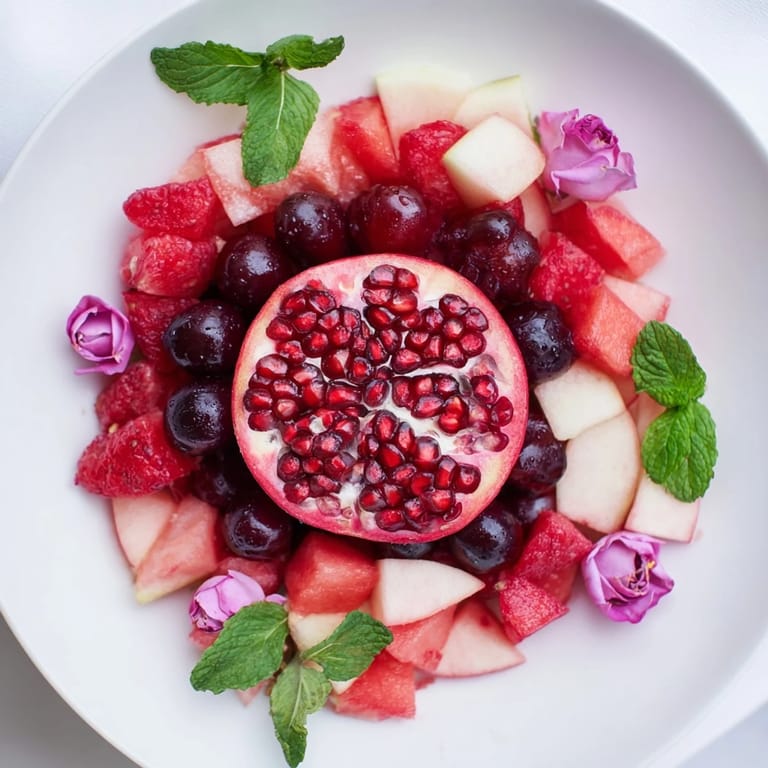
- Find your largest, flattest serving platter—something with enough real estate to let the colors breathe. Place the pomegranate halves cut side up in the center, positioning them so they're stable and visible from every angle.
- Build the deepest layer:
- Arrange your dark cherries, red grapes, and strawberries in a crescent or ring directly around the pomegranate. Work slowly here, overlapping slightly so there's no empty platter showing through—this is your anchor color.
- Create the pink transition:
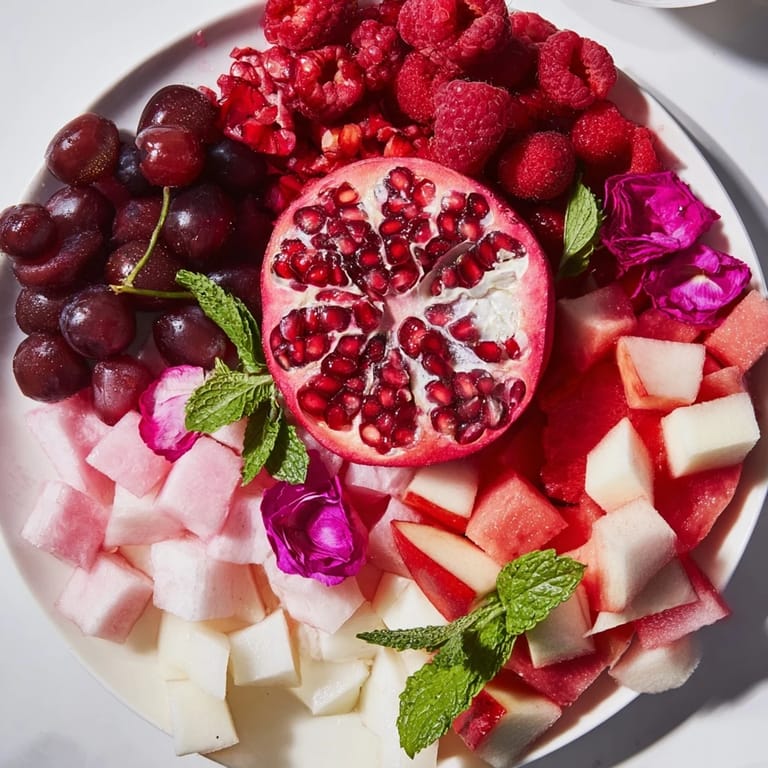
- Layer raspberries, watermelon cubes, and grapefruit segments next to the reds, letting the colors fade gradually from deep to soft. Think of it like a sunset where one shade naturally melts into the next without harsh lines.
- Finish with the pale outer edge:
- Place dragon fruit cubes, apple slices, and pear slices around the outer rim, creating that final soft transition. If you're using apple or pear, do this step last and dress them with a tiny squeeze of lime juice immediately.
- Garnish and serve:
- Scatter fresh mint leaves and rose petals across the platter if you're using them, focusing on gaps where they'll catch the light. Serve immediately, or cover loosely with plastic wrap and refrigerate until your guests arrive.
 Pin It
 The real magic happened when my nephew, who usually pushes fruit around his plate, spent ten minutes just studying the colors before eating anything. He wanted to remember it exactly as it looked. That moment reminded me that food is never just fuel—it's also conversation, memory, and permission to slow down and look closely at what we're about to eat.
Arranging Like You Mean It
Color arrangement isn't complicated once you stop overthinking it. The basic rule is to move from dark to light as you spiral outward from the center, but honestly, you can trust your instincts more than you think. If a color combination makes you pause for a second, that pause means it's probably striking. Overlapping matters too—let each fruit layer rest slightly on the previous one so the platter feels full and intentional rather than sparse or scattered.
Seasonal Swaps and Flexibility
This platter is a skeleton, not a prison. In winter, substitute with pomegranate seeds, red currants, persimmons, and white pear. Summer opens up peaches, nectarines, mulberries, and lychees. The principle stays the same—you're chasing a color gradient from dark to light, so pick whatever's ripe and local. I once made this in March with blood orange segments and it was just as beautiful as the original.
Pairing and Presentation
This platter wants something cold and celebratory beside it. A chilled sparkling rosé is perfect because it echoes the color palette, but so is a crisp white wine or even sparkling water with fresh mint. The beauty of a fruit platter is that it works alone as a light meal or as the opening act before heavier courses. I've learned that having small plates nearby makes it feel more intentional, like you planned for people to linger over it rather than grab and go.
- Keep it on the table as a centerpiece for at least the first part of your gathering so everyone can appreciate the visual before diving in.
- If you're serving this at a warm gathering, keep the platter in a cool spot or refresh it halfway through by bringing it back to the kitchen briefly.
- Cut the pomegranate halves just before serving, or they'll start to dry and lose that jewel-like appearance.
 Pin It
 This platter reminds me that sometimes the simplest recipes are the ones that matter most—not because they're technically impressive, but because they change how people see what's possible in their own kitchens. Make it once and you'll find yourself reaching for it again.
Recipe FAQs
- → How should the fruits be arranged?
Arrange fruits in overlapping layers, starting with deep red fruits close to the pomegranate, transitioning through pink tones, and finishing with pale pink and white fruits at the outer edge.
- → Can I substitute any fruits?
Yes, seasonal alternatives like red currants, pomegranate seeds, lychees, or peaches work well to maintain the color gradient.
- → How do I prevent apple and pear slices from browning?
Lightly drizzle lime juice over apple and pear slices to prevent oxidation and maintain fresh appearance.
- → Is this platter suitable for specific dietary needs?
It's vegan and gluten-free, making it suitable for a wide range of dietary preferences without common allergens.
- → What garnishes enhance the platter?
Fresh mint leaves and edible rose petals add extra color, aroma, and sophistication to the presentation.