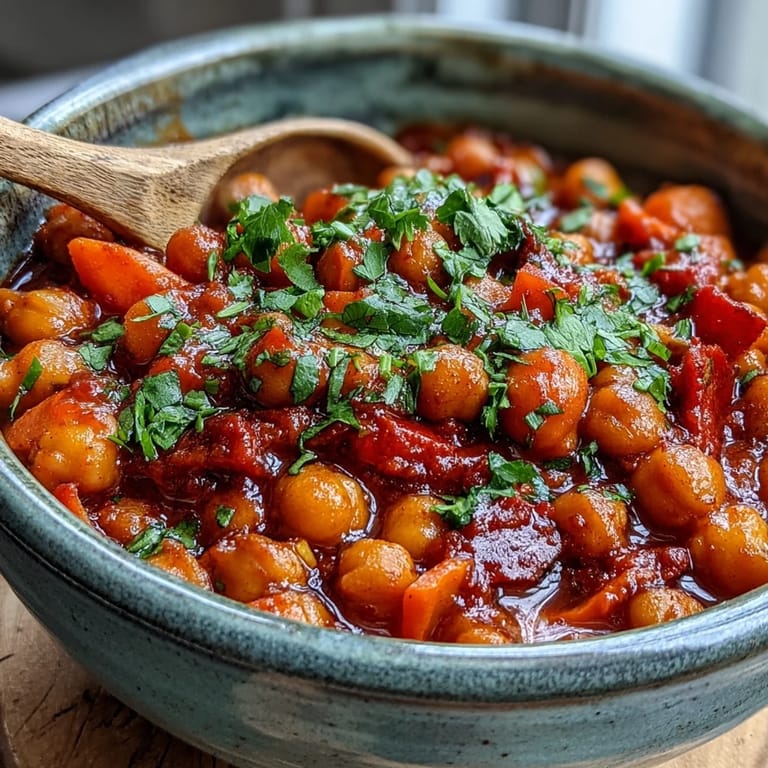
 Pin It
 There's something about the smell of cumin hitting hot oil that stops me mid-thought every single time. Years ago, a friend brought this stew to my place on one of those gray afternoons when I wasn't expecting company, and the moment I opened the door, that warmth just wrapped around me. She said it was something her neighbor taught her, nothing fancy, just chickpeas and whatever spices were calling from the cabinet. I've made it dozens of times since, and it never feels the same twice—sometimes it's pure comfort, sometimes it's what I need when the weather turns.
I made this for my sister when she went vegetarian, and I was honestly nervous I'd mess it up or make something forgettable. But watching her taste it, watching her slow down and actually sit with the bowl instead of rushing through dinner—that's when I realized good food isn't about complexity, it's about care. She asked for the recipe before she even finished eating.
Ingredients
- Chickpeas (2 cans, drained and rinsed): They're the backbone here—rinse them well under cold water to reduce that tinny canned taste and help them absorb all the spice flavors.
- Onion (1 large, finely chopped): The base of everything; take your time softening it because that's where the stew's depth comes from.
- Garlic (2 cloves, minced): Don't skip this step, and don't let it burn—it should just kiss the oil before the other vegetables join in.
- Carrots and red bell pepper (2 carrots diced, 1 pepper diced): They add sweetness and texture; the red pepper especially brightens the whole thing.
- Diced tomatoes (1 can, 14 oz): Use canned, not fresh—canned tomatoes are picked and preserved at peak ripeness, which this stew needs.
- Vegetable broth (2 cups): This is your liquid foundation; use good broth if you have it, as it really shapes the final flavor.
- Tomato paste (2 tablespoons): Stir it into the hot oil before the liquid goes in; this small step deepens the whole stew.
- Olive oil (2 tablespoons): Use something you'd actually taste in a salad—the quality matters more than you'd think.
- Cumin (1 teaspoon): Warm, earthy, and the star of the spice show here.
- Smoked paprika (1 teaspoon): Adds a whisper of smoke and depth without any real heat.
- Ground coriander (1/2 teaspoon): Citrusy and subtle—it lifts the whole spice blend.
- Turmeric (1/2 teaspoon): Golden color and a gentle earthiness; it ties everything together.
- Chili flakes (1/2 teaspoon, adjust to taste): The heat comes from here—start with half a teaspoon and build if you like fire.
- Cinnamon (1/2 teaspoon): A pinch goes a long way; it adds warmth and a hint of sweetness that doesn't announce itself.
- Bay leaf (1): Fish it out before serving—it's flavor, not food.
- Salt and black pepper: Taste as you go; season at the end, not the beginning.
- Lemon juice (1/2 lemon): This is the secret weapon that wakes everything up at the very end.
- Fresh cilantro or parsley (2 tablespoons, chopped): Either one works; cilantro is more herbaceous, parsley is mild and clean.
Tired of Takeout? 🥡
Get 10 meals you can make faster than delivery arrives. Seriously.
One email. No spam. Unsubscribe anytime.
Instructions
- Build your base with the aromatics:
- Pour the olive oil into a large pot over medium heat and let it warm for a moment—you want to feel gentle heat, not aggressive sizzling. Add the chopped onion and let it soften for about 4 to 5 minutes, stirring now and then, until it turns translucent and begins to smell sweet.
- Add the supporting vegetables:
- Toss in the minced garlic, diced carrots, and red bell pepper, stirring everything together for another 3 to 4 minutes. You're not looking for them to be cooked through; you just want them to start releasing their flavors into the oil and beginning to soften at the edges.
- Toast the spices into life:
- Sprinkle in the cumin, smoked paprika, coriander, turmeric, chili flakes, and cinnamon, then stir constantly for about a minute until the whole pot becomes fragrant. This is the moment where dried spices go from dormant to alive, and you'll feel the shift in the aroma.
- Build the liquid foundation:
- Stir in the tomato paste, mixing it through the oil and spices, then add the diced tomatoes, drained chickpeas, vegetable broth, and bay leaf. Stir gently to combine, then increase the heat and bring everything to a rolling boil—it doesn't need to be violent, just active.
- Let it simmer and develop:
- Once it reaches a boil, lower the heat, place a lid on the pot, and let it bubble gently for 25 minutes, stirring occasionally so nothing sticks to the bottom. The stew will thicken, the chickpeas will soften further, and all the flavors will start finding each other.
- Thicken and adjust:
- Remove the lid and let it simmer uncovered for another 5 minutes—this allows excess moisture to evaporate and the stew to reach that perfect consistency where it coats the spoon without being watery. Season with salt and pepper to your taste, tasting as you adjust.
- Finish with brightness:
- Discard the bay leaf, then stir in the lemon juice and your choice of fresh herbs. Taste one more time and adjust anything that needs it—the lemon should wake up all the spices without making it taste sour.
- Serve it warm:
- Ladle the stew into bowls and serve it as is, or alongside crusty bread for dipping, rice, couscous, or flatbread. A drizzle of olive oil on top isn't necessary but never goes unappreciated.
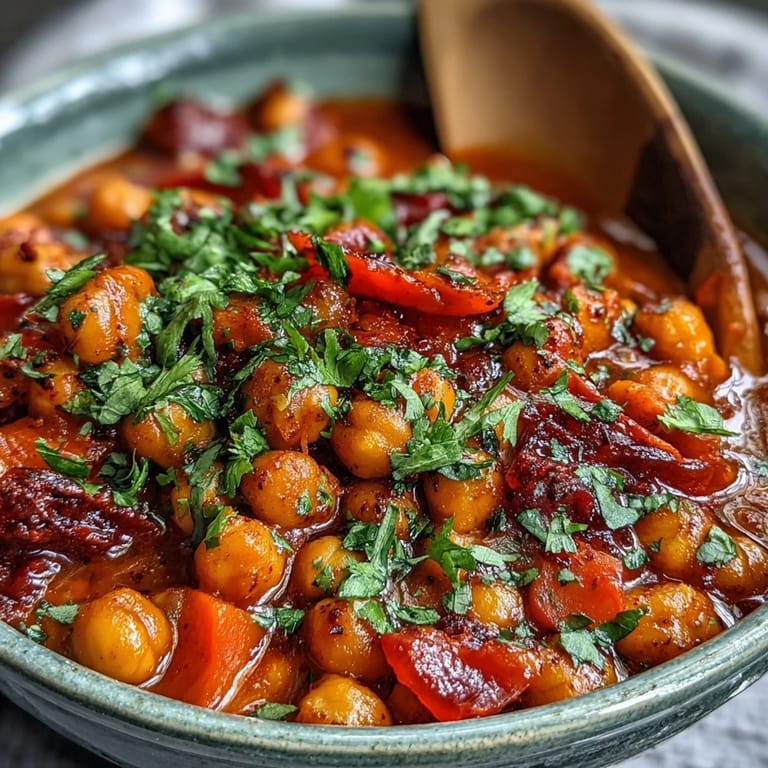 Pin It
 I've learned that this stew is one of those dishes that becomes a ritual more than a recipe. Making it for someone always feels like saying something without words—I'm thinking of you on a cold day, I want you to feel held by warmth, I know this will help.
The Magic of Spice Blooming
The moment you add those spices to hot oil is where the entire stew shifts from promising to extraordinary. When spices hit heat, their volatile oils release, and suddenly what was dusty powder becomes complex flavor. It's the difference between a stew that tastes nice and one that tastes like someone poured intention into it. I used to add spices with the tomatoes and wondered why mine never quite matched what I remembered from my friend's kitchen—it took one experiment with the sequence to change everything.
Why Leftovers Matter
This stew genuinely improves after sitting overnight in the fridge. The spices continue to dance with each other, the chickpeas absorb more of the liquid, and the flavors resolve into something more cohesive than they were the first day. I actually make this stew specifically so I have something substantial and good waiting for me the next day when I'm tired or busy. It reheats perfectly in a pot with just a splash of extra broth if needed.
Adapting for Your Heat Tolerance
The chili flakes and smoked paprika are where the heat lives in this stew, and they're entirely adjustable to your preference. If you like fire, start with the full half teaspoon and add more; if you prefer it mild, use a quarter teaspoon or skip it altogether—the stew is delicious either way because the warmth comes from the spice blend, not just the heat. I had a friend who was new to spicy food try this with barely any chili flakes, and she loved it; another friend added jalapeños and extra flakes and came back for seconds.
- Start conservatively with heat and taste as you go; you can always add more but you can't take it out.
- Smoked paprika adds depth and color without serious heat, so don't skip it even if you reduce the chili flakes.
- Fresh cilantro at the end acts like a cooling agent, so it's your friend if the spice level climbs higher than expected.
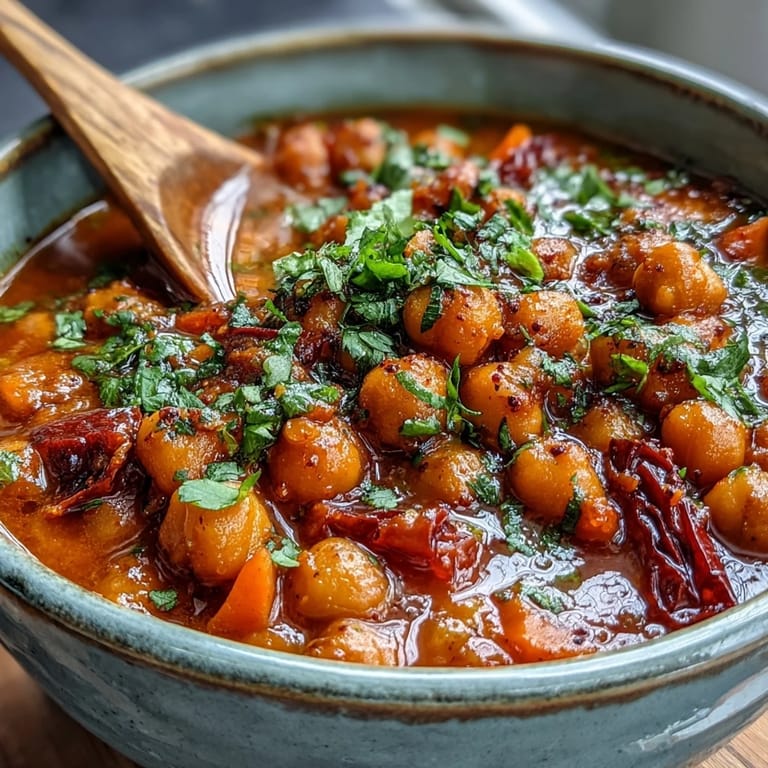 Pin It
 This stew asks nothing of you except a little attention and some time to sit on the stove. Serve it to people you care about, or save it for yourself on a day when warmth is what you need most.
Recipe FAQs
- → How long does this stew keep?
The stew stores well in the refrigerator for up to 4 days and actually develops deeper flavors overnight. It also freezes beautifully for up to 3 months.
- → Can I make it less spicy?
Absolutely. Reduce or omit the chili flakes to tone down the heat while keeping all the aromatic spices that give this dish its characteristic warmth.
- → What can I serve with this?
Crusty bread is perfect for soaking up the flavorful broth. It also serves beautifully over steamed rice, couscous, or quinoa for a more substantial meal.
- → Can I use dried chickpeas?
Yes, soak and cook about 1 cup dried chickpeas until tender before adding them in step 4. This will add time but yields excellent texture.
- → How can I add more protein?
Stir in cubed tofu during the last 10 minutes of simmering, or serve with a dollop of Greek yogurt if not vegan. Lentils also complement the flavors well.