 Pin It
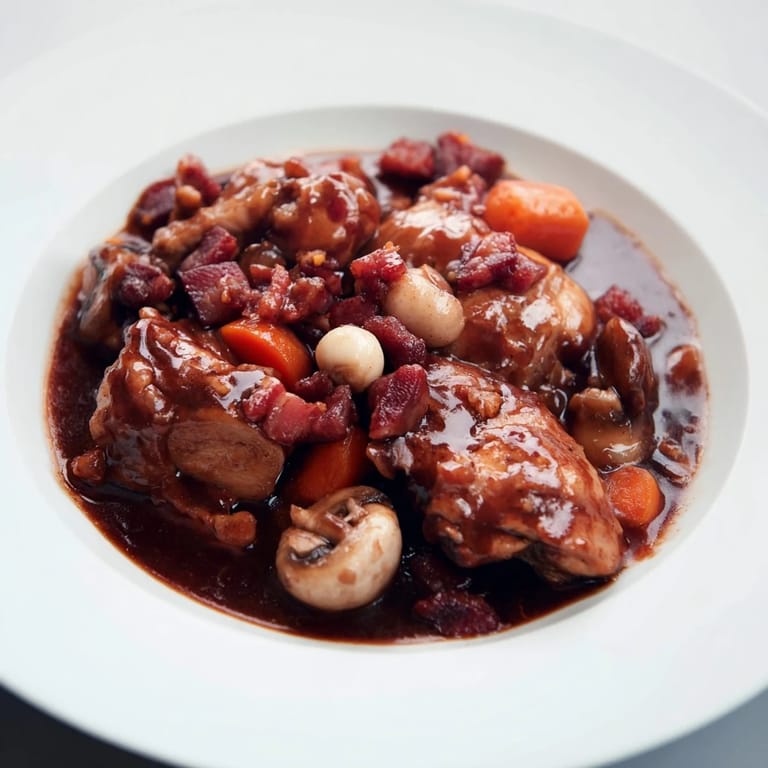
 The first time I made coq au vin, I wasn't trying to impress anyone—I was just hungry and cold, staring at a bottle of decent Burgundy that had been sitting on my counter. My grandmother always said this dish was what you made when you wanted to turn ordinary chicken into something that tasted like you'd been cooking since dawn. Two hours later, my kitchen smelled like wine-soaked herbs and caramelized bacon, and I understood why she kept this recipe close.
I remember bringing this to a dinner party where everyone arrived exhausted from their week, and within minutes, the aroma had completely changed the mood of the room. Someone asked for the recipe, then another person did, and suddenly I realized this wasn't just dinner—it was the kind of meal that reminded everyone why gathering around food matters.
Ingredients
- 1 whole chicken (about 1.5 kg), cut into 8 pieces: Ask your butcher to do this if you'd rather not wrestle with raw poultry—it saves time and keeps your cutting board cleaner.
- 150 g smoked bacon or pancetta, diced: The smoke is essential here; it's the backbone of the whole dish's flavor, so don't skip it or swap for mild bacon.
- 200 g pearl onions, peeled: Buy them frozen and already peeled if your patience is thin—I've done it both ways and honestly can't tell the difference once everything braises together.
- 250 g cremini or button mushrooms, cleaned and quartered: Save the sautéing for near the end; this keeps them from turning into little flavor sponges that absorb all the wine.
- 2 medium carrots, sliced: Cut them on a slight bias so they look intentional and cook more evenly.
- 2 garlic cloves, minced: Fresh garlic makes a real difference here—jarred just doesn't have the same punch.
- 750 ml dry red wine (Burgundy or Pinot Noir): Use a wine you'd actually drink; anything harsh or overly cheap will translate into the sauce.
- 250 ml chicken stock: Homemade is wonderful, but good quality store-bought works fine too.
- 2 tbsp tomato paste: This adds depth without making the sauce taste tomatoey—it's a secret weapon in French braises.
- 2 tbsp all-purpose flour: This helps thicken the sauce naturally as everything simmers.
- 2 tbsp olive oil and 2 tbsp unsalted butter: The combination matters; the butter adds richness while the oil keeps things from burning.
- 2 bay leaves and 4 sprigs fresh thyme: Don't skip the fresh herbs—dried thyme tastes tired by comparison.
- Salt and freshly ground black pepper: Taste as you go; the wine concentrates flavors, so you may need less salt than you'd expect.
Tired of Takeout? 🥡
Get 10 meals you can make faster than delivery arrives. Seriously.
One email. No spam. Unsubscribe anytime.
Instructions
- Prep and dry your chicken:
- Pat each piece thoroughly with paper towels—this is the step that determines whether your chicken browns or steams. Don't rush it, and season generously with salt and pepper right before browning.
- Render the bacon:
- In your Dutch oven over medium heat, cook the diced bacon until the edges crisp and the fat renders into the pot. This takes about 5 minutes and creates the flavorful base everything else will build on.
- Brown the chicken properly:
- Working in batches so you don't crowd the pan, brown each piece until the skin is deep golden. This isn't just for looks—the browned bits stick to the bottom of the pot and become sauce magic later.
- Soften the aromatics:
- Toss in your carrots, pearl onions, and garlic, stirring occasionally until they're lightly golden and smell like caramelized vegetables. About 5 minutes does it.
- Build the sauce base:
- Stir in the tomato paste and flour, cooking for just a minute until everything turns a deeper color. This prevents raw flour taste and creates the foundation for your sauce.
- Bring everything together:
- Return the chicken and bacon, add the wine, stock, bay leaves, and thyme, then scrape the bottom with a wooden spoon to release all those stuck-on flavorful bits. The wine will look like it dominates now, but it'll mellow and concentrate beautifully.
- Low and slow braise:
- Bring to a simmer, cover, and let it bubble gently on the stove or in a 325°F oven for about an hour and a half. The chicken should be tender enough to cut with a spoon by the end.
- Handle the mushrooms separately:
- While everything braises, heat 1 tbsp butter and 1 tbsp olive oil in a separate skillet over medium-high heat, then brown the mushrooms until they're golden and smell earthy. This prevents them from becoming waterlogged in the wine.
- Finish strong:
- Remove the lid for the last 15 minutes so the sauce reduces slightly and deepens in flavor. Fold in the browned mushrooms and taste for salt and pepper—the wine will have concentrated, so you might surprise yourself with how much seasoning you need.
 Pin It
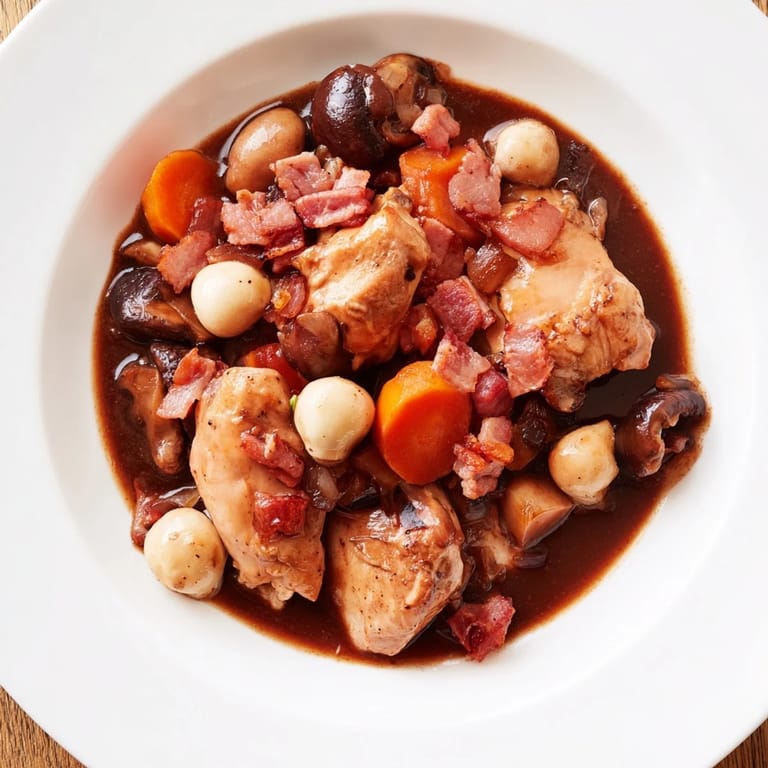
 There was an evening when a friend mentioned offhandedly that she never felt welcome in fancy French restaurants, and I realized that's exactly why this dish matters—it takes something that sounds intimidating and makes it accessible, proof that depth of flavor doesn't require pretense or complicated technique.
Wine Matters More Than You'd Think
The wine here isn't a seasoning you can skimp on—it's the entire soul of the dish. I learned this the hard way when I grabbed a bottle labeled cheap Burgundy that turned out to be thin and acidic, and the whole braise tasted sharp and one-dimensional. A proper Pinot Noir or even a decent wine you'd serve at dinner transforms the sauce into something complex and warming, not harsh. The flavors mellow and deepen as everything simmers together, so think of the wine as an investment in the final result rather than just another ingredient on the list.
Timing and Temperature Are Your Friends
I used to rush this dish, cranking up the heat to save time, and somehow the chicken would end up tough and the sauce would taste thin. The moment I slowed everything down—gentler heat, longer time—everything changed. A proper simmer is barely a bubble on the surface, not an aggressive boil. If you're cooking on the stovetop, keep it low; if you use the oven at 325°F, you get even more even heat and can leave it alone for longer stretches without worrying about the bottom scorching.
Serving Suggestions and Final Thoughts
This dish is demanding in the best way—it wants to be served over something that soaks up the sauce, whether that's crusty French bread for tearing and dunking, creamy mashed potatoes, or buttered noodles. A splash of brandy stirred into the mushrooms as they sauté adds a subtle smokiness that makes people ask what the secret ingredient is. If you're cooking for vegetarians, you can substitute hearty mushrooms or root vegetables, though the bacon and chicken are pretty core to what makes it sing.
- Crusty bread is non-negotiable if you want to capture every drop of sauce—this isn't something to waste.
- Leftovers reheat beautifully and often taste even better the next day when flavors have melded overnight.
- A simple green salad on the side cuts through the richness and makes the whole meal feel balanced.
 Pin It
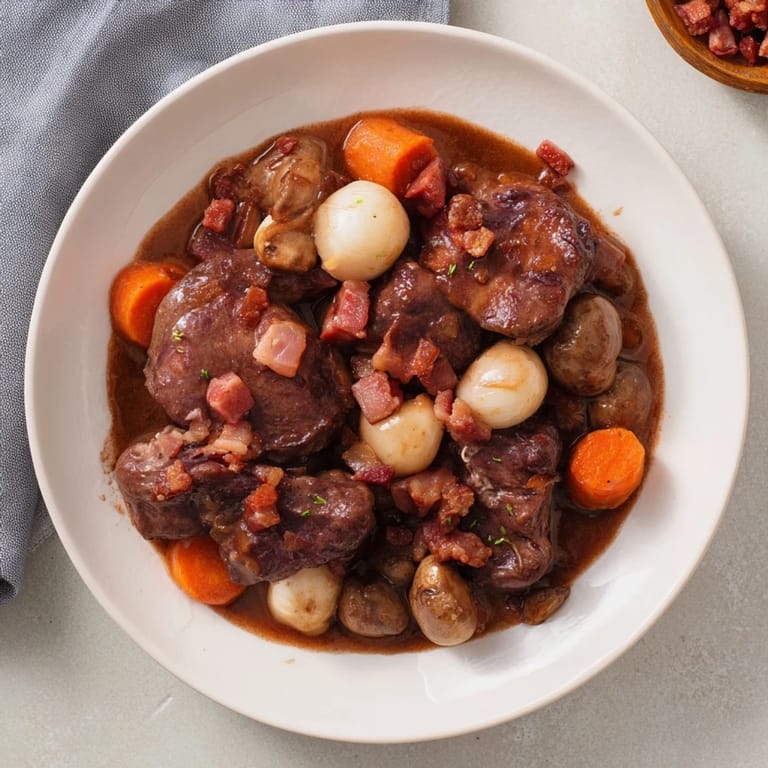
 Coq au vin taught me that patience and proper technique aren't about showing off—they're about respecting the ingredients and the people eating what you make. This is the kind of dish that deserves a lingering meal and good company.
Recipe FAQs
- → What cut of chicken works best for this dish?
Using a whole chicken cut into pieces or bone-in thighs provides the best flavor and tenderness when braised.
- → Can I substitute the red wine in the braise?
Dry red wine is ideal to add depth, but grape juice with a splash of vinegar can be used as an alternative.
- → How do I ensure the mushrooms have a rich flavor?
Sauté mushrooms separately in butter and olive oil until browned before adding to the dish for enhanced earthiness.
- → Why is it important to brown the chicken and bacon first?
Browning creates caramelized flavors and a richer base for the braising liquid, elevating the overall taste.
- → What are good side dishes to accompany this preparation?
Crusty French bread, mashed potatoes, or buttered noodles complement the rich flavors and soak up the sauce well.