 Pin It
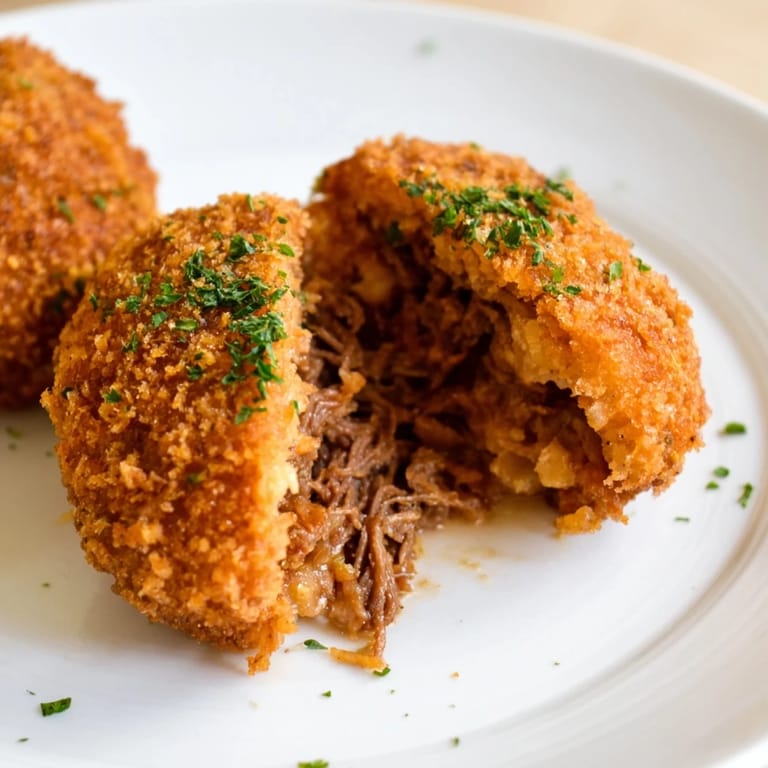
 My first Dutch croquette emerged from the fryer with more crunch than grace, shattering on the plate like a savory grenade. But that golden shell gave way to something unexpected—a filling so velvety and rich it tasted like someone had bottled the comfort of a Amsterdam café and tucked it into a bread crumb coat. Now these croquettes are the thing I crave when winter settles in, when I want something that feels indulgent but somehow also deeply home.
I made these for my neighbor on a rainy Thursday, and watching her close her eyes after the first bite told me everything. She asked for the recipe before she'd even finished chewing, which meant I'd gotten the beef tender enough and the cream thick enough to hold together without being gluey.
Ingredients
- Stewing beef (250 g): Chuck or similar tough cuts work best because long simmering turns them impossibly tender and deeply flavorful—avoid lean cuts that dry out.
- Beef broth (500 ml): Use quality broth; it's the foundation of your filling and shouldn't taste like salt and water.
- Bay leaf: One leaf is enough to add quiet sophistication without overpowering the beef.
- Onion (1 small): Finely chop it so it disappears into the filling and seasons it evenly.
- Butter for ragout (1 tbsp): Unsalted lets you control the salt level as you build the filling.
- Butter for roux (40 g): This is your thickening agent—don't skimp or rush this step.
- All-purpose flour (40 g): Creates the roux that turns broth into a luxurious cream sauce.
- Whole milk (150 ml): Full-fat milk makes the filling taste richer than cream alone.
- Fresh parsley (1 tbsp): Optional, but a scattered handful adds a fresh note that cuts through the richness.
- Ground nutmeg (1/2 tsp): Just enough to make people wonder what makes these taste so special.
- Eggs (2 large): The glue between flour and breadcrumbs—beat them lightly and they'll coat evenly.
- Fine dry breadcrumbs (150 g): Panko or Dutch paneermeel gives you that shatter-crisp crust that echoes when you bite through it.
- Neutral oil for frying: Sunflower or canola won't compete with the filling's flavors.
Tired of Takeout? 🥡
Get 10 meals you can make faster than delivery arrives. Seriously.
One email. No spam. Unsubscribe anytime.
Instructions
- Simmer the beef until it falls apart:
- Combine beef, broth, bay leaf, and salt in a saucepan and bring to a boil, then lower the heat so it barely murmurs—you want the meat to grow tender, not tough. After about an hour, the beef should shred easily with a fork. Discard the bay leaf, shred the meat finely, and set aside 200 ml of the cooking liquid.
- Build a softer base with onion and meat:
- In a skillet, melt 1 tablespoon of butter and cook the chopped onion gently until it turns translucent and sweet, about 3 minutes. Stir in the shredded beef and season with pepper and a pinch more salt if needed.
- Make the roux that becomes a sauce:
- In a clean saucepan, melt 40 grams of butter over low heat, then stir in the flour and keep stirring for 2 minutes—you're cooking out the flour's raw taste. Slowly add the reserved beef broth and milk while whisking so no lumps form.
- Weave everything together into ragout:
- Pour the beef and onion mixture into the thickened sauce, add the nutmeg and parsley if using, and stir until it looks smooth and creamy. Taste it, adjust the seasoning, then spread it into a shallow dish, cover, and refrigerate for at least an hour until it's firm enough to shape.
- Shape the filling into cylinders:
- Once chilled, divide the ragout into 10 pieces and roll each one into a cylinder about 8 centimeters long. Cold filling shapes cleanly; if it gets soft, chill it again.
- Coat with the crispy armor:
- Set up three shallow bowls with flour, beaten eggs, and breadcrumbs. Roll each croquette in flour to seal the surface, dip it in egg until coated, then roll it in breadcrumbs. For extra crispiness, repeat the egg and breadcrumb step so you have a thicker, crunchier shell.
- Fry until the outside shatters:
- Heat oil to 180°C (350°F)—use a thermometer so the temperature stays true. Working in batches, fry the croquettes for 3 to 4 minutes until they're golden brown all over. Drain them on paper towels so they stay crispy.
- Serve them while the contrast is sharpest:
- Eat them hot with mustard nearby for dipping.
 Pin It
 There's a moment every time I make croquettes where I watch someone take that first bite and see them realize that something this delicious doesn't need to be complicated. That's when food becomes less about technique and more about how it brings people to the table.
Making Ahead and Freezing
One of the greatest gifts these croquettes offer is their freezer-friendliness. Bread them completely, lay them on a tray, freeze for a few hours, then transfer to a bag and they'll keep for weeks. When you want them, simply increase the frying time by 1 to 2 minutes from frozen and they'll come out just as golden and crispy as if you'd made them fresh that morning.
Pairing and Serving Suggestions
I've learned that croquettes aren't just appetizers—they're a moment of togetherness. Serve them hot on a board with fries and a sharp mustard, or arrange them on a platter with pickles and cornichons for something more refined. A crisp pilsner or pale lager beside them feels right, the beer's brightness cutting through the richness in the best way.
Variations and Flavor Explorations
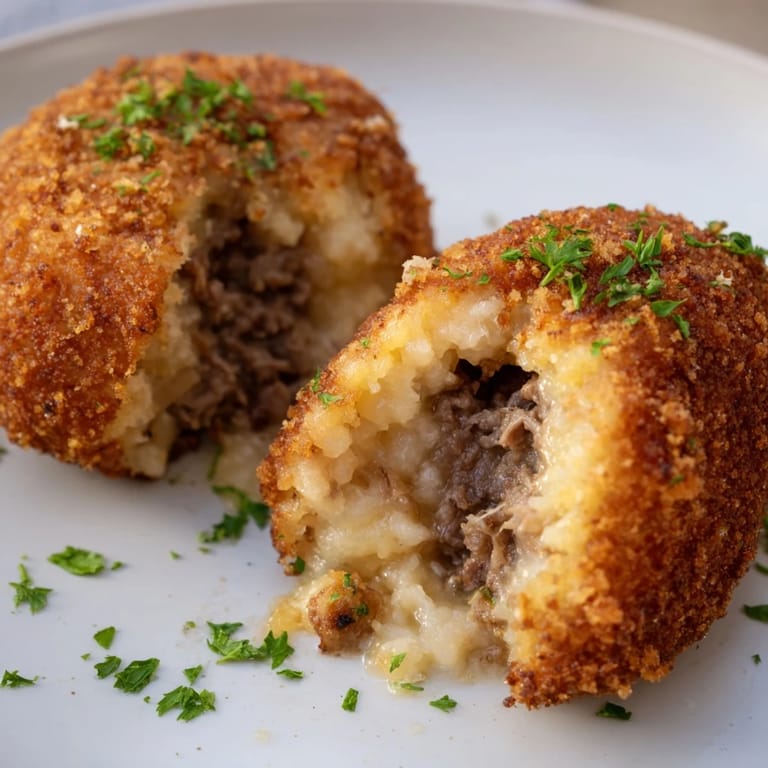
Once you've mastered the beef version, there's a whole universe of fillings waiting. Veal mixed with beef creates a more delicate flavor, while some cooks swear by a touch of cognac stirred into the ragout at the end. I've seen versions with mushrooms softened in butter and folded into the filling, adding an earthy depth that makes people pause and ask what that secret ingredient is.
- Try substituting half the beef with veal for a lighter, more refined taste.
- A small splash of brandy or cognac stirred into the finished filling adds sophistication without overpowering.
- Finely chopped mushrooms sautéed in butter and mixed into the ragout create an unexpectedly luxurious version.
 Pin It
 These croquettes are the kind of food that reminds you why you started cooking in the first place. Make them once and they'll become part of your regular rotation.
Recipe FAQs
- → How is the beef filling prepared?
The beef is simmered slowly with broth and aromatics until tender, then shredded and mixed into a creamy roux with milk and seasoning.
- → What coating is used for crispiness?
The filling is first dusted in flour, dipped in beaten eggs, then coated with fine dry breadcrumbs for a golden, crunchy crust.
- → Can these croquettes be frozen?
Yes, once shaped and breaded, they can be frozen and fried directly from frozen with a slightly longer frying time.
- → What oil is suitable for frying?
Neutral oils with high smoke points like sunflower or canola oil are ideal for deep frying croquettes.
- → How should croquettes be served?
Serve hot, optionally with mustard for dipping or paired with fries and a crisp lager.