 Pin It
 My first osso buco came on a rainy Milan evening when a colleague insisted I stop by her family's kitchen. She moved veal shanks from pot to oven with such casual grace that I assumed it was simple, until hours later the apartment filled with this mahogany-rich aroma that made everything else fade away. That dish taught me something quiet: the best meals aren't rushed, they're surrendered to. Now whenever I braise veal shanks, I'm chasing that same feeling of anticipation and eventual reward.
I made this for my partner one winter when we'd been stuck inside too long, and I remember how their expression shifted when they tasted it, like they'd suddenly remembered what they were hungry for. The braising pot became a meditation, the kind of cooking where you can step away and trust the oven to do what needs doing. That meal became our thing, the one we make when we need to slow down together.
Ingredients
- Veal shanks (4, about 350 g each, cross-cut, bone-in): The bone and marrow are the secret here, not just decoration. Look for shanks that are pale pink and ask your butcher to cut them perpendicular to the bone so the marrow stays intact during cooking.
- Salt and freshly ground black pepper: Season generously before dredging; the veal is large enough to handle bold seasoning.
- All-purpose flour (1/3 cup): Just a light dredge to create the crust that browns beautifully and helps thicken the sauce later.
- Olive oil and unsalted butter (2 tbsp each): Together they prevent either from burning while browning the veal, and the butter adds a subtle richness.
- Onion, carrots, celery (1 large onion, 2 carrots, 2 stalks): This is your holy trinity; finely chopped means they'll soften completely and dissolve into the sauce.
- Garlic cloves (4, minced): Mince them fine so they become part of the sauce rather than distinct pieces.
- Dry white wine (1 cup): Use something you'd actually drink; it becomes the soul of the braising liquid.
- Diced tomatoes (1 can, 400 g with juice): Canned is actually superior here because the acidity is consistent and the tomatoes break down evenly.
- Beef or veal stock (1 1/2 cups): Homemade is a gift if you have it, but good quality store-bought works beautifully.
- Tomato paste (2 tbsp): Stir it into the vegetables before adding liquid, this step deepens the entire sauce.
- Bay leaves and dried thyme (2 leaves, 1 tsp): These are subtle anchors; don't skip them, but don't double them either.
- Lemon zest (from 2 lemons, divided): Reserve half for the gremolata; this bright note is what makes people sit up and notice.
- Fresh flat-leaf parsley and garlic (2 tbsp chopped, 1 clove minced): Make the gremolata just before serving so it stays verdant and alive.
Tired of Takeout? 🥡
Get 10 meals you can make faster than delivery arrives. Seriously.
One email. No spam. Unsubscribe anytime.
Instructions
- Prepare and season your veal:
- Pat each shank completely dry with paper towels, then season boldly with salt and pepper on all sides. Dredge lightly in flour, coating all surfaces, then shake off the excess so you're left with just a whisper of flour rather than a thick crust.
- Brown the shanks:
- Heat your Dutch oven over medium-high heat until the oil shimmers and the butter foams. Working carefully so you don't crowd the pot, brown each shank for 3 to 4 minutes per side until deeply golden, then transfer to a plate and set aside.
- Build your base:
- Add the chopped onion, diced carrots, celery, and minced garlic to the same pot where the veal browned. Sauté, stirring occasionally, until the vegetables soften and smell sweet, about 6 minutes. You'll notice the bottom of the pot is covered in those browned bits, which is exactly what you want.
- Deepen with tomato paste:
- Stir in the tomato paste and let it cook in the oil for a full minute, stirring constantly so it caramelizes slightly and loses its raw edge. This moment matters more than it seems.
- Deglaze and add liquid:
- Pour in the white wine, scraping the bottom of the pot with a wooden spoon to release all those browned, flavorful bits. Let it reduce slightly for a minute or two, then add the canned tomatoes with their juice, the stock, bay leaves, thyme, and half of your lemon zest.
- Return the veal and begin braising:
- Nestle the browned veal shanks back into the pot in a single layer, spooning the sauce over them. Bring everything to a gentle simmer, then cover the pot and transfer it to a preheated 160°C (325°F) oven for 2 hours, until the veal is fork-tender and the meat is nearly falling from the bone.
- Make the gremolata:
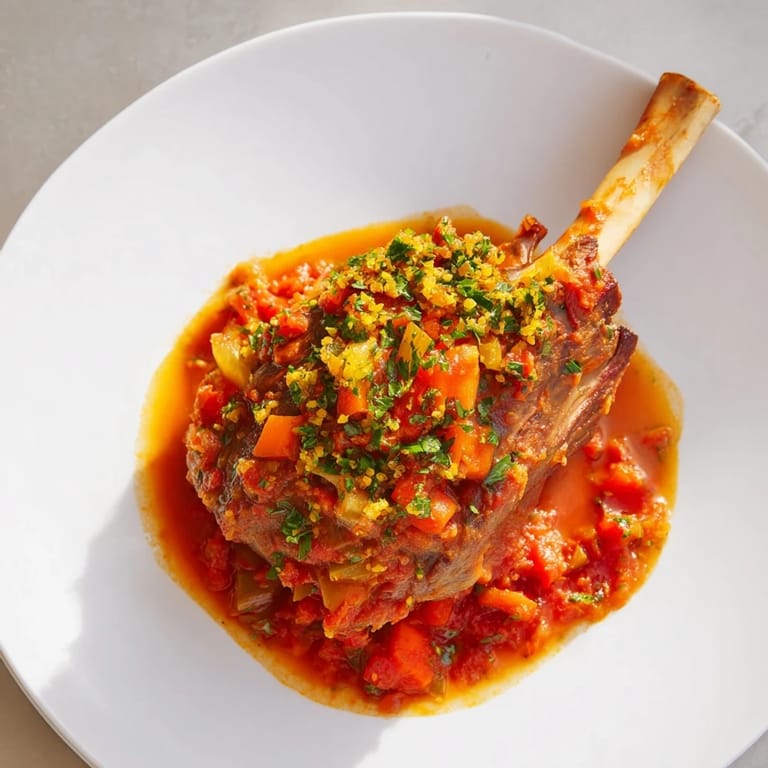
- While the veal braises, finely chop the fresh parsley, mince the remaining garlic clove, and combine both with your reserved lemon zest in a small bowl. Taste it and let the brightness make you smile.
- Finish and serve:
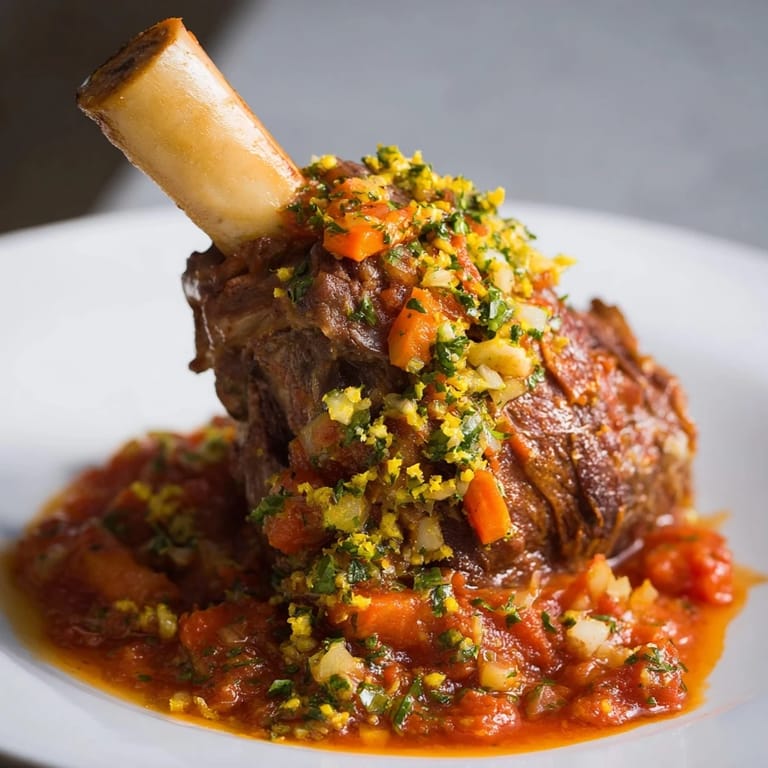
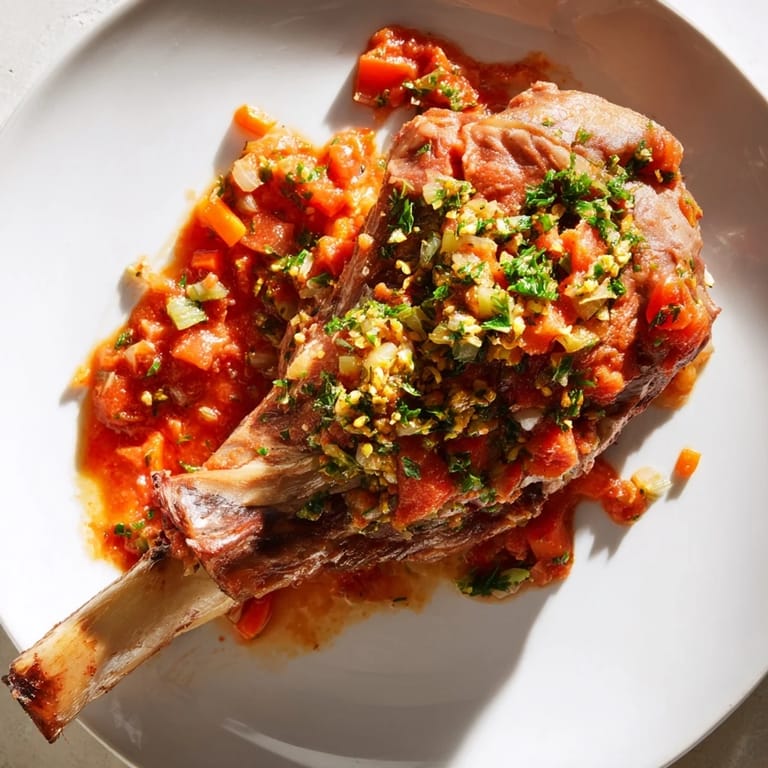
- Remove the shanks to a warm platter. If you'd like a thicker sauce, skim off any excess fat from the surface and simmer the braising liquid on the stovetop for a few minutes. Spoon the sauce over the veal and crown each shank with a generous pinch of gremolata just before serving, so the fresh herbs stay alive on the plate.
 Pin It
 There's a moment near the end of braising when you crack the lid open just to check, and the steam rises up carrying that mingled aroma of wine, tomato, and veal, and you realize you're about to create something that will linger in someone's memory. That's when you know you've done it right.
What Makes This Dish Milanese
Osso buco hails from Milan's working-class kitchens, born from resourcefulness and slow-cooking skill rather than luxury ingredients. The Milanese approach values depth over flash, letting time and technique do what fancy equipment cannot. When you serve this with risotto alla Milanese (saffron-infused, golden, luxurious), you're recreating a pairing that's been refined over centuries, where the creamy rice catches every drop of that precious sauce.
Choosing Your Veal and Stock
The quality of your veal shank and stock will quietly determine how good this dish becomes. Veal from humanely raised, pasture-fed animals has better flavor and a texture that braises more gracefully than factory-raised meat. The same applies to stock: if you have access to homemade veal or beef stock, use it without hesitation. If you're buying prepared stock, choose one where meat is the main ingredient and sodium isn't astronomical.
Beyond the Basic Recipe
Once you've mastered this version, you have a framework for experimentation. Some cooks add a splash of brandy for warmth, or a handful of mushrooms for earthiness, or a pinch of saffron to echo the risotto. The beautiful thing about braised dishes is their flexibility within structure—you can adjust, personalize, and make them yours.
- Serve with creamy polenta, saffron risotto, or soft mashed potatoes to catch every precious drop of sauce.
- Leftover osso buco is even better the next day, when all the flavors have had time to meld and deepen.
- This dish freezes exceptionally well; make extra and save some for a moment when you need comfort without effort.
 Pin It
 Osso buco is the kind of cooking that demands patience and rewards it generously. Make this when you have time to let the kitchen fill with warmth and aroma, when you want to feed people something that tastes like care.
Recipe FAQs
- → What cut of meat is used in Osso Buco?
Traditionally, veal shanks cross-cut with the bone in are used, providing a tender texture after slow braising.
- → How long should veal shanks be cooked for tenderness?
They are typically braised for about 2 hours, allowing the meat to become soft and flavorful.
- → What ingredients form the base sauce?
The sauce combines diced tomatoes, white wine, stock, tomato paste, and a mix of aromatic vegetables such as onions, carrots, celery, and garlic.
- → What is gremolata and how is it used?
Gremolata is a zesty garnish made from parsley, garlic, and lemon zest, sprinkled on top to add fresh, bright flavors.
- → Can this dish accommodate gluten-free preferences?
Yes, using gluten-free flour for dredging the veal allows for a gluten-free adaptation without compromising texture.
- → What are recommended side dishes to serve with Osso Buco?
Traditional accompaniments include saffron risotto (Risotto alla Milanese), polenta, or creamy mashed potatoes.