 Pin It
 My first bouillabaisse came from a mistake—I'd bought far too much fish at the market in Marseille and stood in a tiny apartment kitchen with no real plan, just a handful of saffron and the smell of fennel rising from a pot. A neighbor appeared in my doorway drawn by the aroma, and by evening we were passing bowls between us, tearing bread, dipping it in golden rouille while the Mediterranean light faded outside. That stew taught me that the best dishes often come from necessity and generosity, not from following rules.
Years later, I made this for a small dinner party where someone had just returned from Provence, homesick and talking about the light there. Halfway through the meal, they went quiet, and when they looked up their eyes were wet—not from sadness, but from tasting a memory. That's when I understood that bouillabaisse isn't really about technique; it's about building a moment that tastes like home, even if it's someone else's home.
Ingredients
- Firm white fish (monkfish, sea bass): These hold their shape and provide a delicate sweetness that balances the bolder oily fish.
- Oily fish (red mullet): This is where the soul of bouillabaisse lives—it adds depth and richness that broth alone could never achieve.
- Mussels: Choose ones that close when tapped; open ones have already begun to spoil.
- Shrimp and scallops: These cook fast, so add them last to avoid rubbery texture.
- Saffron threads: Don't buy powdered saffron—it's often diluted with turmeric, and you'll taste the difference immediately.
- Fennel bulbs: The slight anise note is essential; it's what makes bouillabaisse unmistakably Provençal.
- Orange zest: A single zest makes the broth sing by adding brightness that no amount of salt can replicate.
- Fish stock or water: If you can make stock from fish bones the day before, do it—if not, good filtered water works fine.
- Olive oil: Use your best oil for the rouille; this is where it shines.
Tired of Takeout? 🥡
Get 10 meals you can make faster than delivery arrives. Seriously.
One email. No spam. Unsubscribe anytime.
Instructions
- Build the flavor base:
- Heat oil and sauté onion, leek, fennel, carrot, and garlic slowly for 8–10 minutes, stirring occasionally until they're soft and beginning to lose their sharp edges but still pale. This is where patience pays off—rushing this step means a muddled broth instead of a clear, clean foundation.
- Deepen with aromatics:
- Add tomatoes, orange zest, bay leaf, thyme, parsley, saffron, fennel seeds, and peppercorns, letting them toast for 5 minutes in the oil so their essential oils release fully. You should smell saffron and anise climbing toward the ceiling.
- Wake up the pot:
- Pour in white wine and let it bubble away for 2 minutes, then add your stock or water and bring it to a gentle boil. Lower the heat and let it simmer uncovered for 25 minutes, which concentrates flavors and allows the broth to become something greater than its parts.
- Strain for clarity:
- Pour everything through a fine sieve, pressing gently on the solids with the back of a spoon to coax out every bit of flavor, then discard what remains. The broth should be golden and fragrant, almost clear if held to light.
- Cook the seafood:
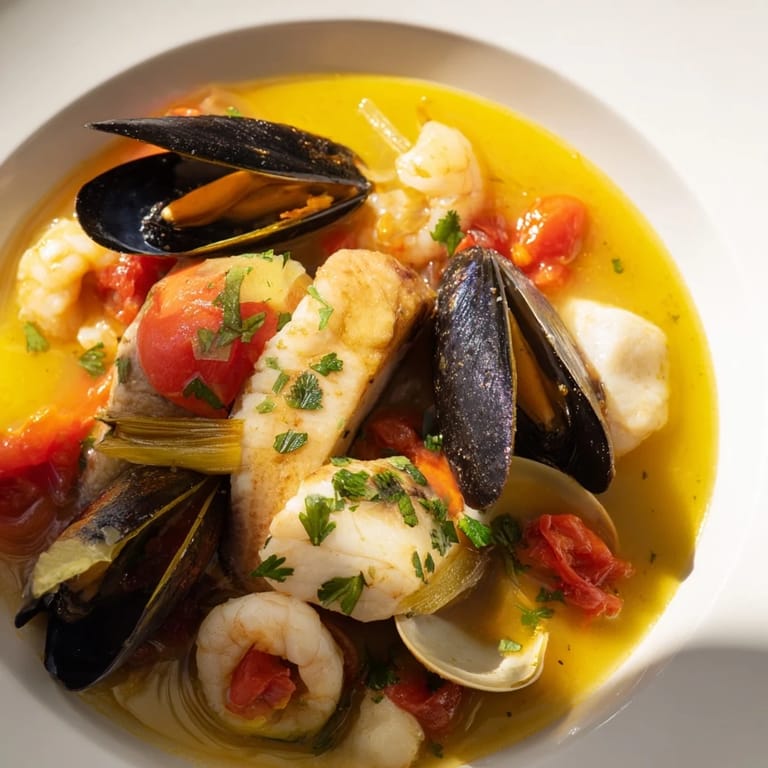
- Bring broth to a gentle simmer and add firm fish first, cooking for 5 minutes, then add oily fish, mussels, shrimp, and scallops all together and cook 5–6 minutes more until mussels open and shrimp turn pink. Discard any mussels that refuse to open—they're telling you something.
- Make the rouille:
- Whisk egg yolk with minced garlic, chili, saffron with its soaking water, and mustard until smooth, then drizzle in oil drop by drop while whisking constantly until it thickens into something that looks like luxury. If it breaks, start over with a fresh yolk and slowly incorporate the broken mixture—this sauce is forgiving if you respect it.
- Serve with ceremony:
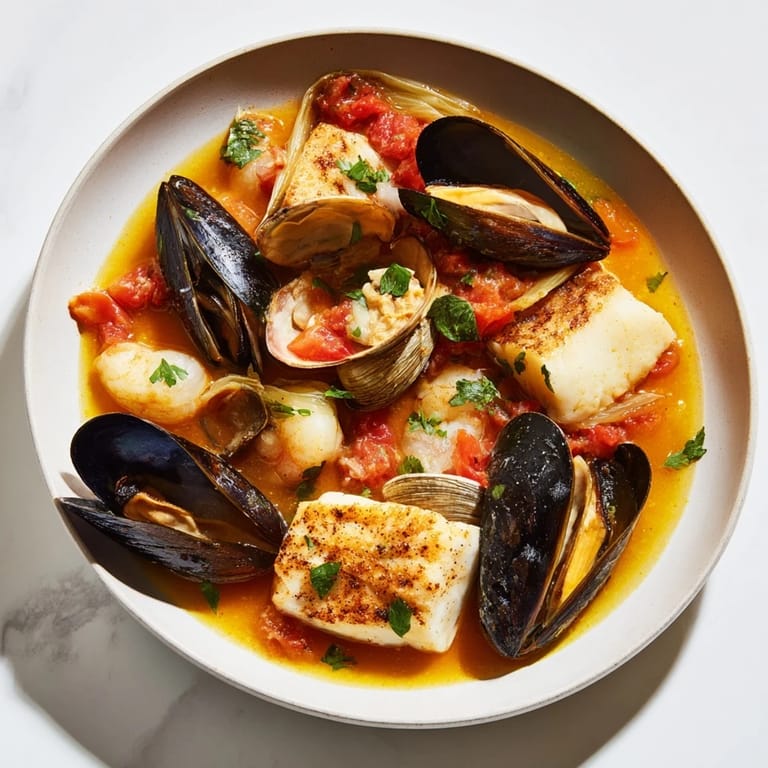
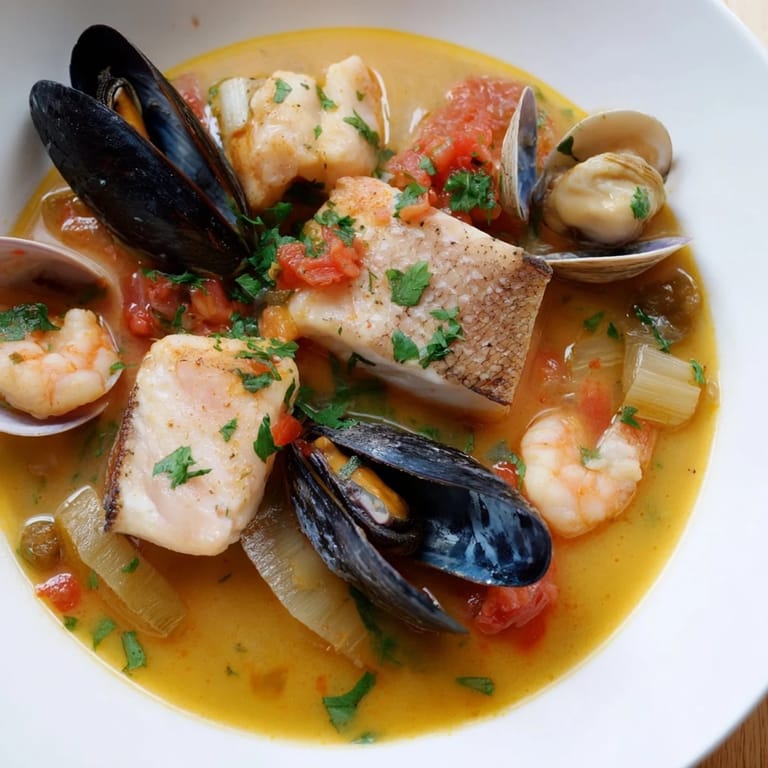
- Ladle the stew into warm bowls, sprinkle fresh parsley over top, and serve with toasted baguette slices brushed with oil and a generous spoonful of rouille on the side. Let people build their own experience, spooning rouille onto bread and into broth according to their own desires.
 Pin It
 I've learned that bouillabaisse is oddly forgiving of substitutions but unforgiving of shortcuts—you can swap fish varieties depending on what's fresh, but you cannot rush the base or skip the straining. It's a dish that rewards attention the way some people reward loyalty: quietly but completely.
Choosing Your Fish
The traditional recipe calls for at least three or four types of local fish, which creates complexity that a single variety simply cannot achieve. In Provence, fishmongers would know exactly which fish were in season and would pack a basket based on what the morning's boats brought in. If you're working with what your market offers, look for fish with clear eyes and bright gills, and ask your fishmonger which varieties would hold up best in a long simmer. Firm white fish like monkfish or sea bass should anchor your selection, but the oily fish—red mullet, mackerel, or even small sardines—are what give bouillabaisse its characteristic richness and depth.
The Rouille: Why It Matters
Rouille is essentially a saffron-infused garlic mayonnaise, and it's the bridge between the broth and the bread, between the humble and the luxurious. The first time I made it, I tried to add the oil too quickly and ended up with a separated, grainy mess—but I learned that if you go slowly, whisking constantly, something almost magical happens. The egg yolk emulsifies the oil into silk, and the saffron turns it golden while the garlic and chili add heat and character. It can be made a full day ahead, which means you're really only making the broth on the day you serve it.
Wine and Timing
The white wine you use should be something you'd actually drink—not expensive, but honest. It simmers away to almost nothing in 2 minutes, leaving only its best qualities behind. Timing is everything in bouillabaisse because the seafood cooks so quickly; the broth should be at a gentle, steady simmer, not a rolling boil, so that everything cooks evenly. I set a timer for each addition and pay attention rather than wander away, because the difference between perfect and overdone can be as little as two minutes.
- Serve bouillabaisse in warm bowls so the broth stays hot while you eat.
- A chilled Provençal rosé or crisp white wine is the only appropriate drink alongside it.
- Leftovers keep for 2 days refrigerated, though honestly you'll want to eat it all tonight.
 Pin It
 Bouillabaisse is the kind of dish that reminds you why we gather around tables in the first place—not for perfection, but for connection. Make it when you want to slow down and taste something real.
Recipe FAQs
- → What types of fish are best for this seafood stew?
Use a mix of firm white fish like monkfish or sea bass, and oily fish such as red mullet to achieve depth in flavor and texture.
- → How does saffron influence the dish?
Saffron adds a delicate, aromatic warmth and a subtle golden hue that enhances the seafood broth's complexity.
- → What is the purpose of the rouille sauce?
Rouille is a garlicky saffron mayonnaise that adds creaminess and a spicy kick, perfectly complementing the stew’s flavors.
- → Can this dish be prepared ahead of time?
The rouille sauce can be made a day in advance and refrigerated; however, it's best to cook the seafood and broth fresh for optimal taste and texture.
- → What sides pair well with this stew?
Toasted baguette slices brushed with olive oil are traditional, ideal for dipping into the flavorful broth and rouille.
- → How should unopened mussels be handled after cooking?
Discard any mussels that remain closed after cooking, as they may not be safe to eat.