 Pin It
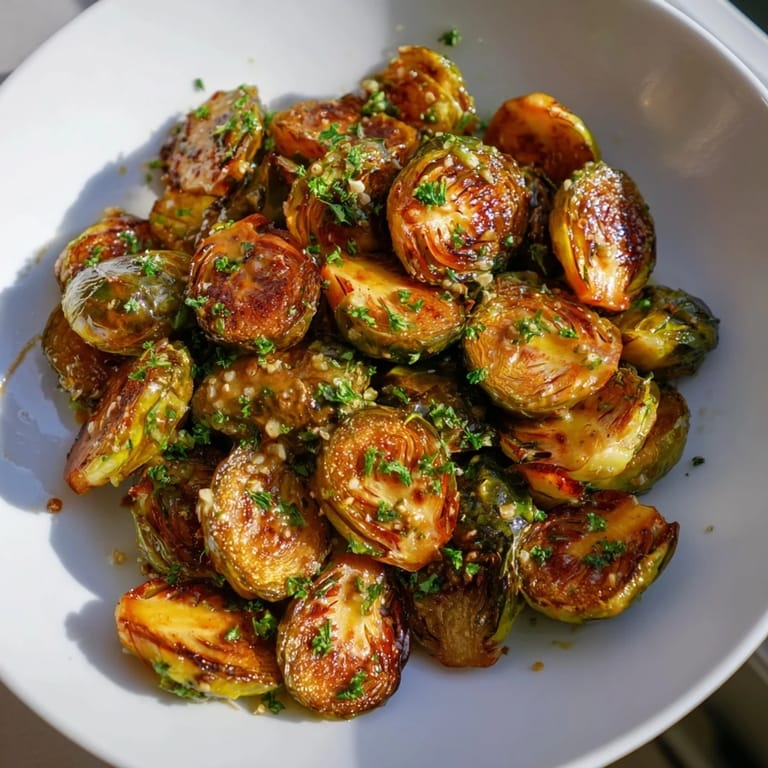
 Brussels sprouts weren't on my radar until my neighbor brought a roasted batch to a potluck, and I watched people actually go back for seconds. That caramelized exterior, those crispy edges—I had to know her secret. Turns out it wasn't magic, just heat and timing, but the glaze she used made all the difference. Now I make these whenever I need something that feels a little fancy without the fuss.
I made this for my partner's family dinner last fall, and someone actually asked if I'd bought them from a restaurant. The kitchen smelled incredible—that caramelized sweetness mixed with mustard heat—and watching people's faces when they tasted them was worth every minute of prep. That's when I realized roasted vegetables didn't have to be boring.
Ingredients
- Brussels sprouts, 1 lb trimmed and halved: Cut them in half so the flat side hits the baking sheet, which is where all that golden-brown magic happens.
- Olive oil, 2 tbsp: This carries the glaze and helps those edges crisp up; don't skip it.
- Honey, 2 tbsp: The sweetness that balances the mustard's tang—use good honey if you have it.
- Dijon mustard, 1 ½ tbsp: This is your umami backbone, sharp and sophisticated.
- Whole-grain mustard, 1 tbsp: Those little seeds add texture and a gentler, earthier mustard flavor.
- Garlic powder, ½ tsp: A whisper of garlic that doesn't overpower, just deepens everything.
- Apple cider vinegar, 1 tbsp: The secret that keeps the glaze from feeling one-note sweet.
- Salt, ½ tsp: Brings all the flavors into focus.
- Black pepper, ¼ tsp: A small amount so it doesn't bite too hard.
- Fresh parsley, 2 tbsp chopped (optional): A fresh finish if you want one.
Tired of Takeout? 🥡
Get 10 meals you can make faster than delivery arrives. Seriously.
One email. No spam. Unsubscribe anytime.
Instructions
- Get your oven ready:
- Heat it to 425°F and line a baking sheet with parchment paper so cleanup is easy and nothing sticks.
- Make the glaze:
- Whisk the oil, honey, both mustards, garlic powder, vinegar, salt, and pepper together in a large bowl until it's smooth and well combined. The glaze should smell sharp and sweet at the same time.
- Coat the sprouts:
- Add your halved Brussels sprouts to the bowl and toss them until every piece is covered with glaze. Use your hands if you need to—make sure nothing's left behind.
- Arrange on the sheet:
- Spread them in a single layer with the flat, cut side down touching the pan. That's where the caramelization happens, so don't pile them up.
- Roast with a flip:
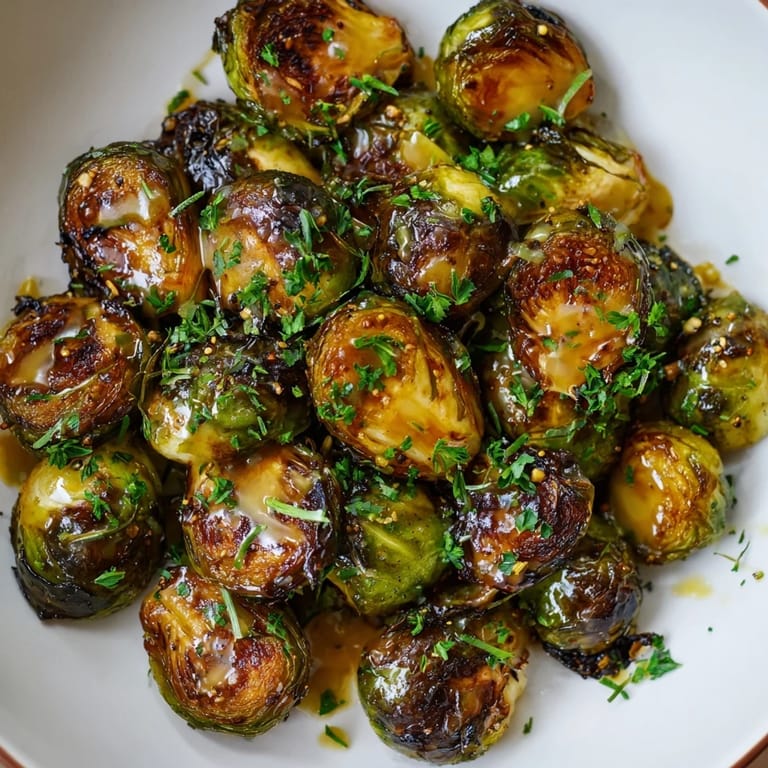
- Roast for about 10–12 minutes, then shake the pan and flip them over so the other side gets golden too. The whole thing takes 20–25 minutes total until they're deep brown and crispy around the edges.
- Finish and serve:
- Transfer them to a serving dish, sprinkle parsley on top if you like, and eat them while they're still warm.
 Pin It
 My sister brought a friend to dinner who said she'd never had a Brussels sprout she liked, and after trying these, she asked for the recipe. That moment of converting someone who thought they didn't even like a vegetable—that's what cooking is really about.
Why This Glaze Works
The two mustards do something special together: the sharp brightness of Dijon cuts through richness while the whole-grain version adds a softer, nuttier note that most people don't expect. The honey comes in sweet, but the vinegar immediately reminds you it's not a dessert. It's the tension between them that keeps your palate interested, and that's why one bite leads to another.
What to Serve Alongside
These work beautifully next to roasted chicken, grilled steak, or even fish because the glaze is bold enough to stand up to anything. I've also served them at vegetarian dinners where they steal the spotlight from heavier sides. The sweetness makes them feel festive without being seasonal—pull them out in January just as easily as November.
Simple Variations to Try
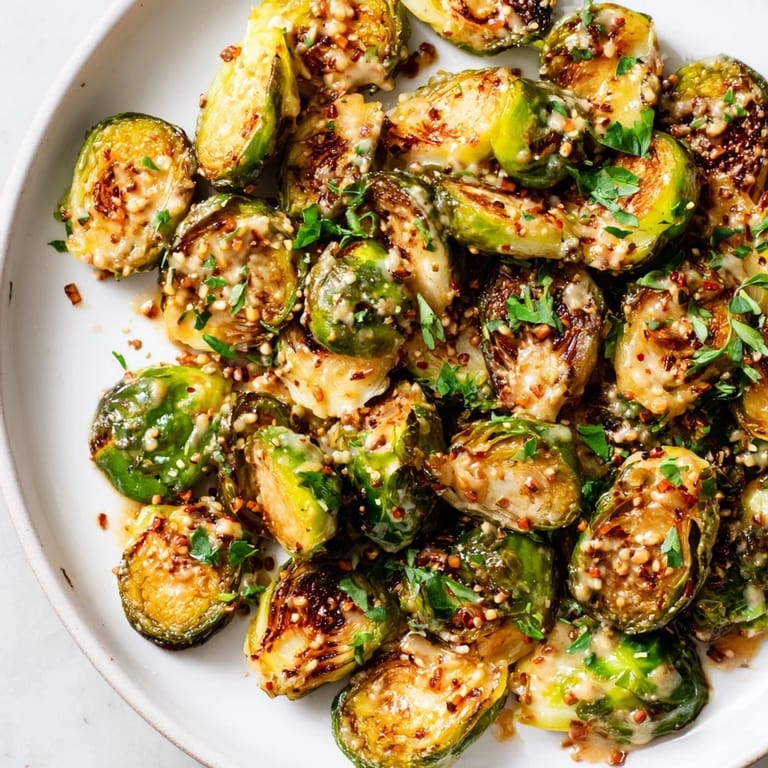
The base recipe is solid, but there's room to play. A pinch of chili flakes adds warmth without heat, toasted nuts bring crunch, and if you want to take it in a different direction, maple syrup swaps in for honey and gives everything a deeper, more autumn-like flavor. Once you understand why this glaze works, you can trust your instincts to adjust it.
- Toast chopped pecans or walnuts and scatter them on just before serving for crunch.
- Add a pinch of red chili flakes if you want a subtle warm kick beneath the sweet and tangy.
- Drizzle with balsamic vinegar at the end for extra depth and a slight shine.
 Pin It
 This dish teaches you that roasted vegetables don't have to be an afterthought—they can be the reason people ask for seconds. Once you nail this, you'll start experimenting with other vegetables the same way.
Recipe FAQs
- → How do you achieve caramelization on Brussels sprouts?
Roasting at a high temperature with the cut side down encourages caramelization, which brings out their natural sweetness and crispiness.
- → Can I substitute honey for a different sweetener?
Yes, maple syrup works well as a vegan alternative and adds a subtle sweetness to the glaze.
- → What is the purpose of using both Dijon and whole-grain mustards?
Combining Dijon and whole-grain mustards balances smoothness with texture, adding complexity to the tangy glaze.
- → How can I add extra crunch to this dish?
Toasted chopped pecans or walnuts sprinkled on top just before serving add a delightful crunch.
- → Is this dish suitable for gluten-free diets?
Yes, provided the mustard condiments used are gluten-free, this dish fits well within gluten-free dietary needs.